Digital buyer journeys
What digital buyer journeys means for buyers and exhibitors in this sector.
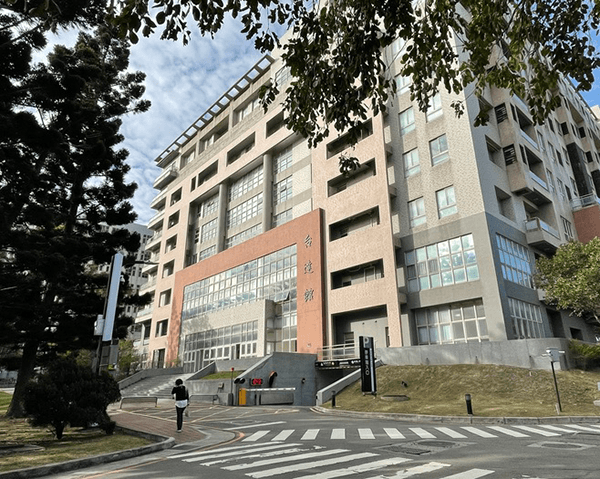
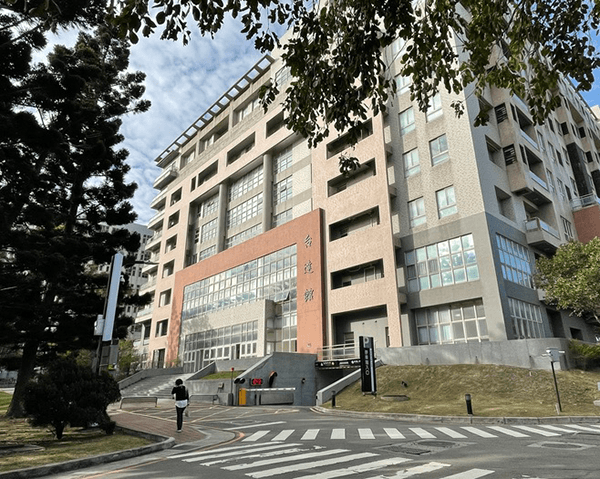
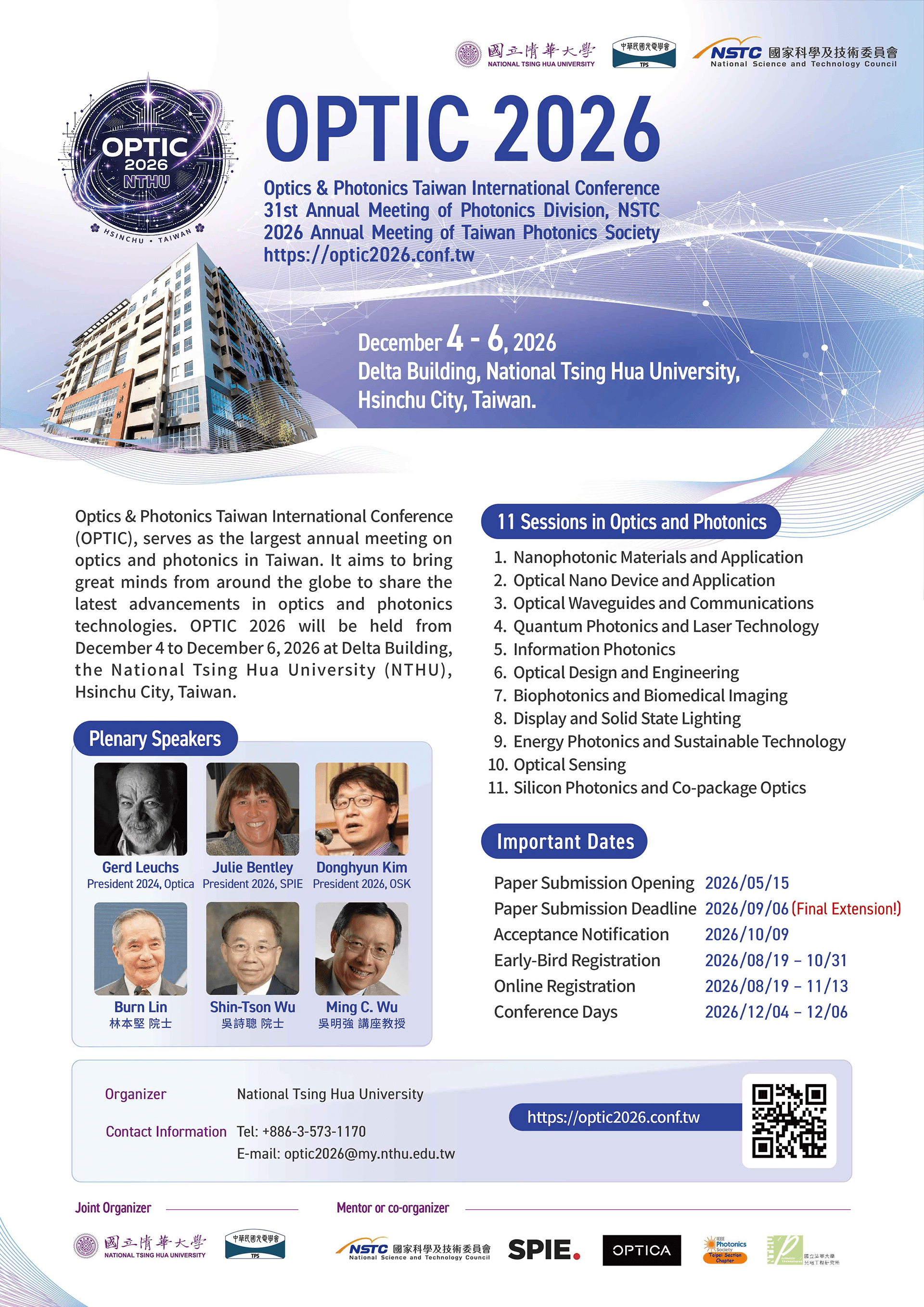
OPTIC 2026, the largest optics and photonics conference in Taiwan, will be held from December 4 to 6, 2026 at NTHU Delta Hall, Hsinchu.
Dates
4–6 Dec 2026
City / country
Hsinchu, Taiwan
Venue
NTHU Delta Hall
Event overview
The OPTIC 2026 conference aims to bring together leading experts in optics and photonics to share the latest advancements in technology. With 11 parallel tracks covering a wide range of topics, attendees will have the opportunity to engage with cutting-edge research and network with peers in the field.
The event will feature plenary and invited speakers, poster sessions, and opportunities for collaboration. OPTIC 2026 takes place in Hsinchu, Taiwan.
TL;DR
Attending OPTIC 2026 provides access to the latest research in optics and photonics, networking opportunities with industry leaders, and insights into emerging technologies. Attendees include researchers, industry professionals, and students in the fields of optics and photonics.
Exhibiting at OPTIC 2026 allows companies to showcase their latest products and technologies to a targeted audience of researchers and industry professionals. It offers a platform for networking, generating leads, and enhancing brand visibility in the optics and photonics community. Meet qualified buyers and partners including Manufacturers of optical devices and systems, Suppliers of photonic materials and components, Technology companies in laser and imaging systems.
Attendees, exhibitors & solutions
Visitor profile
Typical attendee groups you can expect to meet.
Exhibitor profile
Main supplier and exhibitor segments present at the show.
Product categories
Key solution areas showcased across the event.
Location & Facilities
Halls & areas
1NTHU Delta Hall, No. 101, Section 2, Guangfu Rd, Guangming Village, East District, Hsinchu City, 300, Taiwan
NTHU Delta Hall in Hsinchu typically provides on-site or adjacent visitor parking during major trade fairs; confirm daily rates, payment methods and hall access on the organiser or venue website before travel.
Food options
On-site catering
On-site diningParking: NTHU Delta Hall in Hsinchu typically provides on-site or adjacent visitor parking during major trade fairs; confirm daily rates, payment methods and hall access on the organiser or venue website before travel.
Gate: Follow organiser signage to the main visitor entrance at NTHU Delta Hall for badge collection; allow extra time for security screening during peak morning arrival.
Attend
Member
Non-Member
Student Member
Student Non-Member
Intelligence
Key market insights, trends, news and related events to help you understand the bigger picture.
Why it matters
On 2026-12-04 to 2026-12-06, OPTIC 2026 in Hsinchu covering Optical materials and components, Photonics devices and systems, Laser technology and applications, Imaging and sensing gives technology buyers a single calendar window to compare suppliers, validate specs on the stand, and book follow-ups before the next buying cycle - especially when your roadmap matches the published exhibitor profile.
Key trends shaping this market and its wider industry.
Digital buyer journeys
What digital buyer journeys means for buyers and exhibitors in this sector.
Sustainability in procurement
What sustainability in procurement means for buyers and exhibitors in this sector.
Automation and labour efficiency
What automation and labour efficiency means for buyers and exhibitors in this sector.
Regional supply-chain resilience
What regional supply-chain resilience means for buyers and exhibitors in this sector.
Hybrid engagement models
What hybrid engagement models means for buyers and exhibitors in this sector.
Plan your trip

A range of accommodation options near the venue and across key areas.
THE HO HOTEL
USD 95–122 / night
Breakfast (paid), free Wi-Fi, free parking, hot tub, air conditioning, fitness center, restaurant, room service
Howard Plaza Hotel Hsinchu
USD 150–190 / night
Free breakfast, free Wi-Fi, free parking, indoor pool, air conditioning, fitness center, spa, restaurant
The Carlton Hotel
USD 150–190 / night
Free breakfast, free Wi-Fi, air conditioning, parking, restaurant, full-service laundry, accessible, business center
Royal Hotel
USD 150–202 / night
Free Wi-Fi, air conditioning, pet-friendly, breakfast, parking, kid-friendly, smoke-free property
Get around the city with these convenient transport options.
NTHU campus shuttle bus
NTHU publishes a weekday shuttle timetable (2026/03/23-2026/04/25 edition listed on the Office of General Affairs site). Check the current timetable before travel.
Airport shuttle
NTHU Office of Global Affairs lists airport shuttle information for arriving visitors; Rome2Rio also documents the TPE-to-NTHU route.
City bus
Hsinchu City Department of Transportation and Hsinchu County Travel publish public bus route and fare information.
Weather
Hsinchu in early December is cool and windy rather than cold: plan on roughly 14-22 C during the day and 13-16 C at night, with passing showers rather than all-day rain. The city's nickname, the windy city, is earned between October and March when the northeast monsoon funnels strong gusts across the coastal plain, so walking the NTHU campus can feel several degrees colder than the thermometer reading. Pack a windproof jacket, a compact umbrella and layers for air-conditioned lecture rooms. These are climatological approximations for the 4-6 December 2026 window, not an official forecast - check a local forecast in the final 48 hours before travel.
Plan for the climate
Check temperatures and pack accordingly
Venue connectivity
Confirm mobile roaming or local SIM options for business visitors to Taiwan.
Ride-hailing
Taxis
Public transit
Car rentals
Useful information to help you have a smooth and respectful visit.
Hsinchu: a windy tech city
Hsinchu is nicknamed the windy city for the northeast monsoon gusts that sweep the coastal plain from autumn into spring, so a windproof layer matters more than a heavy coat in December. The city is also the heart of Taiwan's semiconductor cluster: Hsinchu Science Park sits a short drive from the National Tsing Hua University campus, which is why an optics and photonics conference here draws both academic groups and fab-side engineers.
Getting around the NTHU campus
Delta Hall sits on the National Tsing Hua University campus along Guangfu Road, and the campus is large enough that comfortable shoes are worth packing. NTHU publishes a weekday campus shuttle timetable, while Hsinchu city and county bus networks connect the campus to the city centre and the high-speed rail station in Liujia.
Local food and table etiquette
Hsinchu is known for rice vermicelli and pork meatball soup, and the streets around the City God Temple on Zhongshan Road form one of the city's liveliest snack districts, especially in the evening. Tipping is not customary in Taiwan, many small eateries are cash-only, and pointing at a menu or using a translation app is perfectly normal outside chain restaurants.
Money, cards and connectivity
Prices on the ground are quoted in New Taiwan dollars, and while hotels and larger restaurants accept international cards, night-market stalls and small shops prefer cash. An EasyCard or iPASS covers city buses, convenience stores and some campus services; tourist SIM cards are sold at Taiwan Taoyuan International Airport arrivals.
Language and introductions
Traditional Chinese is the written form used in Hsinchu, and English is common among university staff and science park engineers. Business cards are still exchanged in academic and industry settings, ideally presented and received with both hands, and a bilingual card helps when names are transcribed into Chinese.
If you extend your stay
Within a short drive of Hsinchu you can reach Neiwan Old Street, the Hakka town of Beipu, the 17 km coastline bicycle path and Hsinchu Zoo. The Taiwan High Speed Rail station in Liujia puts Taipei and Taichung within easy reach for a weekend either side of the 4-6 December 2026 conference.
Practical guides
Everything needed to arrive prepared, navigate the event, and make the visit productive.
Google Flights price insight for the New York-Hsinchu sample indicated the cheapest fares usually appear up to about 5 months before departure and that prices in the capture were typical. Book early and confirm ground transfer from TPE to Hsinchu separately.
Get to the venue and around the city with these options.
Airport → venue: Use the nearest international airport serving Hsinchu; Metro, train or taxi links are typically available to the venue district.
Hotel → venue: Precinct hotels near NTHU Delta Hall: Hsinchu (approx. 1.3 km from NTHU Delta Hall): THE HO HOTEL; Hsinchu (approx. 3 km from NTHU Delta Hall): Howard Plaza Hotel Hsinchu; Hsinchu (approx. 3 km from NTHU Delta Hall): The Carlton Hotel.
Ride-hail: Ride-hailing apps are commonly used in Hsinchu; confirm local availability before travel.
Public transit: Hsinchu public transport to NTHU Delta Hall relies on the city and county bus networks plus the NTHU campus shuttle. Official route and timetable sources are the Hsinchu City Department of Transportation, Hsinchu County Travel public bus pages, and the NTHU shuttle timetable.
Parking: On-site parking is available at NTHU Delta Hall; confirm daily rates and hall access on the organiser or venue site.
Plan and pack for the event climate.
Month: December 2026
Temperature: Approx. 14-22 C by day and 13-16 C overnight in Hsinchu during early December, with wind making it feel cooler on the NTHU campus. Climatological approximation for the 4-6 December 2026 dates, not an official forecast - confirm before travel.
Seasonality: Early December falls in northern Taiwan's cool, moderately wet season, and Hsinchu's northeast monsoon produces gusty days with passing showers rather than long downpours. Pack a windproof shell and a compact umbrella, and expect air-conditioned lecture rooms to feel chilly. Approximate seasonality only - check the local forecast in the days before the conference.
Packing: Approx. 14-22 C by day and 13-16 C overnight in Hsinchu during early December, with wind making it feel cooler on the NTHU campus. Climatological approximation for the 4-6 December 2026 dates, not an official forecast - confirm before travel. Early December falls in northern Taiwan's cool, moderatel
Plan your trip
Best day to visit: Day 2 (mid-show)
Mid-show days at OPTIC 2026 usually combine full exhibitor attendance with scheduled B2B meetings, before early pack-down on the final day.
Confirm your registration tier and payment
Lock in Hsinchu accommodation
Check Taiwan entry rules for your passport
Plan the airport-to-campus leg
Sort money, connectivity and transit card
Build a session shortlist from the schedule
Prepare discussion material
Pack for windy December weather
Reconfirm transport and watch the forecast
Plan arrival at NTHU Delta Hall
Set a lead and learning target
Close the loop before you fly home
Registration and hall orientation at NTHU Delta Hall
Supplier meetings and product demos
Final negotiations and follow-up
OPTIC 2026 registration concourse
NTHU Delta Hall
Central meeting point before and between hall appointments during show days.
Organiser B2B lounge (if offered)
NTHU Delta Hall
Hosted matchmaking and buyer programmes when published by the organiser.
Budget

Adjust the inputs below to create a directional event budget.
This is a directional estimate. Please verify live rates before booking.
Official cost items and estimated ranges for exhibitors.
visitor_ticket
visitor · Member
USD 5000 / per person
visitor_ticket
visitor · Non-Member
USD 6000 / per person
visitor_ticket
visitor · Student Member
USD 2500 / per person
visitor_ticket
visitor · Student Non-Member
USD 3300 / per person
| Item | For | Tier | Estimated range | Status | As of |
|---|---|---|---|---|---|
| visitor_ticket | visitor | Member | USD 5000 / per person | organiser_published | |
| visitor_ticket | visitor | Non-Member | USD 6000 / per person | organiser_published | |
| visitor_ticket | visitor | Student Member | USD 2500 / per person | organiser_published | |
| visitor_ticket | visitor | Student Non-Member | USD 3300 / per person | organiser_published |
Decision
Use this quick check to decide whether OPTIC 2026 fits your visit, exhibit or skip plan.
QUESTION 1 OF 6
For OPTIC 2026, what is your primary role on the show floor?
Compare participation options side by side to choose the best fit for your objectives.
visit
Your category focus and target suppliers align with the official exhibitor profile.
Best for
Buyers, engineers, and delegates sourcing Optical materials and components and Photonics devices and systems solutions and benchmarking suppliers at OPTIC 2026 in Hsinchu.
Min. budget
$6,554.00
Timeline
4-8 weeks before opening day for registration, hotels, and travel.
Risks
Session times and ticket tiers may change - confirm the official agenda before booking.
exhibit
You have a defined lead-generation or distributor recruitment goal for this market.
Best for
Brands and manufacturers launching Optical materials and components and Photonics devices and systems products who need qualified meetings with the event's trade audience.
Min. budget
$29,493.00
Timeline
3-6 months for stand booking, freight, staffing, and pre-show marketing.
Risks
Booth pricing and corner premiums vary by hall - confirm with the organiser sales team.
skip
Audience, geography, or commercial goals do not justify travel and stand costs this cycle.
Best for
Teams with weak category fit, budget constraints, or overlapping commitments during the Hsinchu show week.
Timeline
N/A
Risks
Skipping may mean missing buyer meetings if competitors exhibit or attend the same week.
FAQs & glossary
Frequently asked
Glossary
Also known as
Alternate names and search phrases for this event.
1 more alternate names hidden
Display a free company card at your booth, or share your professional card on the show floor.