Digital buyer journeys
What digital buyer journeys means for buyers and exhibitors in this sector.

Join the International Experts Summit on Neurology and Neurological Disorders from April 15-17, 2027, at Grand Prince Hotel Osaka Bay, Japan. Engage with top experts in neurology and explore the latest research and clinical practices.
Dates
15–17 Apr 2027
City / country
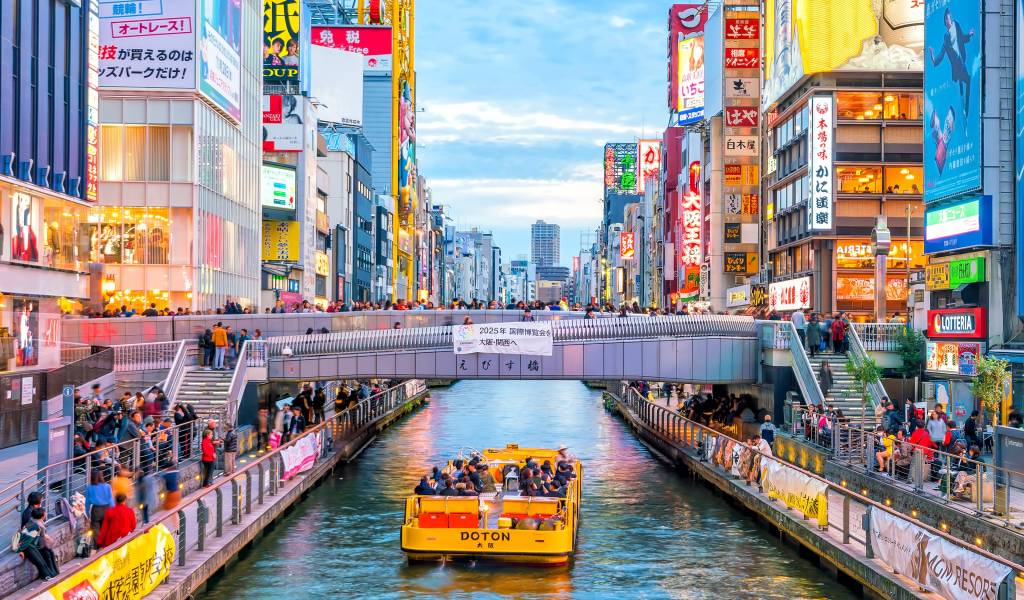
Osaka, Japan
Venue
Grand Prince Hotel Osaka Bay
Event overview
The International Experts Summit on Neurology and Neurological Disorders (Neurology Summit-2027) will be held in Osaka, Japan, from April 15-17, 2027.
This hybrid event invites participants to join in person or virtually, fostering global collaboration.
The summit will feature keynote presentations, plenary sessions, and workshops, providing a platform for leading neurologists and healthcare professionals to exchange ideas and advancements in the field.
TL;DR
Attendees will gain insights into the latest innovations in neurology, network with experts, and participate in discussions that shape the future of neurological science. The event offers a unique opportunity to learn from leading figures in the field and explore new clinical practices.
Exhibitors will have the chance to showcase their products and services to a targeted audience of healthcare professionals and researchers. This hybrid event will gather leading neurologists and healthcare professionals to discuss advancements in neurology. Attendees include neurologists, researchers, and healthcare professionals influencing patient care and clinical practices.
Attendees, exhibitors & solutions
Visitor profile
Typical attendee groups you can expect to meet.
Exhibitor profile
Main supplier and exhibitor segments present at the show.
Product categories
Key solution areas showcased across the event.
Location & Facilities
Osaka, Japan
Grand Prince Hotel Osaka Bay in Osaka typically provides on-site or adjacent visitor parking during major trade fairs; confirm daily rates, payment methods and hall access on the organiser or venue website before travel.
Food options
On-site catering
On-site diningParking: Grand Prince Hotel Osaka Bay in Osaka typically provides on-site or adjacent visitor parking during major trade fairs; confirm daily rates, payment methods and hall access on the organiser or venue website before travel.
Gate: Follow organiser signage to the main visitor entrance at Grand Prince Hotel Osaka Bay for badge collection; allow extra time for security screening during peak morning arrival.
Attend
Delegate/Listener (In-Person)
Speaker (In-Person)
Student
Virtual (Speaker/Delegate)
Who runs the show
[ in Osaka covering Neurological Devices and Technologies, Pharmaceuticals for Neurological Disorders, Clinical Research Services, Healthcar gives medical buyers a single calendar window to compare suppliers, validate specs on the stand, and book follow-ups before the next buying cycle - especially when your roadmap matches the published exhibitor profile.
Key trends shaping this market and its wider industry.
Digital buyer journeys
What digital buyer journeys means for buyers and exhibitors in this sector.
Sustainability in procurement
What sustainability in procurement means for buyers and exhibitors in this sector.
Automation and labour efficiency
What automation and labour efficiency means for buyers and exhibitors in this sector.
Regional supply-chain resilience
What regional supply-chain resilience means for buyers and exhibitors in this sector.
Hybrid engagement models
What hybrid engagement models means for buyers and exhibitors in this sector.
Plan your trip

A range of accommodation options near the venue and across key areas.
Holiday Inn Osaka Namba
4.0
USD 155–245 / night
Google Hotels capture row lists parking and free Wi-Fi. Night band is a labeled estimate for the 15-17 April 2027 dates; confirm with the hotel.
Holiday Inn & Suites Shin Osaka, an IHG Hotel
4.4
USD 140–220 / night
Capture lists parking and a fitness center. Shin-Osaka gives direct Shinkansen access for delegates adding Kyoto or Tokyo legs.
Garner Hotel Osaka Honmachi Kita Semba
4.4
USD 105–170 / night
Lowest captured 3-star band with free Wi-Fi; Honmachi is a central business district with good metro coverage toward the bay area.
Imano Osaka Shinsaibashi Hostel
4.2
USD 50–105 / night
Budget hostel captured from Google Hotels; pet-friendly with free Wi-Fi. Suitable for students and early-career researchers on the JPY 549 student registration tier.
Get around the city with these convenient transport options.
Airport limited express rail
Fastest rail option into Namba for hotels in the Namba and Shinsaibashi clusters; add a metro fare for the final leg.
JR limited express rail
Best choice if you stay near Shin-Osaka or continue by Shinkansen; JR Pass holders should check coverage for this leg.
Airport limousine bus
Useful with heavy luggage or demo equipment since the bus drops at hotel and station stops rather than requiring a metro transfer.
Monorail plus suburban rail or subway
Itami serves domestic connections; the Osaka Monorail links the airport to the northern rail and subway network for onward travel into the city.
Subway (Osaka Metro)
Osaka Metro is the workhorse for hotel-to-venue trips between Namba, Hommachi, Umeda and the bay district; ICOCA and other IC cards are the standard payment.
Taxi
Taxis are metered and reliable but expensive for long runs; an airport-to-city taxi from KIX costs far more than rail, so reserve taxis for late arrivals or equipment moves.
Prepaid IC card
An ICOCA-style IC card works across operators and removes the need to buy a ticket for every trip; top up at station machines.
Weather
Mid-April in Osaka is spring: typically mild days with cool evenings, roughly 10-20 C (about 50-68 F), and a realistic chance of a rainy spell. The captured sources do not include an official climate table, so treat the band as an estimate and check a live forecast in the week before departure. Air quality in the city is usually moderate; Open-Meteo's three-day forecast for Osaka at the time of capture showed a US AQI near 50 with PM2.5 around 11.8 micrograms per cubic metre, and sensitive travellers should still check local advisories.
Plan for the climate
Check temperatures and pack accordingly
Venue connectivity
Japan runs on 4G and 5G networks with good urban coverage in Osaka. Options for delegates are a prepaid data SIM or eSIM bought at the airport or online before travel, a pocket Wi-Fi rental, or an international roaming add-on from your home carrier. Hotel and venue Wi-Fi is normally available; confirm whether the summit provides dedicated delegate Wi-Fi for poster and demo sessions. Mains power is 100 V with Type A flat-blade sockets, so European and UK plugs need an adapter, and laptops with 100-240 V chargers work without a converter.
Ride-hailing
Taxis
Public transit
Car rentals
Useful information to help you have a smooth and respectful visit.
Punctuality and queuing
Japanese conferences start on time and rail connections are tightly timed. Plan to reach the venue before the first session rather than at the minute it begins, and queue on the marked platform lines for metro and JR services.
Cash, cards and IC cards
Hotels and larger restaurants accept international cards, but smaller counters and some transit top-up machines are easier with cash in yen. An IC card such as ICOCA speeds up metro, JR and bus travel and is worth loading on arrival.
Business cards and introductions
Exchanging meishi (business cards) with a two-handed presentation and a brief bow is still standard in Japanese clinical and industry settings. Bring a supply with your affiliation and neurology speciality clearly printed.
Tipping and service charges
Tipping is not customary in Japan and can cause confusion; service is generally included in the price. If a group dinner is arranged, confirm whether the organiser is splitting the bill in advance.
Quiet on trains and in session rooms
Phone calls are avoided on commuter trains and mobile phones are set to silent mode. Keep the same courtesy in session rooms and poster halls, and step outside for calls.
Shoes and indoor spaces
Some traditional restaurants, temples and private rooms require shoes to be removed. Wear footwear that is easy to slip off if you plan cultural visits around the summit days in Kyoto or Nara.
Practical guides
Everything needed to arrive prepared, navigate the event, and make the visit productive.
The captured flight mission returned only intra-Japan and regional reference tiles, for example Osaka to Tokyo from around JPY 10,660 and Osaka to Seoul from around JPY 28,130; these are connection references, not fares from Europe, the Gulf, North America or Australia, and no attendee origin fare was captured. Price the long-haul leg directly with airlines or an agent, targeting Kansai International (KIX) for international service and Osaka Itami (ITM) only for domestic connections. Book early for mid-April 2027, since spring is a popular travel window in Japan, and compare arrival times against the last airport rail and limousine bus departures if you land in the evening.
Get to the venue and around the city with these options.
Airport → venue: Use the nearest international airport serving Osaka; Metro, train or taxi links are typically available to the venue district.
Hotel → venue: Precinct hotels near Grand Prince Hotel Osaka Bay: Namba: Holiday Inn Osaka Namba; Shin-Osaka: Holiday Inn & Suites Shin Osaka, an IHG Hotel; Hommachi: Garner Hotel Osaka Honmachi Kita Semba.
Ride-hail: Ride-hailing apps operate in Osaka alongside the traditional taxi ranks found at stations, hotels and the airport, but coverage is thinner than in some other Asian cities and app availability for foreign accounts can vary. Taxis are metered, clean and reliable, with a flag fall of roughly JPY 700-900 for the first stretch and distance-based charges after that - confirm live meters and payment options, since not every car takes foreign cards. For the airport run, rail is far cheaper than a taxi, so reserve cars for late arrivals, equipment moves or group trips.
Public transit: Osaka Metro, JR West and the private railways (Nankai, Hankyu, Hanshin, Kintetsu) form a dense network that covers the airport approaches, the Shinkansen stations and the bay district. An IC card such as ICOCA works across operators and city buses, and day passes can pay off if you make several trips. From KIX, Nankai serves Namba and JR serves Shin-Osaka; from Itami, the monorail links to the northern rail network. Services run frequently and stop earlier than in some capitals, so check the last train if you plan a late dinner. Confirm the final leg from the nearest station to the venue on the venue access page.
Parking: Capture lists on-site parking at the Grand Prince Hotel Osaka Bay venue base, which suits delegates driving from Kansai or arriving with demo equipment. Daily rates, height limits and any reduced event tariff are set by the venue, so confirm directly with the hotel or organiser before you plan to drive. For most overseas delegates rail will be cheaper and faster than a car, and central Osaka parking is limited and priced by the hour.
Plan and pack for the event climate.
Month: April 2027 (summit dates 15-17 April)
Seasonality: April falls in Osaka's spring season, ahead of the June rainy season, so rain is possible but not continuous. The captured sources provide no specific rainfall figures for the 15-17 April window, so check a live forecast in the final week and keep one indoor backup plan for evening socials.
Packing: Pack light layers you can add or remove through the day, comfortable shoes for metro stairs and poster-hall walking, a compact umbrella for spring showers, and a Type A plug adapter for Japanese 100 V sockets. A light jacket covers cool evenings by the bay, and a small bag helps on packed commuter trains.
Plan your trip
Best day to visit: Day 2 (mid-show)
Mid-show days at International Experts Summit on Neurology and Neurological Disorders (Neurology Summit-2027) usually combine full exhibitor attendance with scheduled B2B meetings, before early pack-down on the final day.
Day -14: Book the international leg into Kansai International Airport (KIX) and reserve a hotel in Namba, Shin-Osaka or Hommachi with free cancellation until the April 2027 rates are confirmed.
Day -12: Check Japanese entry requirements for your passport and, if a visa is needed, open the application with your nearest Japanese embassy or consulate.
Day -12: Download the programme PDF and shortlist the neurology, neuroimaging and neuromodulation sessions you will not miss across 15-17 April.
Day -10: Map your route from KIX into the city (Nankai to Namba or JR limited express to Shin-Osaka) and decide whether an airport limousine bus suits your hotel stop.
Day -10: Plan any side visits to Osaka or Kyoto university labs and hospitals around the summit days, and confirm appointments by email.
Day -7: Arrange an IC card (ICOCA) or check that your phone wallet covers Osaka Metro and JR West fares.; Day -7: If you are presenting, confirm your abstract acceptance, poster dimensions and any slide upload instructions from the organiser.
Day -5: Book any dinner or meeting venue in Namba or Umeda, since Osaka restaurants fill quickly on weekends.
Day -3: Pack light layers for mild spring days, a compact umbrella, and a Type A plug adapter for Japanese 100 V sockets.
Day -2: Check in for your flight and screenshot your rail ticket and hotel address in Japanese characters for taxi drivers.
Day -1: Arrive in Osaka, top up your IC card and walk the final route to the venue so the first morning is stress-free.
Day 1 (15 April): Arrive 30-45 minutes before the opening session to collect your badge and orient yourself in the venue.
Day -14: Confirm your registration tier (delegate, speaker, student or virtual) and save the confirmation email for badge collection in Osaka.; Use the mid-day break for poster viewing and exhibitor stands on neurodiagnostics and neuromodulation hardware.
Registration and hall orientation at Grand Prince Hotel Osaka Bay
Supplier meetings and product demos
Final negotiations and follow-up
International Experts Summit on Neurology and Neurological Disorders (Neurology Summit-2027) registration concourse
Grand Prince Hotel Osaka Bay
Central meeting point before and between hall appointments during show days.
Organiser B2B lounge (if offered)
Grand Prince Hotel Osaka Bay
Hosted matchmaking and buyer programmes when published by the organiser.
Budget

Adjust the inputs below to create a directional event budget.
This is a directional estimate. Please verify live rates before booking.
Official cost items and estimated ranges for exhibitors.
visitor_ticket
visitor · Delegate/Listener (In-Person)
JPY 849 / per person
visitor_ticket
visitor · Speaker (In-Person)
JPY 749 / per person
visitor_ticket
visitor · Student
JPY 549 / per person
visitor_ticket
visitor · Virtual (Speaker/Delegate)
JPY 399 / per person
| Item | For | Tier | Estimated range | Status | As of |
|---|---|---|---|---|---|
| visitor_ticket | visitor | Delegate/Listener (In-Person) | JPY 849 / per person | organiser_published | |
| visitor_ticket | visitor | Speaker (In-Person) | JPY 749 / per person | organiser_published | |
| visitor_ticket | visitor | Student | JPY 549 / per person | organiser_published | |
| visitor_ticket | visitor | Virtual (Speaker/Delegate) | JPY 399 / per person | organiser_published |
Decision
Use this quick check to decide whether International Experts Summit on Neurology and Neurological Disorders (Neurology Summit-2027) fits your visit, exhibit or skip plan.
QUESTION 1 OF 6
For International Experts Summit on Neurology and Neurological Disorders (Neurology Summit-2027), what is your primary role on the show floor?
Compare participation options side by side to choose the best fit for your objectives.
visit
Your category focus and target suppliers align with the official exhibitor profile.
Best for
Buyers, engineers, and delegates sourcing Neurological Devices and Technologies and Pharmaceuticals for Neurological Disor solutions and benchmarking suppliers at International Experts Summit on Neurology and Neurological Disorders (Neurology Summit-2027) in Osaka.
Min. budget
$96,371.00
Timeline
4-8 weeks before opening day for registration, hotels, and travel.
Risks
Session times and ticket tiers may change - confirm the official agenda before booking.
exhibit
You have a defined lead-generation or distributor recruitment goal for this market.
Best for
Brands and manufacturers launching Neurological Devices and Technologies and Pharmaceuticals for Neurological Disor products who need qualified meetings with the event's trade audience.
Min. budget
$433,669.00
Timeline
3-6 months for stand booking, freight, staffing, and pre-show marketing.
Risks
Booth pricing and corner premiums vary by hall - confirm with the organiser sales team.
skip
Audience, geography, or commercial goals do not justify travel and stand costs this cycle.
Best for
Teams with weak category fit, budget constraints, or overlapping commitments during the Osaka show week.
Timeline
N/A
Risks
Skipping may mean missing buyer meetings if competitors exhibit or attend the same week.
FAQs & glossary
Glossary
Also known as
Alternate names and search phrases for this event.
2 more alternate names hidden
Trust footer
1
References
1
Publishers
0
Date checked
Iconic Meetings
Display a free company card at your booth, or share your professional card on the show floor.