
Dates

    16–18 Jun 2027

    City / country

    Tokyo, Japan

    Venue

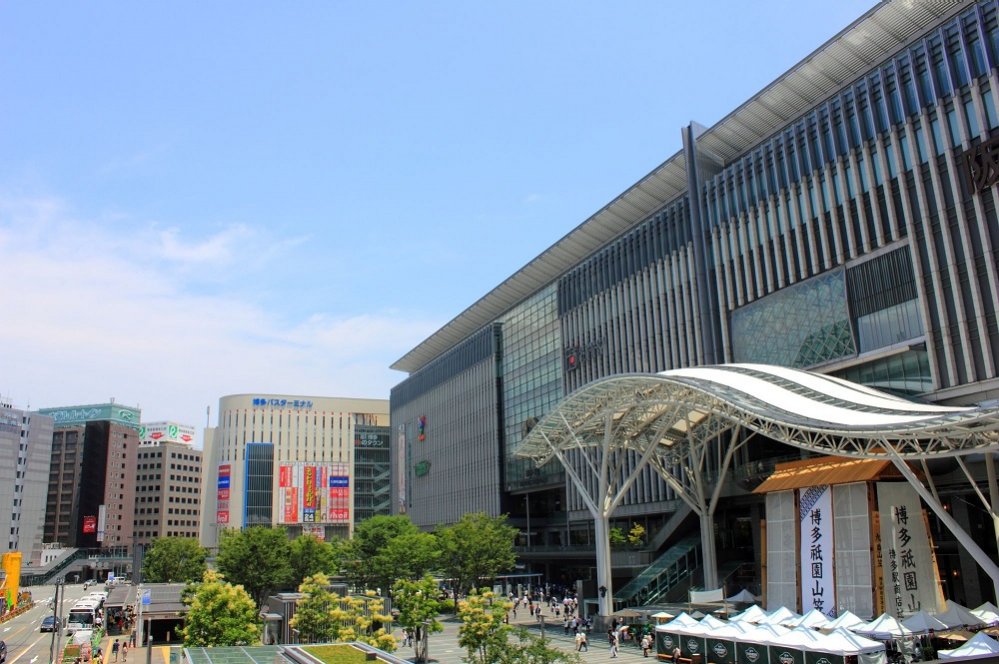
    Tokyo Big Sight

    20 Floor Picks

    Matched booths for Manufacturing World Tokyo 2026

    Get my picks

    Exhibiting at?

    Enter your business email to get a free first Exclusive Spotlight worth 250$.

    Explore Spotlights
    Register / Buy Tickets

    Are you the organiser of this event?

    Event overview

    Overview

    Manufacturing World Tokyo 2026 will take place from June 16 to 18, 2027 at Tokyo Big Sight.

    This event focuses on the latest trends in manufacturing, featuring keynote sessions from industry leaders such as Toyota, Honda, and NVIDIA.

    Attendees will gain insights into generative AI, robotics, and automation.

    TL;DR

    1. 1Dates And Venue: Manufacturing World Tokyo 2026 runs June 16-18, 2027 at Tokyo Big Sight in Tokyo, Japan.
    2. 2Organiser: RX Japan G.K. organises the show for manufacturing technology buyers and suppliers.
    3. 3Programme Focus: Listing highlights generative AI and automation technologies across the show floor.
    4. 4Speakers: Keynotes from leading companies such as Toyota and NVIDIA are featured.
    5. 5Networking: Visitors can meet industry professionals and attend exhibitor product seminars.

    Why visit

    Visitors will benefit from insights into cutting-edge technologies and trends in manufacturing. Dates And Venue: Manufacturing World Tokyo 2026 runs June 16-18, 2027 at Tokyo Big Sight in Tokyo, Japan. Networking: Visitors can meet industry professionals and attend exhibitor product seminars.

    Why exhibit

    Exhibitors can showcase their latest innovations to a targeted audience of industry professionals, enhancing visibility and generating leads. Organiser: RX Japan G.K. organises the show for manufacturing technology buyers and suppliers. Speakers: Keynotes from leading companies such as Toyota and NVIDIA are featured. Networking: Visitors can meet industry professionals and attend exhibitor product seminars. Manufacturing World Tokyo is a pivotal event for industry.

    Attendees, exhibitors & solutions

    Who this event is for

    Visitor profile

    Typical attendee groups you can expect to meet.

    Manufacturing executives and decision-makers
    Technology developers and engineers
    Supply chain and logistics professionals
    Quality assurance and control specialists
    Research and development teams
    Investors and venture capitalists in manufacturing

    Exhibitor profile

    Main supplier and exhibitor segments present at the show.

    Manufacturers of machinery and equipment
    Suppliers of raw materials and components
    Technology providers in automation and robotics
    Consultants in manufacturing processes
    Service providers for manufacturing solutions
    Startups in the manufacturing technology space

    Product categories

    Key solution areas showcased across the event.

    Industrial automation and robotics solutions
    Additive manufacturing technologies
    Smart manufacturing systems and IoT applications
    Manufacturing software and data analytics tools
    Sustainable manufacturing practices and materials
    Quality control and testing equipment

    Location & Facilities

    Venue

    Tokyo Big Sight

    Tokyo, Japan

    Attend

    Entry & tickets

    Who runs the show

    Organisers

    RX Japan G.K.

    How the last edition performed

    Previous edition

    Last edition

    2026

    Completed

    Visitors: 90,000

    Exhibitors: 2,000

    This edition

    2027

    Next edition

    Not announced yet

    Impact

    A bigger and stronger platform

    Manufacturing World Tokyo 2026 will take place from June 16 to 18, 2027 at Tokyo Big Sight. This event focuses on the latest trends in manufacturing, featuring keynote sessions from industry leaders such as Toyota, Honda, and NVIDIA. Attendees will gain insights into generative AI, robotics, and automation. Manufacturing World Tokyo is a pivotal event for industry professionals to explore the latest innovations and technologies in manufacturing. It serves as a platform.

    Audience quality

    High-value decision-makers

    Visitors typically include Manufacturing executives and decision-makers, Technology developers and engineers, Supply chain and logistics professionals, Quality assurance and control specialists. Event dates: June 16-18, 2027. Location: Tokyo Big Sight, Tokyo, Japan. Keynote speakers from leading companies like Toyota and NVIDIA. Focus on generative AI and automation technologies. Manufacturing World Tokyo 2026 attracts an audience aligned with the organiser's published visitor positioning.

    Exhibitor outcomes

    Real business growth

    Exhibitors can showcase their latest innovations to a targeted audience of industry professionals, enhancing visibility and generating leads. Manufacturing World Tokyo is a pivotal event for industry professionals to explore the latest innovations and technologies in manufacturing. It serves as a platform for networking and collaboration among key players in the sector. Exhibitor categories include Manufacturers of machinery and equipment, Suppliers of raw materials and components, Technology providers in.

    Intelligence

    Market context

    Key market insights, trends, news and related events to help you understand the bigger picture.

    Japan — Asia-Pacific (Tokyo Bay / Ariake, Koto City, Tokyo)

    Why it matters

    Manufacturing World Tokyo is one of Japan's largest manufacturing trade shows, co-locating a cluster of specialist exhibitions (design engineering, mechanical components, factory facilities, additive manufacturing, aerospace and medical-device manufacturing) at Tokyo Big Sight. For suppliers, it is the single most efficient annual touchpoint with Japanese OEMs, Tier-1 automotive/electronics manufacturers and SME precision shops. For buyers, it concentrates domestic and regional component, automation and materials vendors in one venue, backed by Tokyo's position as the APAC hub for industrial R&D and precision manufacturing.

    Industry trends

    Key trends shaping this market and its wider industry.

    01

    Labour shortage driving factory automation

    Japan's shrinking workforce is pushing manufacturers toward robotics, cobots, vision systems and lights-out production, making automation a dominant theme across the halls.

    02

    Smart factory / IIoT and data-driven production

    MES, edge computing, condition monitoring and AI-based quality inspection are moving from pilot projects into Japanese plant rollouts.

    03

    Additive manufacturing moving into production

    Metal and polymer 3D printing is shifting from prototyping toward jigs, tooling and low-volume production parts, especially in aerospace and medical devices.

    04

    Carbon neutrality and energy-efficient manufacturing

    Decarbonisation targets are driving demand for energy-efficient machine tools, heat recovery, lightweight materials and lifecycle CO2 tracking.

    05

    Supply-chain resilience and localisation

    Post-pandemic and geopolitical pressures are encouraging Japanese OEMs to dual-source and reshore critical components, opening opportunities for new suppliers.

    Plan your trip

    Travel & logistics

    Local currency · JPY

    Arrival airports

    Choose from the following airports, with convenient access to the event and venue.

    NRT

    Tokyo

    Primary international gateway serving Tokyo.

    to venue

    45–70 min

    by car

    Hotel tiers

    A range of accommodation options near the venue and across key areas.

    Budget
    Ariake / Kokusai-Tenjijo (walking or one stop from Tokyo Big Sight)

    USD 60–110 / night

    Compact business hotels with reliable Wi-Fi and easy access to the venue; book early as June is a busy period in the Ariake/Toyosu area.

    source
    Mid-range
    Ariake / Odaiba waterfront

    USD 110–190 / night

    Larger rooms than the budget tier with breakfast and conference facilities, most within 10–20 minutes of Tokyo Big Sight by train or taxi.

    source
    Premium
    Odaiba / Tokyo Bay front

    USD 250–500 / night

    Full-service international hotels with bay views, executive floors and meeting space — common choice for exhibitor teams and senior buyer delegations.

    source

    Local transport

    Get around the city with these convenient transport options.

    train

    Estimated costJPY 390 (~USD 2.60) one way
    Best forYurikamome Line: Shimbashi → Tokyo Big Sight

    Driverless elevated line with a station directly at the venue's east side; the fastest public-transport option from central Tokyo.

    train

    Estimated costJPY 350–500 (~USD 2.30–3.30) one way
    Best forJR Rinkai Line: Osaki / Shibuya / Shin-Kiba → Kokusai-Tenjijo

    Kokusai-Tenjijo Station is roughly a 7-minute walk from Tokyo Big Sight; useful if your hotel is on the west side of the city.

    airport_bus

    Estimated costApprox. JPY 3,200 (~USD 21) one way
    Best forNarita Airport (NRT) → Tokyo Bay / Ariake hotel area

    Airport Limousine bus; journey typically 75–110 minutes depending on traffic. Confirm the current stop closest to your hotel.

    taxi

    Estimated costApprox. JPY 22,000–28,000 (~USD 145–185) taxi estimate
    Best forTokyo (NRT) to Tokyo Big Sight

    Usually more expensive than the limousine bus or train; best for late arrivals or groups with luggage.

    ride_hail_app

    Estimated costApprox. JPY 1,000–2,000 (~USD 7–13) per short trip
    Best forShort hops within Ariake / Odaiba

    Taxi-hailing apps such as GO are widely used in Tokyo; conventional street taxis remain the norm. Uber operates mainly as a taxi-dispatch service.

    Plan your trip

    Visa & entry documents

    Check the latest visa requirements and entry guidelines before travelling.

    Visa not required
    ATA Carnet: accepted
    TypeWho needs itFeeProcessing
    Short-term stay — visa exemptionCitizens of 70+ countries/regions including the United States, United Kingdom, EU/Schengen states, Canada, Australia, New Zealand, Singapore and South Korea—None — granted at arrival
    Short-term Stay visa — single entry (business purpose)Nationals without a visa-exemption agreement travelling for meetings, conferences or business negotiation$20.00Approximately 5–10 business days after submission
    Short-term Stay visa — multiple entry (business purpose)Frequent business travellers from eligible countries who need repeated entries within the visa validity$40.00Approximately 5–10 business days after submission

    Japan maintains visa-exemption arrangements with more than 70 countries and regions. Visa-exempt visitors must present a valid passport, and entry is at the discretion of the immigration officer.

    Japan accepts ATA Carnets for the temporary admission of exhibition and professional equipment; exhibitors should verify the applicable goods schedule with their national issuing chamber before shipping.

    Official visa page

    Weather

    June in Tokyo is warm, humid and marks the onset of the rainy season (tsuyu): typical highs of 26–27 °C and lows around 19–20 °C, with roughly 165–180 mm of rain spread over about 12 wet days. Expect muggy conditions and occasional heavy showers — pack a compact umbrella, breathable clothing and comfortable walking shoes for the halls.

    Plan for the climate

    Check temperatures and pack accordingly

    Venue connectivity

    Confirm mobile roaming or local SIM options for business visitors to Japan.

    Ride-hailing

    Taxis

    Public transit

    Car rentals

    Cultural notes

    Useful information to help you have a smooth and respectful visit.

    Tipping and payments

    Tipping is not customary in Japan and can cause awkwardness; taxi fares and restaurant bills are paid as shown. Cash is still widely accepted, though major hotels, taxis and convenience stores take IC cards (Suica/PASMO) and credit cards.

    Business cards and greetings

    Exchanging meishi is standard at Japanese trade shows. Offer and receive cards with both hands, take a moment to read the card rather than pocketing it immediately, and use surnames with the honorific '-san' until invited to do otherwise.

    Punctuality and stand etiquette

    Meetings and seminar start times are kept precisely. Ask before photographing exhibitor stands or taking product literature in bulk, and keep noise down in the halls — Japanese trade-show floors are notably quieter than Western equivalents.

    Practical guides

    Visitor & Exhibitor Essentials

    Everything needed to arrive prepared, navigate the event, and make the visit productive.

    Flights

    Destination: NRT

    Book flights to NRT (Tokyo) when possible for the shortest transfer to the venue.

    Visa

    Japan is visa-free for short stays for citizens of 70+ countries and regions (including the US, UK, EU/Schengen states, Canada, Australia, Singapore and South Korea) — typically 90 days, with some nationalities limited to 15 or 30 days. Visitors who do not hold a visa-exemption nationality must obtain a Short-Term Stay visa (business/conference purpose) from a Japanese embassy or consulate before travel; Japan has no visa-on-arrival for business visitors. Exhibitors shipping goods temporarily should use an ATA Carnet, which Japan accepts.

    Estimated cost: Varies by visa type and nationality (check official site).

    Processing: Varies by nationality; apply several weeks before travel.

    Generally 90 days; some nationalities are limited to 15 or 30 days. Business meetings, conferences and trade-fair attendance are permitted. Apply at a Japanese embassy or consulate in your country of residence; supporting documents such as an invitation or event confirmation are commonly requested.

    Official

    Transport

    Get to the venue and around the city with these options.

    Airport → venue: Primary gateways: Tokyo (NRT): Primary international gateway serving Tokyo.. Allow road or rail time to Tokyo Big Sight; on-site parking is usually available at major exhibition venues.

    Hotel → venue: Precinct hotels near Tokyo Big Sight: Ariake / Kokusai-Tenjijo (walking or one stop from Tokyo Big Sight): Toyoko Inn Tokyo Big Sight Ariake, APA Hotel & Resort Tokyo Bay Shiomi, Hotel LiVEMAX Tokyo Ariake; Ariake / Odaiba waterfront: Tokyo Bay Ariake Washington Hotel, Hotel Trusty Tokyo Bayside, Daiwa Roynet Hotel Tokyo Ariake; Odaiba / Tokyo Bay front: Hilton Tokyo Odaiba, Grand Nikko Tokyo Daiba, Tokyo Baycourt Club Hotel & Spa Resort.

    Ride-hail: Ride-hailing apps are commonly used in Tokyo; confirm local availability before travel.

    Public transit: Check local bus/metro options for routes to Tokyo Big Sight.

    Parking: On-site parking is available at Tokyo Big Sight; confirm daily rates and hall access on the organiser or venue site.

    Weather

    Plan and pack for the event climate.

    Month: June 2027

    Temperature: 19–27 °C (typical June lows around 19–20 °C and highs around 26–27 °C)

    Seasonality: June is the start of Tokyo's rainy season (tsuyu) — high humidity with roughly 165–180 mm of rainfall across about 12 wet days, including occasional heavy showers.

    Packing: June in Tokyo is warm, humid and marks the onset of the rainy season (tsuyu): typical highs of 26–27 °C and lows around 19–20 °C, with roughly 165–180 mm of rain spread over about 12 wet days. Expect muggy conditions and occasional heavy showers — pack a compact umbrella, breathable clothing and com

    Plan your trip

    Planning

    Best day to visit: Day 2 — Thursday 17 June 2027

    Day 2 gives the fullest combination of exhibitor presence and seminar density: Day 1 absorbs opening, registration and press activity, while Day 3 thins out as exhibitors pack down. Booking Day 2 lets you complete a full sourcing walk across the co-located halls plus take in technical sessions without the first-day queue.

    1

    Check passport validity and confirm Japan entry or visa requirements for your nationality. — Passport should be valid for the full trip; verify current rules on the official Japanese government visa site.

    2

    Book flights into Tokyo for arrival on or before June 15, 2027. — Narita (NRT) is the listed international gateway; allow transfer time to Tokyo Big Sight.

    3

    Reserve a hotel near Tokyo Big Sight or in central Tokyo with good rail access. — Compare venue-side and central Tokyo options for the June 16-18, 2027 show.

    4

    Register online for Manufacturing World Tokyo 2026 and save your badge confirmation. — Register via manufacturing-world.jp and keep the confirmation QR code ready.

    5

    Download the hall plan, exhibitor list and conference programme. — Use the official site to shortlist target booths and sessions before travel.

    6

    Pre-schedule B2B meetings with target exhibitors. — Email exhibitors ahead of the show to lock in meeting slots.

    7

    Shortlist conference sessions and exhibitor seminars to attend. — Build a day-by-day agenda across June 16-18, 2027.

    8

    Plan local transport between your hotel and Tokyo Big Sight. — Check rail and bus options and load an IC card on arrival.

    9

    Prepare business materials and your packing list. — Include business cards, chargers and Japan-compatible plug adapters.

    10

    Check the June weather outlook for Tokyo and pack accordingly. — Build in layers and comfortable walking shoes for long show days.

    11

    Organise meeting documents and follow-up templates. — Store contracts, price sheets and lead notes in one folder.

    12

    Arrive on Day 1, collect your badge and orient at Tokyo Big Sight. — Arrive early for security screening and hall orientation.

    Side trips

    2

    Odaiba & Tokyo Bay waterfront

    Tokyo Bay views, teamLab Planets (Toyosu), Odaiba Seaside Park and DiverCity Tokyo Plaza — the easiest evening short trip after show hours.

    Asakusa & Senso-ji Temple

    Tokyo's oldest temple, Nakamise shopping street and traditional craft shops — a half-day option on the day before or after the show.

    Networking spots

    3

    Tokyo Big Sight business-matching / B2B area

    On-site

    Dedicated meeting and business-matching zones on the show floor are the highest-density place to meet Japanese OEMs, Tier-1s and distributors.

    On-site conference and seminar theatres

    On-site

    Technical sessions and keynote halls draw senior engineers and buyers — good for structured introductions between sessions.

    Odaiba / Ariake hotel lobbies and bars

    Off-site (evening)

    Hotel bars at Hilton Tokyo Odaiba, Grand Nikko Tokyo Daiba and Tokyo Bay Ariake Washington Hotel are the usual venue-adjacent spots for after-show meetings.

    Budget

    Costs & budget

    Cost reference

    Official cost items and estimated ranges for exhibitors.

    visitor_ticket

    visitor · advance online registration

    —

    estimate

    visitor_ticket

    visitor · on-site / no pre-registration

    JPY 3000–5000 / per person

    estimate

    visa_fee

    visitor · short-term stay, single entry

    JPY 3000 / per person

    official

    visa_fee

    visitor · Short-term Stay visa — single entry (business purpose)

    USD 20 / per application

    official

    visa_fee

    visitor · Short-term Stay visa — multiple entry (business purpose)

    USD 40 / per application

    official

    Decision

    Visit, exhibit, or skip?

    Should you go?

    Pick the closest answer for each. Your recommendation updates live.

    QUESTION 1 OF 6

    What is your primary role?

    Decision matrix

    Compare participation options side by side to choose the best fit for your objectives.

    visit

    You need face-to-face supplier comparison, live equipment demos and a read on the Japanese manufacturing market.

    Best for

    Manufacturers, design and production engineers evaluating Japanese suppliers of components, materials, automation and factory equipment; first-time market scouting.

    Min. budget

    $450.00

    Timeline

    2–6 weeks (registration, flights and hotel booking)

    Risks

    Budget estimate from listing cost signals — confirm live rates.

    June is Tokyo's rainy season; allow extra transfer time between hotel and Tokyo Big Sight.

    Many exhibitors and seminars operate primarily in Japanese — plan an interpreter or bilingual colleague.

    exhibit

    You have an active Japan or APAC pipeline and can staff the stand with Japanese-capable commercial staff.

    Best for

    Component makers, automation/robotics vendors, software and engineering service providers targeting Japanese OEMs and Tier-1 manufacturers.

    Min. budget

    $2,250.00

    Timeline

    6–12 months (space booking, stand build, freight, visas, staffing)

    Risks

    Budget estimate from listing cost signals — confirm live rates.

    Stand/booth pricing is not published in listing sources — obtain a quote from RX Japan before committing.

    Freight, Japanese-language collateral and local sales follow-up typically add substantial cost beyond the floor budget.

    skip

    Japan is not a target market this cycle, or travel budget is better spent on a regional alternative.

    Best for

    Teams with no Japan/APAC manufacturing pipeline, or whose sourcing and sales needs are already served by a nearer circuit show.

    Timeline

    None

    Risks

    No major risks listed.

    Trust footer

    Sources

    5

    References

    1

    Publishers

    0

    Date checked

    1

    Manufacturing World

    Digital business cards for the show floor

    Display a free company card at your booth, or share your professional card on the show floor.

    Create a free card