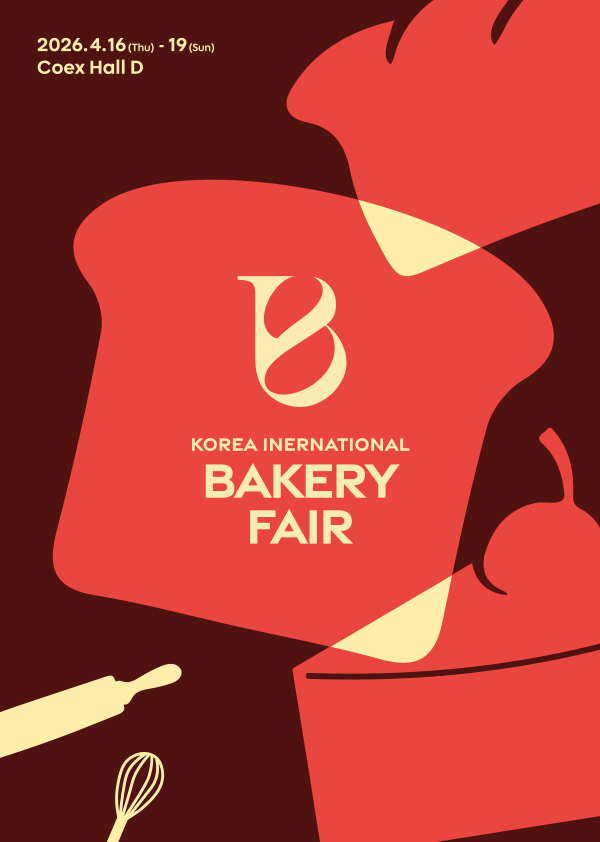
Dates

    4–7 Nov 2026

    City / country

    Seoul, South Korea

    Venue

    Coex Hall A, B, C & The Platz

    Time

    10:00 AM – 6:00 PM

    20 Floor Picks

    Matched booths for FOOD WEEK KOREA 2026

    Get my picks

    Exhibiting at?

    Enter your business email to get a free first Exclusive Spotlight worth 250$.

    Explore Spotlights
    Official Website Register / Buy Tickets

    Are you the organiser of this event?

    Event overview

    Overview

    FOOD WEEK KOREA is the largest international comprehensive B2B2C food exhibition in South Korea, showcasing premium foods, alternative/new foods, manufacturing automation, smart distribution, and farm technology.

    It provides the best business platform for both B2B buyers and B2C consumers.

    TL;DR

    1. 1Event Name: FOOD WEEK KOREA 2026
    2. 2Dates: November 4-7, 2026
    3. 3Location: Coex Hall A, B, C & The Platz, Seoul
    4. 4Expected Scale: 1,000 companies from 30 countries, 1,800 booths
    5. 5Expected Visitors: 60,000

    Why visit

    Attendees will gain access to a wide range of premium food products, network with industry leaders, and discover the latest trends and technologies in the food sector.

    Why exhibit

    Exhibitors will benefit from direct access to thousands of qualified buyers, enhance brand visibility, and engage in meaningful business discussions. This event is crucial for connecting food industry professionals with innovative products and solutions, fostering business growth and collaboration in the rapidly evolving food sector.

    Attendees, exhibitors & solutions

    Who this event is for

    Visitor profile

    Typical attendee groups you can expect to meet.

    Food industry professionals
    Retail buyers
    Food service operators
    Health and wellness advocates
    Food technology innovators
    Culinary experts

    Exhibitor profile

    Main supplier and exhibitor segments present at the show.

    Food manufacturers
    Beverage producers
    Food technology companies
    Agricultural suppliers
    Health food brands
    Gourmet food producers

    Product categories

    Key solution areas showcased across the event.

    Processed foods and beverages
    Fresh produce and ingredients
    Health foods and supplements
    Gourmet and specialty foods
    Smart kitchen appliances
    Food tech solutions

    Location & Facilities

    Venue

    Halls & areas

    4
    Hall AHall BHall CThe Platz

    Coex Hall A, B, C & The Platz

    513 Yeongdong-daero, Seoul, South Korea

    Entrances & gates

    Main Entrance

    Hall AHall BHall CThe Platz

    Facilities

    Parking

    Parking may be limited; public transport is recommended.

    Food options

    Various food stalls

    On-site dining

    Parking: Parking may be limited; public transport is recommended.

    Attend

    Entry & tickets

    Trade-only

    Event days & opening times

    DayOpening hours
    10:00 AM –6:00 PM (last entry at 17:00) on November 4 – 6
    10:00 AM –5:00 PM (last entry at 16:00) on November 7
    • General Admission

      Early bird pricing available until August 31.

      ₩5,900
    • Regular Admission

      Standard ticket price during the event.

      ₩15,000
    Register

    Ticket info

    Registration deadline

    2026-11-03T18:00:00

    Who runs the show

    Organisers

    Ministry of Agriculture, Food and Rural Affairs

    Korea Agro Fisheries&Food Trade Corporation

    How the last edition performed

    Previous edition

    Last edition

    2025

    Completed

    Visitors: 55,711

    Exhibitors: 950

    Floor area: 18,000 sqm

    Edition #: 20

    Exhibitor countries: 42

    Visitor countries: 30

    This edition

    2025

    Visitors: 60,000

    Exhibitors: 1,000

    Floor area: 18,000 sqm

    Next edition

    2026

    The 2026 edition promises to be even larger with more exhibitors and visitors.

    Increased international participation More diverse product offerings

    Growth over time

    Impact

    A bigger and stronger platform

    The 2025 edition brought together 55,711+ visitors at Coex Hall A, B, C & The Platz. FOOD WEEK KOREA is the largest international comprehensive B2B2C food exhibition in South Korea, showcasing premium foods, alternative/new foods, manufacturing automation, smart distribution, and farm technology. It provides the best business platform for both B2B buyers and B2C consumers. This event is crucial for connecting food industry professionals with innovative products and solutions, fostering business growth.
    Audience quality

    High-value decision-makers

    Visitors typically include Food industry professionals, Retail buyers, Food service operators, Health and wellness advocates. Event Name: FOOD WEEK KOREA 2026. Dates: November 4-7, 2026. Location: Coex Hall A, B, C & The Platz, Seoul. Expected Scale: 1,000 companies from 30 countries, 1,800 booths. Documented attendance reached 55,711+ visitors in the reference edition. FOOD WEEK KOREA 2026 attracts an audience aligned with the organiser's published visitor positioning.

    Exhibitor outcomes

    Real business growth

    Exhibitors will benefit from direct access to thousands of qualified buyers, enhance brand visibility, and engage in meaningful business discussions. This event is crucial for connecting food industry professionals with innovative products and solutions, fostering business growth and collaboration in the rapidly evolving food sector. Exhibitor categories include Food manufacturers, Beverage producers, Food technology companies, Agricultural suppliers. The prior edition hosted 950+ exhibiting companies.

    Intelligence

    Market context

    Key market insights, trends, news and related events to help you understand the bigger picture.

    Seoul, South Korea (Northeast Asia / APAC)

    Why it matters

    The event serves as a key platform for showcasing innovations in the food industry, connecting suppliers with buyers, and promoting advancements in food technology.

    Industry trends

    Key trends shaping this market and its wider industry.

    01

    K-Food export momentum

    02

    Retail and HORECA channel expansion

    03

    Food tech and alternative protein

    04

    Food safety, certification and export readiness

    05

    Smart manufacturing and packaging automation

    Global food & beverage trade circuit

    6–12 months ahead for stand booking and buyer-programme registration

    FOOD WEEK KOREA sits within the international food and beverage trade-fair calendar; many buyers combine a Seoul visit with one or two of these fairs to cover multiple sourcing regions in a season.

    January–February

    Gulfood, Dubai

    March

    FHA-Food & BeverageSingapore / FOODEX JAPANTokyo

    March or October (biennial)

    ANUGA, Cologne (odd Years) / SIAL Paris (even Years)

    November

    FOOD WEEK KOREA, Seoul

    Peer events drawn from the established international food & beverage trade-fair circuit; confirm dates and cycles on each organiser's website.

    Plan your trip

    Travel & logistics

    Local currency · KRW

    Arrival airports

    Choose from the following airports, with convenient access to the event and venue.

    ICN

    Seoul

    Primary international gateway serving Seoul.

    to venue

    45–70 min

    by car

    Hotel tiers

    A range of accommodation options near the venue and across key areas.

    Budget
    Samseong-dong / Yeoksam, Gangnam (5–15 min to Coex)

    USD 70–130 / night

    source
    Mid-range
    Samseong-dong / Gangnam business district (walking or 1–2 subway stops to Coex)

    USD 130–220 / night

    source
    Premium
    Directly at or beside Coex / Samseong-dong

    USD 250–450 / night

    source

    Local transport

    Get around the city with these convenient transport options.

    airport_rail

    Estimated costKRW 9,500–11,000 express (~USD 7–8); KRW 4,150 all-stop (~USD 3)
    Best forICN Airport Railroad (AREX) → Seoul Station

    Express ~43 min non-stop; all-stop ~60 min. Then transfer to subway Line 2 or 9 for Samseong/Bongeunsa.

    subway

    Estimated costKRW 1,400–1,600 per ride with T-money card (~USD 1–1.2)
    Best forSeoul Station → Samseong / Bongeunsa (Lines 2 & 9) to Coex

    Samseong (Line 2) and Bongeunsa (Line 9) are the closest stations to Coex; buy a rechargeable T-money card for the week.

    airport_bus

    Estimated costKRW 16,000–18,000 (~USD 12–14)
    Best forICN → Samseong/Coex area (KAL limousine route 6103)

    Direct drop-off near major Gangnam/Coex hotels; runs less frequently than the train, so check the timetable on arrival.

    taxi

    Estimated costKRW 70,000–90,000 incl. tolls (~USD 52–68)
    Best forICN → Coex (Halls A–C & The Platz)

    60–90 min depending on traffic; deluxe taxis cost more. Use the official taxi queue at the terminal.

    subway

    Estimated costKRW 1,500–1,700 (~USD 1.2)
    Best forGimpo Airport (Line 9 express) → Bongeunsa (Coex)

    ~50–60 min without transfers; convenient if arriving via Gimpo.

    ride_hail

    Estimated costShort city trips KRW 5,000–12,000 (~USD 4–9)
    Best forKakao T / Uber within Gangnam and to Coex

    Kakao T is the dominant local app; foreign cards may need verification, so a T-money card is a reliable backup.

    taxi

    Estimated costKRW 60,000–80,000 (taxi to COEX or KINTEX)
    Best forSeoul (ICN) to Coex Hall A, B, C & The Platz

    AREX train to Seoul, then metro to the venue line.

    Plan your trip

    Visa & entry documents

    Check the latest visa requirements and entry guidelines before travelling.

    Visa required
    ATA Carnet: accepted

    Citizens of more than 100 countries (including the US, UK, EU member states, Australia, Canada, Japan and Singapore) may enter Korea visa-free for short business visits of up to 90 days; many of these travellers must hold an approved K-ETA. Verify your specific nationality on the official K-ETA and Korea Visa Portal sites.

    ATA Carnets are generally accepted in Korea for the temporary import of exhibition goods, samples and professional equipment; confirm procedures in advance with Korea Customs and the organiser's freight partner.

    Official visa page

    Weather

    November in Seoul is late autumn and generally crisp and dry: daytime highs of about 11–14°C, overnight lows of 2–5°C, roughly 45 mm of rain spread over about 6 days, and low humidity. Expect cool evenings — bring a warm coat and layers for commuting between Coex halls and evening networking events.

    Plan for the climate

    Check temperatures and pack accordingly

    Venue connectivity

    Confirm mobile roaming or local SIM options for business visitors to South Korea.

    Ride-hailing

    Taxis

    Public transit

    Car rentals

    Cultural notes

    Useful information to help you have a smooth and respectful visit.

    Tipping and payments

    Tipping is not customary in Korea and is often politely declined; service charges are usually already included. Cards are accepted almost everywhere, but keep some cash (KRW) for small vendors and taxis.

    Business etiquette

    A short bow and a two-handed exchange of business cards are standard. Meetings are usually formal at the start and can move quickly once rapport is built; punctuality is expected. Korean business cards commonly include English on one side.

    Dress and daily etiquette

    Business dress for trade fairs is smart/business casual. On the subway keep voices low and give up priority seats; remove shoes when entering a Korean home or traditional restaurant. Coex and Gangnam are walkable, but expect long distances between halls.

    Practical guides

    Visitor & Exhibitor Essentials

    Everything needed to arrive prepared, navigate the event, and make the visit productive.

    Flights

    Destination: ICN

    Book flights to ICN (Seoul) when possible for the shortest transfer to the venue.

    Visa

    Most international visitors enter South Korea either visa-free with a K-ETA (Korea Electronic Travel Authorization) or on a short-term business visa (C-3-4, up to 90 days). K-ETA is applied for online at k-eta.go.kr, costs KRW 10,000 (approx. USD 7–8) and is normally approved within 24–72 hours; apply at least 72 hours before departure. Visa-free entry for eligible nationalities is typically 90 days. Nationals without visa-free or K-ETA eligibility should apply at a Korean embassy/consulate 2–4 weeks ahead. Confirm your nationality's current status on the official Korea Immigration / K-ETA portals before booking.

    Estimated cost: Varies by visa type and nationality (check official site).

    Processing: Varies by nationality; apply several weeks before travel.

    Applied for online; valid 2 years with multiple entries and stays of up to 90 days per visit. Fee is KRW 10,000 (approx. USD 7–8). Single-entry, up to 90 days; multiple-entry short-term business visas are available at a higher fee (approx. USD 90). Apply well before the show date.

    Official

    Transport

    Get to the venue and around the city with these options.

    Airport → venue: Primary gateways: Seoul (ICN): Primary international gateway serving Seoul.. Allow road or rail time to Coex Hall A, B, C & The Platz; on-site parking is usually available at major exhibition venues.

    Hotel → venue: Precinct hotels near Coex Hall A, B, C & The Platz: Samseong-dong / Yeoksam, Gangnam (5–15 min to Coex): ibis Ambassador Seoul Gangnam, Nine Tree Premier Hotel Seoul Gangnam; Samseong-dong / Gangnam business district (walking or 1–2 subway stops to Coex): Novotel Ambassador Seoul Gangnam, Oakwood Premier Coex Center; Directly at or beside Coex / Samseong-dong: InterContinental Seoul COEX, Grand InterContinental Seoul Parnas, Park Hyatt Seoul.

    Ride-hail: Ride-hailing apps are commonly used in Seoul; confirm local availability before travel.

    Public transit: Check local bus/metro options for routes to Coex Hall A, B, C & The Platz.

    Parking: On-site parking is available at Coex Hall A, B, C & The Platz; confirm daily rates and hall access on the organiser or venue site.

    Weather

    Plan and pack for the event climate.

    Month: November 2026

    Temperature: November in Seoul: daytime highs 11–14°C, overnight lows 2–5°C

    Seasonality: Late autumn — mostly dry with roughly 6 rainy days and around 45 mm of rainfall in November; low humidity and cool evenings, so pack layers and a warm coat for the 4–7 November 2026 show.

    Packing: Late autumn — mostly dry with roughly 6 rainy days and around 45 mm of rainfall in November; low humidity and cool evenings, so pack layers and a warm coat for the 4–7 November 2026 show.

    Plan your trip

    Planning

    Best day to visit: Day 2 – Thursday 5 November 2026

    Opening day is dominated by the ceremony and first-pass orientation, while the final day sees exhibitors packing down early. Days 2–3 are typically the densest for hall programming, buyer–seller matchmaking and stand staffing at a four-day Coex trade fair, making Thursday 5 November the most efficient day for meetings across Halls A, B, C and The Platz. Confirm against the published schedule at foodweek.co.kr/schedule once released.

    1

    Confirm passport validity and check South Korea entry requirements for your nationality — FOOD WEEK KOREA 2026 runs 4-7 November 2026 at Coex Hall A, B, C and The Platz in Seoul; verify entry rules with the relevant Korean embassy or official portal before booking.

    2

    Book return flights to Incheon International Airport (ICN), the primary gateway for Seoul — Allow transfer time from ICN into the city and aim to land at least the day before the 4 November opening.

    3

    Reserve a hotel near Coex for 3-7 November 2026 — Staying within the Coex trade district keeps travel to the halls short across the four show days.

    4

    Complete online visitor registration for FOOD WEEK KOREA 2026 — Registration and badge details are published on foodweek.co.kr; keep your confirmation for on-site collection.

    5

    Download the visitor guide, hall plan and programme schedule — Halls A, B, C and The Platz hold different zone groupings, so plan a route per hall before arrival.

    6

    Shortlist the sessions and exhibitors you most want to see — Main exhibit groups include processed foods, fresh produce, health foods, gourmet foods and smart kitchen solutions.

    7

    Request B2B meetings with target suppliers or buyers before the show opens — Use the registration and buyer programme contacts to pre-schedule meetings rather than arranging them on the floor.

    8

    Plan local transport between your hotel and Coex — Confirm taxi and metro options locally and allow buffer time for morning peak around the Gangnam trade district.

    9

    Arrange travel insurance, payment cards and a small amount of local cash — Card acceptance is common but a cash reserve helps for small purchases and transport.

    10

    Prepare business cards, meeting documents and a lead-capture method — Load a note-taking or scanning app so supplier contacts captured on the floor are usable after the show.

    11

    Check the Seoul forecast for the show week and pack accordingly — Early November in Seoul is generally cool; bring layers plus comfortable shoes for walking between halls.

    12

    Travel to Seoul, collect your badge at Coex and confirm Day-1 hall access — Arrive early on the first show day for orientation, security screening and badge collection.

    Sample visitor itinerary

    Route-optimised day
    TBA

    Registration and badge collection at the Coex Hall A entrance, then the opening ceremony and Ministry of Agriculture keynote.

    Coex Hall A
    TBA

    First sweep of the trade halls: Korean agri-food and export pavilions, regional food clusters and ingredient suppliers.

    Coex Hall A & Hall B
    TBA

    Targeted buyer–seller matchmaking and food-tech/processing demonstrations, followed by an evening networking reception.

    Coex Hall C & The Platz
    TBA

    Return visits to priority booths, price/volume negotiation and follow-up meetings before the show closes.

    Coex Hall A–C

    Side trips

    2

    Gyeongbokgung Palace & Bukchon Hanok Village

    Korea's best-known royal palace with the changing-of-the-guard ceremony and a historic hanok district for traditional food and tea.

    Namsan Seoul Tower & Myeongdong

    City-view observation deck plus a dense street-food and shopping district — quick evening option after show hours.

    Networking spots

    3

    The Platz (Coex)

    Venue special zone

    Coex Hall B/C buyer lounge & matchmaking area

    Buyer programme

    Starfield Coex Mall dining floor & Samseong-dong cafés

    Off-floor networking

    Budget

    Costs & budget

    Cost reference

    Official cost items and estimated ranges for exhibitors.

    visitor_ticket

    visitor · General Admission

    KRW 5900 / per person

    official

    visitor_ticket

    visitor · Regular Admission

    KRW 15000 / per person

    official

    visa_fee

    visitor · Entry visa

    USD 8 / per application

    official

    Decision

    Visit, exhibit, or skip?

    Should you go?

    Use this quick check to decide whether FOOD WEEK KOREA 2026 fits your visit, exhibit or skip plan.

    QUESTION 1 OF 6

    What is your primary role?

    Decision matrix

    Compare participation options side by side to choose the best fit for your objectives.

    visit

    Your category focus matches the K-food, agri-food and food-tech themes of Halls A, B, C and The Platz.

    Best for

    Importers, distributors, retail/HORECA buyers and food-tech scouts sourcing Korean and international food products.

    Min. budget

    $450.00

    Timeline

    4–8 weeks before 4 Nov 2026 for buyer registration, K-ETA/visa and flights.

    Risks

    Session and buyer-programme times are not yet published — confirm the agenda before booking.

    Early-bird ticket pricing ends 31 August; late registration costs more.

    Budget estimate from listing cost signals — confirm live rates.

    exhibit

    You have a defined lead-generation, distributor-recruitment or product-launch goal for the Korean market.

    Best for

    Food, beverage, ingredient, equipment and food-tech suppliers targeting Korean buyers and Asian distributors.

    Min. budget

    $2,500.00

    Timeline

    3–6 months for stand booking, freight/customs and marketing preparation.

    Risks

    Booth/stand pricing is not published in captured sources — request the rate card from the organiser.

    Budget estimate from listing cost signals — confirm live rates.

    skip

    Neither sourcing nor selling into the Korean/Asian food market is on your 2026–27 roadmap.

    Best for

    Teams whose category, region or commercial goals do not match this edition.

    Timeline

    N/A

    Risks

    No major risks listed.

    FAQs & glossary

    Answers

    Frequently asked

    What are the ticket prices for FOOD WEEK KOREA 2026?
    General admission tickets start at 5,900 KRW for early bird pricing. Regular admission is 15,000 KRW during the event.
    How can I register as a buyer?
    Buyers must register online before November 3, 2026, to gain free access to the event.
    What are the event hours?
    The event runs from 10:00 AM to 6:00 PM from November 4-6, and from 10:00 AM to 5:00 PM on November 7.
    Where is the event located?
    FOOD WEEK KOREA 2026 will be held at Coex Hall A, B, C & The Platz in Seoul, South Korea.
    What types of products will be showcased?
    The exhibition will feature processed foods, fresh produce, health foods, gourmet foods, and smart kitchen solutions.
    Is there parking available at the venue?
    Parking may be limited; public transport is recommended.

    Glossary

    1
    B2B
    Business-to-business, referring to transactions between businesses.
    2
    B2C
    Business-to-consumer, referring to transactions between businesses and consumers.
    3
    HMR
    Home Meal Replacement, referring to prepared meals that can be eaten at home.
    4
    UFI
    The Global Association of the Exhibition Industry, which certifies international exhibitions.
    5
    Smart Kitchen
    Kitchen technology that incorporates automation and AI to improve cooking and food preparation.
    6
    Food Tech
    Technological innovations in the food industry, including production, processing, and distribution.
    7
    Gourmet
    High-quality food products that are often unique or specialty items.
    8
    Specialty Food
    Food products that are unique or made with high-quality ingredients, often catering to specific dietary needs.

    Trust footer

    Sources

    2

    References

    1

    Publishers

    0

    Date checked

    1

    FOOD WEEK KOREA

    Digital business cards for the show floor

    Display a free company card at your booth, or share your professional card on the show floor.

    Create a free card