Digital buyer journeys
What digital buyer journeys means for buyers and exhibitors in this sector.

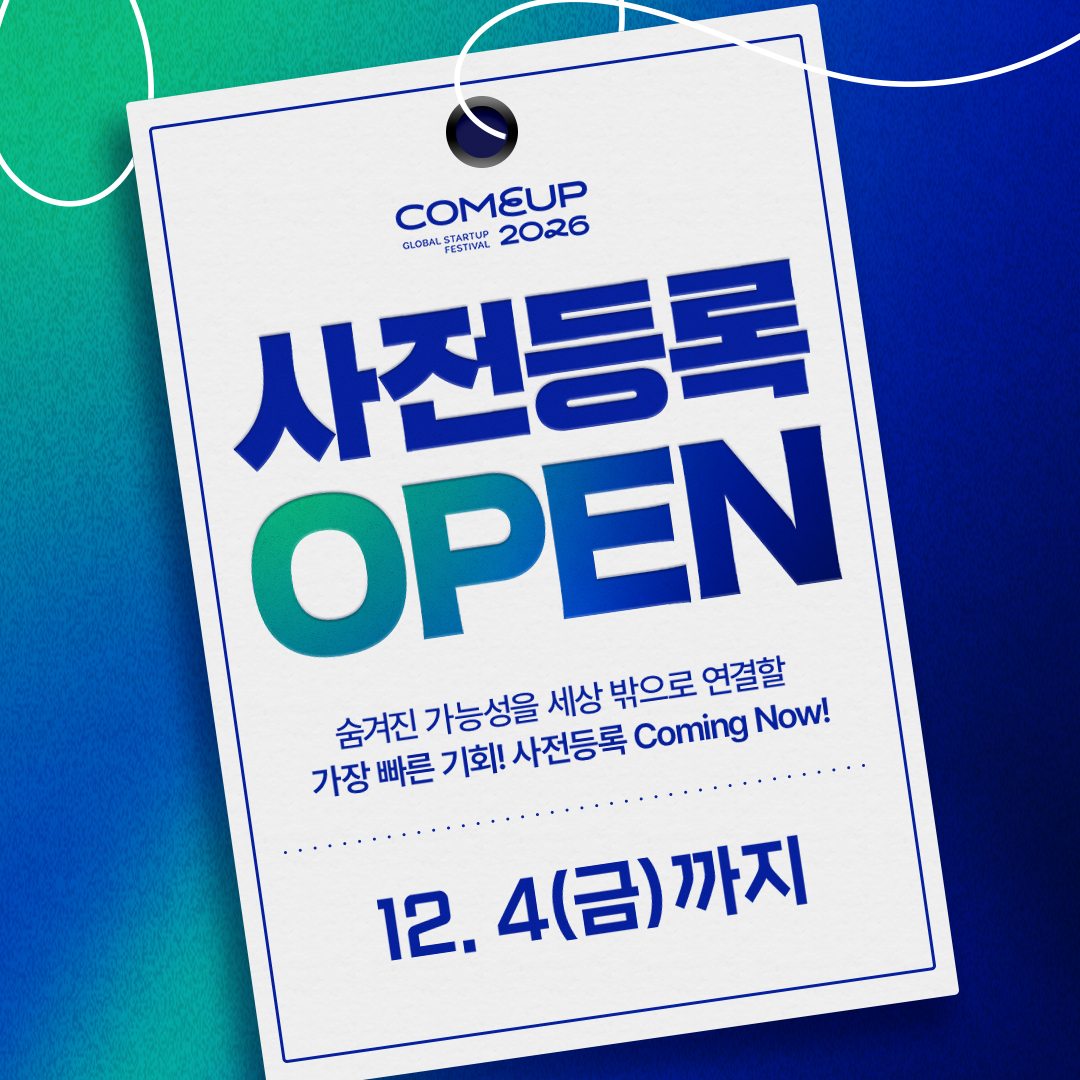
COMEUP 2026 is a global startup festival held from December 9 to 11, 2026 at COEX, Seoul, Korea, connecting startups and investors.
Dates
9–11 Dec 2026
City / country
Seoul, KR
Venue
COEX
Event overview
COMEUP 2026 is the world's most startup-led event, taking place from December 9 to 11, 2026 at COEX in Seoul, Korea. This festival brings together startups, investors, corporates, and innovators to foster meaningful connections and explore new opportunities.
Attendees can expect insightful talks, networking sessions, and business matching opportunities that facilitate growth and collaboration in the startup ecosystem. COMEUP takes place in Seoul, KR.
TL;DR
Attending COMEUP 2026 offers unique opportunities to connect with global startups and investors, gain insights from industry leaders, and explore innovative solutions. This global startup festival connects startups, investors, and innovators for meaningful networking and business opportunities. Attendees include startups, investors, corporates,.
Exhibiting at COMEUP 2026 provides startups with visibility among key industry players, access to potential investors, and opportunities for strategic partnerships. This festival serves as a platform to showcase innovations and connect with a diverse audience interested in the latest trends and technologies.
Attendees, exhibitors & solutions
Visitor profile
Typical attendee groups you can expect to meet.
Exhibitor profile
Main supplier and exhibitor segments present at the show.
Product categories
Key solution areas showcased across the event.
Location & Facilities
Seoul, KR
COEX in Seoul typically provides on-site or adjacent visitor parking during major trade fairs; confirm daily rates, payment methods and hall access on the organiser or venue website before travel.
Food options
On-site catering
On-site diningParking: COEX in Seoul typically provides on-site or adjacent visitor parking during major trade fairs; confirm daily rates, payment methods and hall access on the organiser or venue website before travel.
Gate: Follow organiser signage to the main visitor entrance at COEX for badge collection; allow extra time for security screening during peak morning arrival.
Attend
Intelligence
Key market insights, trends, news and related events to help you understand the bigger picture.
Why it matters
On 2026-12-09 to 2026-12-11, COMEUP in Seoul covering Technology solutions for startups, Investment opportunities in emerging markets, Networking platforms for entrepreneurs, gives technology buyers a single calendar window to compare suppliers, validate specs on the stand, and book follow-ups before the next buying cycle - especially when your roadmap matches the published exhibitor profile.
Key trends shaping this market and its wider industry.
Digital buyer journeys
What digital buyer journeys means for buyers and exhibitors in this sector.
Sustainability in procurement
What sustainability in procurement means for buyers and exhibitors in this sector.
Automation and labour efficiency
What automation and labour efficiency means for buyers and exhibitors in this sector.
Regional supply-chain resilience
What regional supply-chain resilience means for buyers and exhibitors in this sector.
Hybrid engagement models
What hybrid engagement models means for buyers and exhibitors in this sector.
Plan your trip
Choose from the following airports, with convenient access to the event and venue.
Seoul
Primary international gateway serving Seoul.
to venue
by car
A range of accommodation options near the venue and across key areas.
Grand Hyatt Seoul
USD 230–265 / night
Full-service 5-star with pool, spa, fitness center, free parking and bar per the hotel capture. Best fit for teams hosting partner dinners or needing meeting space; budget a taxi or a Line 1/4 transfer to reach the Gangnam venue district each morning.
ibis Styles Ambassador Seoul Myeongdong
USD 150–190 / night
Eco-certified property with breakfast, free Wi-Fi, paid parking, fitness center, bar and restaurant; rated 4.1 by 2.1K reviewers and shown with a 20% discount at capture time. Central shopping-district location with straightforward subway transfers toward Samseong and Bongeunsa.
Seoul N Hotel Dongdaemun
USD 95–122 / night
3-star with breakfast, free Wi-Fi, restaurant, kid-friendly and smoke-free; rated 3.8 in the Google Hotels capture. Budget base east of the centre, with a Line 2 subway run toward the Gangnam venue district.
The One Hostel Hongdae in Seoul - Foreigner Only
USD 150–202 / night
Foreign guests only and located in the Hongdae nightlife and university district; rated 3.5 and listed with an 18% discount at capture time. Good for younger delegations who value evening atmosphere over proximity to the venue.
Get around the city with these convenient transport options.
AREX express train
Fastest rail option from Incheon into the city; from Seoul Station transfer to the subway for the Gangnam venue district. Seat reservation is included with the express ticket.
AREX all-stop train
Cheaper commuter service on the same line, tap in and out with a T-money card. Slower than the express but runs on the standard metro fare structure.
Airport limousine bus
Route 6009 is documented on seoulairportbus.com serving Gangnam Station, Sinsa Station and Yangjae Station. Use it if your hotel is south of the river and you prefer a single seat with luggage.
Seoul Metro (Lines 2 and 9)
Line 9 publishes English schedules and route maps at metro9.co.kr. Samseong and Bongeunsa are the practical stations for the Gangnam convention district; transfers are free within the paid area.
Taxi from ICN
Direct door-to-door option, roughly 32-37 km of road depending on route. Late landings or heavy luggage make this the least stressful arrival, but traffic peaks sharply in the Seoul morning.
App-hailed taxi within Seoul
Kakao T and other local apps are the standard way to hail a metered taxi. Cheaper than the airport run and useful for evening returns when subway crowds peak.
T-money transit card
Covers subway, city buses and the all-stop AREX train with a small fare discount versus single tickets, and saves queueing at ticket machines during show week.
taxi
Approx. 60-90 min by car or limousine bus depending on traffic; Korea's main international gateway and the practical arrival point for most overseas COMEUP visitors. AREX rail, airport limousine buses and taxis all connect to central Seoul; drive times are approximate and should
Weather
Seoul in early December is late autumn tipping into winter: dry, bright and cold, with daytime highs around 2-6°C and night temperatures several degrees below freezing, plus an occasional snow flurry or cold snap. This is a climatological band, not a forecast: check a Seoul forecast in the week before 9-11 December 2026 and pack a proper winter coat, gloves and layers for the walk between subway exits and venue halls. Indoor exhibition halls are heated, so plan for a warm layer you can remove.
Plan for the climate
Check temperatures and pack accordingly
Venue connectivity
Korea has fast, near-ubiquitous 5G and public Wi-Fi in airports, subway stations, cafes and convention halls. Pick up a prepaid data SIM or activate an eSIM at Incheon Airport arrivals before leaving the terminal, and check that your handset supports Korean LTE/5G bands. Power is 220V at 60 Hz with Type C and Type F plugs, so bring an adapter for UK, US and other plug types. Venue Wi-Fi is fine for email and messaging, but exhibitors demoing live products should order a wired connection or a dedicated hotspot through the exhibitor manual rather than relying on shared hall Wi-Fi.
Ride-hailing
Taxis
Public transit
Car rentals
Useful information to help you have a smooth and respectful visit.
T-money transit card
Buy or top up a T-money card at Incheon Airport or any convenience store to tap in and out of Seoul Metro and city buses; it also covers the all-stop AREX train and saves time at ticket machines during a busy show week.
Business card exchange
Korean business meetings usually open with a two-handed exchange of business cards and a brief look at the card before putting it away. Bring plenty of cards, add a Korean-language version of your title if possible, and set up a QR link to your deck for follow-up.
Arrival timing
AREX and airport limousine buses run from ICN into central Seoul, but allow a buffer on 9 December if you land the same morning the show opens, since immigration queues and Seoul morning traffic both bite.
December weather and dress
Seoul early December is cold and dry with freezing nights, so a proper winter coat, gloves and closed shoes matter for the walk between hotel, subway and venue; indoor halls are heated, so wear removable layers.
Dining and evening meetings
Business dinners often involve shared dishes and soju or beer, and tipping is not customary in Korea. Confirm dietary needs in advance and expect late evenings if a partner proposes a team dinner after the exhibition closes.
Practical guides
Everything needed to arrive prepared, navigate the event, and make the visit productive.
Destination: ICN
Book into Incheon (ICN) as the primary gateway, with Gimpo (GMP) as the closer alternative if your itinerary routes through a Korean domestic connection or a nearby Asian city. Nonstop timings make Tokyo the shortest hop at roughly 2 hr 45 min, Singapore around 6.5 hours, Sydney and Middle East nonstops around 8-11 hours, and Europe/US nonstops around 12-15 hours. The cheapest booking window is usually 2 to 5 months before departure, and early December is a busy corporate travel period in Seoul, so lock flights once ICN fares look typical for your route and keep the booking refundable until your K-ETA or visa status is confirmed.
Get to the venue and around the city with these options.
Airport → venue: Primary gateways: Seoul (ICN): Primary international gateway serving Seoul.. Allow road or rail time to COEX; on-site parking is usually available at major exhibition venues.
Hotel → venue: Precinct hotels near COEX: Yongsan-gu / Namsan: Grand Hyatt Seoul; Myeongdong: ibis Styles Ambassador Seoul Myeongdong; Dongdaemun: Seoul N Hotel Dongdaemun.
Ride-hail: Hail metered taxis with Kakao T, the dominant Korean ride-hailing app, or with alternatives such as UT and i.M; international cards may not always link, so keep a local payment method or cash as backup. A typical cross-district ride within Seoul costs roughly KRW 8,000-15,000, with surcharges late at night. Drivers rarely speak English, so show the destination in Korean script and keep the venue address saved on your phone.
Public transit: Incheon International Airport (ICN) connects to central Seoul by the AREX airport railroad (express and all-stop services), airport limousine buses such as route 6009 toward Gangnam, Sinsa and Yangjae, and onward Seoul Metro connections. For the Gangnam convention district, Samseong Station on Line 2 and Bongeunsa Station on Line 9 are the practical stops. Use a T-money card for subway and bus transfers, expect trains roughly every few minutes from early morning to around midnight, and check metro9.co.kr or the official airport transport pages for current timetables and last-train times.
Parking: Large convention complexes in Seoul including the COEX area provide paid on-site parking, usually charged by time blocks with a daily cap, and can fill quickly during major exhibitions. Confirm current rates, height limits and exhibitor access rules with the venue or the organizer's exhibitor manual, and prefer the subway on show days since Samseong and Bongeunsa stations are within walking distance of the halls.
Plan and pack for the event climate.
Month: December 2026
Temperature: Daytime highs typically around 2-6°C with night temperatures several degrees below freezing, roughly -6°C to 4°C across the 9-11 December window (climatological estimate, confirm the forecast before travel)
Seasonality: Early December in Seoul is one of the driest stretches of the year, with crisp clear days and low precipitation; the main risks are a sharp cold snap and occasional light snow that can make pavements slippery in the evening. This is a seasonal pattern rather than a forecast for the 2026 dates.
Packing: Pack a proper winter coat, thermal base layers, gloves, a scarf and closed shoes with grip for the 9-11 December 2026 window in Seoul, plus a compact umbrella for occasional winter precipitation. Keep indoor show attire light enough for heated exhibition halls, bring a power adapter for 220V Type C/F sockets, and add a small crossbody bag for badge, T-money card and business cards during floor walks.
Plan your trip
Best day to visit: Day 2 (mid-show)
Mid-show days at COMEUP usually combine full exhibitor attendance with scheduled B2B meetings, before early pack-down on the final day.
D-14: Confirm your registration status on comeup.org and save the confirmation email and QR code for badge pickup in Seoul.
D-14: Decide your objective for the three days (investor meetings, corporate PoC scouting, hiring, market entry) and shortlist the exhibitors and stages that serve it.
D-13: Book ICN flights and a refundable hotel in Gangnam/Samseong, Myeongdong, Dongdaemun or Hongdae; December corporate demand in Seoul pushes rates up.
D-12: Verify K-ETA or visa status for Korea and check that your passport has enough validity for entry.
D-10: Download the show app or program page and request investor or partner meetings through the official matching route, not by emailing exhibitors cold at the last minute.
D-9: Prepare a one-page company teaser in English, plus a Korean version if you have translation support, and a 10-slide deck for follow-up requests.
D-7: Print business cards and set up a QR or link to your deck, since Korean partners expect a card exchange at first meetings.
D-6: Check the Seoul forecast and pack a winter coat, thermal layers, gloves and closed shoes for the walk between subway and venue.
D-5: Buy or plan a T-money card and map your route to the venue: Samseong Station on Line 2 or Bongeunsa Station on Line 9 serve the COEX area.
D-4: Book an airport transfer slot or decide between AREX, airport limousine bus and taxi based on your landing time and hotel district.
D-3: Confirm meeting times and stage sessions you plan to attend, and block travel buffers between halls.
D-2: Charge devices, pack a power adapter (Korea uses 220V Type C/F) and download offline maps.
D-1: Re-check the program page for hall changes, print your badge QR and set an early start for day one to collect your badge before the opening sessions.
Collect your badge early, walk the exhibition floor once to fix the layout, then keep to your meeting schedule and note booth numbers for follow-up.
Registration and hall orientation at COEX
Supplier meetings and product demos
Final negotiations and follow-up
COMEUP registration concourse
COEX
Central meeting point before and between hall appointments during show days.
Organiser B2B lounge (if offered)
COEX
Hosted matchmaking and buyer programmes when published by the organiser.
Budget
Adjust the inputs below to create a directional event budget.
This is a directional estimate. Please verify live rates before booking.
Decision
Use this quick check to decide whether COMEUP fits your visit, exhibit or skip plan.
QUESTION 1 OF 6
For COMEUP, what is your primary role on the show floor?
Compare participation options side by side to choose the best fit for your objectives.
visit
Your category focus and target suppliers align with the official exhibitor profile.
Best for
Buyers, engineers, and delegates sourcing Technology solutions for startups and Investment opportunities in emerging marke solutions and benchmarking suppliers at COMEUP in Seoul.
Min. budget
$500,000.00
Timeline
4-8 weeks before opening day for registration, hotels, and travel.
Risks
Session times and ticket tiers may change - confirm the official agenda before booking.
exhibit
You have a defined lead-generation or distributor recruitment goal for this market.
Best for
Brands and manufacturers launching Technology solutions for startups and Investment opportunities in emerging marke products who need qualified meetings with the event's trade audience.
Min. budget
$500,000.00
Timeline
3-6 months for stand booking, freight, staffing, and pre-show marketing.
Risks
Booth pricing and corner premiums vary by hall - confirm with the organiser sales team.
skip
Audience, geography, or commercial goals do not justify travel and stand costs this cycle.
Best for
Teams with weak category fit, budget constraints, or overlapping commitments during the Seoul show week.
Timeline
N/A
Risks
Skipping may mean missing buyer meetings if competitors exhibit or attend the same week.
Gallery
FAQs & glossary
Frequently asked
Glossary
Also known as
Alternate names and search phrases for this event.
1 more alternate names hidden
Trust footer
5
References
1
Publishers
0
Date checked
COMEUP
Display a free company card at your booth, or share your professional card on the show floor.