conferenceB2B

    AGU26 Annual Meeting

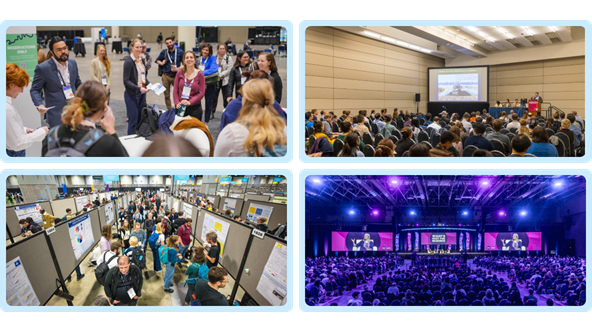
    AGU26 is the American Geophysical Union's annual meeting, bringing 25,000+ Earth and space scientists from 100+ countries to San Francisco to share research and collaborate under the theme 'Where Science Connects.'

    Earth and space sciencesGeosciences

    Dates

    7–11 Dec 2026

    Venue

    George R. Moscone Convention Center

    Time

    8:30 AM – 7:30 PM

    20 Floor Picks

    Matched booths for AGU26 Annual Meeting

    Get my picks

    Exhibiting at?

    Enter your business email to get a free first Exclusive Spotlight worth 250$.

    Explore Spotlights
    Official Website Register / Buy Tickets

    Are you the organiser of this event?

    Notable exhibitors

    Companies exhibiting at AGU26 Annual Meeting include AAAS Science & Technology Policy Fellowships, AAS Division for Planetary Sciences, ABB India Limited, Academia Sinica and ACS Publications.

    • AAAS Science & Technology Policy Fellowships
    • AAS Division for Planetary Sciences
    • ABB India Limited
    • Academia Sinica
    • ACS Publications

    Event overview

    Overview

    AGU’s annual meeting, the largest gathering of Earth and space scientists, convenes 25,000+ attendees from 100+ countries to share research, connect, collaborate, and inspire one another.

    Discover 'Where Science Connects' at AGU26.

    TL;DR

    1. 125,000+ attendees from 100+ countries
    2. 27–11 December 2026 at the George R. Moscone Convention Center, San Francisco
    3. 3Meeting theme: 'Where Science Connects'
    4. 4Hybrid format: in-person and online
    5. 524% of attendees are international; 40% are involved in purchasing decisions

    Why visit

    Cutting-Edge Science: Discover the latest research in Earth and space sciences; Global Collaboration: Network with experts, policymakers, and emerging leaders; Interactive Sessions: Attend workshops, panel discussions, and hands-on learning experiences; Career Advancement: Access mentoring programs, career fairs, and funding opportunities.

    Why exhibit

    Launch and demo your breakthrough innovations in an interactive selling environment; Share your research and exchange information with an interested and qualified audience; Connect directly with current and prospective customers actively seeking solutions like yours; Access top-tier talent and recruit industry experts who are already engaged in your field; Unlock partnerships and expand into new markets with global industry leaders; Gain maximum visibility at the industry's most influential event while advancing Earth and space science innovation.

    Attendees, exhibitors & solutions

    Who this event is for

    Visitor profile

    Typical attendee groups you can expect to meet.

    Researchers
    Scientists
    Educators
    Students
    Policymakers
    Exhibitors
    Journalists and communicators

    Exhibitor profile

    Main supplier and exhibitor segments present at the show.

    Organizations related to Earth and space sciences
    Non-profit research and/or educational institutions or consortia
    Non-profit publishers
    501(c)(3) organizations
    Scientific and engineering open membership societies
    Companies showcasing instrumentation, publishing, and research services

    Location & Facilities

    Venue

    Halls & areas

    3
    Moscone NorthMoscone SouthMoscone West

    George R. Moscone Convention Center

    Facilities

    Parking

    Moscone Center has no on-site parking. The SFMTA-operated Moscone Center Garage at 255 3rd Street offers 732 spaces with 6 ft 6 in clearance. Rates: $4/hour (6 a.m.–noon), $5/hour (noon–3 p.m.), $18 early bird (weekdays, enter 6–9 a.m., exit before 9 p.m.), $29 for 12 hours, $35 for 24 hours. The garage is open 6 a.m. to 10 p.m. daily. The Fifth & Mission / Yerba Buena Garage at 833 Mission Street is open 24/7 with 2,585 spaces at $5–$6/hour, $38 for 12 hours, $44 for 24 hours.

    732 spaces · $35.00/day

    Accessibility

    Moscone Center is ADA-compliant with wheelchair ramps, accessible elevators, and accessible restrooms throughout. Assistive Listening Devices can be arranged through the in-house AV provider (Projection). The venue does not maintain a wheelchair inventory, but a list of local vendors is available to show managers. Wheelchair-accessible transportation during hotel shuttle hours can be scheduled by calling (415) 377-3452 at least 24 hours in advance. Scooter and wheelchair rental is available through Scootaround (1-888-484-1804). Accessible quiet/comfort rooms and Mamava lactation pods are available.

    Prayer rooms

    A Quiet Room is available at Moscone North Lobby, Level 1, Room 115, intended for silent meditation, reflection, or prayer. No mobile device or computer use, and no food or beverages allowed. Prayer rooms have previously been set up at Moscone Center during Ramadan, open to all faiths and equipped with prayer rugs.

    Cloakroom

    Coat and luggage check services are available through Guest Services of America at Moscone North, South, and West lobbies. Services are typically open during registration hours and operate on a first-come, first-served basis. Fees may apply; confirm hours and pricing with the show office.

    Luggage storage

    Luggage storage is available at the coat and luggage check locations in Moscone North, South, and West lobbies. This is useful for arrival/departure days. On-site storage is first-come, first-served and may be limited during peak times. Remote airline and bag check-in has been offered at Moscone West for some events; check with the show office for AGU26 availability.

    Charging points

    Power outlets and charging stations are available throughout the venue. Dedicated charging stations can be found in common areas between Moscone North and South. On-demand meeting pods with power outlets and USB charging have been added to Moscone Center for attendees needing a quiet place to work or charge devices.

    On-site shuttle

    Moscone Center does not operate a venue-wide shuttle. Event-specific hotel shuttle services are common: shuttle buses run between official hotels and Moscone Center when arranged by the show organizer. Wheelchair-accessible transportation during hotel shuttle hours can be scheduled at (415) 377-3452. Check the AGU26 website or app for official shuttle routes and schedules.

    Food options

    Moscone Center concessions, Samovar Tea Lounge, Soma Restaurant & Bar, Super Duper Burgers, Deli Board, Bini's Kitchen

    On-site dining

    Parking: The Moscone Center does not have on-site parking. Nearby parking options are available; Moscone North & South are accessible via Montgomery BART/MUNI station, Moscone West via Powell station.

    Attend

    Entry & tickets

    Event days & opening times

    DayOpening hours
    8:30 AM –7:30 PM Pacific Standard Time, Monday–Friday, 7–11 December 2026
    • In-Person Regular Member

      Early rate through 5 November 2026

      $845.00
    • In-Person Regular Non-Member

      Early rate through 5 November 2026

      $1,050.00
    • In-Person Graduate Student Member

      Early rate through 5 November 2026

      $425.00
    • In-Person Undergraduate Student Member

      Early rate through 5 November 2026

      $215.00
    • Virtual Regular Member

      Early rate through 5 November 2026

      $420.00
    • Virtual Regular Non-Member

      Early rate through 5 November 2026

      $525.00
    • One Day In-Person

      One-day registration rate for members and non-members

      $435.00
    • Guest Pass

      Adult guest 18 or older; does not include oral or poster scientific sessions

      $180.00
    Register

    Ticket info

    Badge collection

    All registration fees must be paid in full before receiving credentials. Online registration continues through the last day of the conference, and on-site registration opens Sunday, 6 December 2026 at the Moscone Center.

    Ticket notes

    One-day in-person registration is available at $435. Registered attendees may buy guest passes for $180 each; guests must be 18 or older and may access the Exhibit Hall, Welcome Reception, and keynotes, but not oral or poster scientific sessions. Special-event tickets must be purchased online by 5 November 2026 and are non-refundable. AGU will not accept cash on site during AGU26; on-site payments must be by credit card.

    Who runs the show

    Organisers

    AGU Member Service Center

    General inquiries and registration support

    Jamie Saunders

    Exhibit Sales Contact

    What's on

    Programme

    2

    Oral

    1

    Plenary

    3

    Event days

    08:30–19:30

    Typical time

    This agenda is still being finalised. Check the official agenda for the latest sessions.

    Speakers

    DR

    Dr. Richard Alley

    Evan Pugh University Professor of Geosciences @ Pennsylvania State University

    Ice cores, glaciers, and climate change

    DK

    Dr. Karen Alley

    Associate Professor @ University of Manitoba

    Ice-ocean interaction and sea-level rise

    BJ

    Brandon Jones

    AGU President @ American Geophysical Union

    Moderator, plenary conversation

    DG

    Dr. Gabrielle Boisrame

    Assistant Research Professor @ Desert Research Institute

    Hydrologic extremes and global-to-local modeling

    CT

    Chris Terai

    Research Scientist @ Lawrence Livermore National Laboratory

    Hydrologic extremes modeling

    MM

    Mathieu Morlighem

    Professor @ Dartmouth College

    Ice sheet modeling and cryospheric sciences

    AL

    Amanda Lynch

    Professor @ Brown University

    Cryospheric sciences and polar research

    EH

    Edward Hanna

    Professor @ University of Lincoln

    Cryospheric sciences

    MD

    Mariama Dryák-Vallies

    Researcher @ University of Colorado Boulder

    Polar research and cryospheric sciences

    MR

    Margaret Rudolf

    Researcher @ University of Alaska Fairbanks

    Cryospheric sciences

    TY

    Tandong Yao

    Professor @ Institute of Tibetan Plateau Research, Chinese Academy of Sciences

    Cryospheric sciences and Tibetan Plateau research

    From Ice Ages to Ice Loss: What the Past and Present Teach Us About Our Climate Future (Featured Plenary)

    Plenary
    Moscone Center, North, Hall E

    Monday, Dec 7, 2026

    08:30 – 19:30

    GC117: The global water cycle: coupling and exchanges of mass and energy between the ocean, land, cryosphere, and atmosphere

    Oral

    Wednesday, Dec 9, 2026

    08:30 – 12:00

    C31G: Understanding and Projecting Ice Sheet Evolution and Tipping Dynamics for Future Sea Level Rise (Poster)

    Poster
    13:00 – 14:00

    TH33C: Decade of Action for Cryospheric Sciences and Fifth International Polar Year (Town Hall)

    Town Hall
    14:15 – 15:45

    C33C: Understanding and Projecting Ice Sheet Evolution and Tipping Dynamics for Future Sea Level Rise (Oral)

    Oral

    Thursday, Dec 10, 2026

    10:30 – 12:00

    U42A: A Decade of Action for Cryospheric Sciences and Preparing for the Fifth International Polar Year (Union Session)

    Union Session

    Topic tracks

    Atmospheric and Climate SciencesCryospheric SciencesHydrology and Water CycleSolar and Heliospheric PhysicsClimate Intervention and SRM

    Co-located events

    Annual ISMIP7 Community Workshop

    Separate ticket

    NASA PACE Hands-on Workshop (SCIWS15: Working with PACE Satellite Data for Ocean, Atmosphere, and Land Research)

    Separate ticket

    International Heliophysics Data Environment Alliance (IHDEA) Meeting

    Separate ticket

    Co-located seminars

    Proposal Writing Workshop: Using NASA ROSES as an Example

    Paid

    Awards

    AGU Union Medals, Awards and Prizes

    Annual

    AGU recognizes individuals and teams for outstanding accomplishments in research, education, science communication, and outreach with Union Medals, Awards, and Prizes, presented at the AGU Annual Meeting.

    Union MedalsAwardsPrizes
    source

    AGU Fellows

    Annual

    AGU Fellows are recognized for their innovative research and exceptional contributions to Earth and space science, honored at the AGU Annual Meeting.

    Fellows
    source

    AGU Section Awards and Lectures

    Annual

    AGU sections present awards and named lectures to recognize significant contributions in specific scientific disciplines, celebrated at the AGU Annual Meeting.

    Section AwardsNamed Lectures
    source

    How the last edition performed

    Previous edition

    Last edition

    2025

    Completed

    Exhibitors: 289

    This edition

    2026

    Visitors: 25,000

    Exhibitors: 300

    Next edition

    2026

    AGU26 will take place December 7–11, 2026, at the Moscone Center in San Francisco under the theme 'Where Science Connects.' AGU's recurring positioning states the annual meeting convenes 25,000+ attendees from 100+ countries. The 2026 edition returns to the meeting's historical home city after the 2025 edition in New Orleans.

    Venue rotation back to San Francisco (Moscone Center) Theme refined to 'Where Science Connects'

    Growth over time

    Edition recap

    AGU25 ran 15-19 December 2025 in New Orleans. AGU's post-show archive preserves the scientific program, iPoster gallery, AGUTV resources and past-exhibitor information. The archived official exhibitor PDF is numbered through 289 exhibitor entries. A final audited AGU25 attendee total was not located in the public post-show materials reviewed, so the official pre-event forecast of more than 20,000 attendees is kept separate from the prior-edition actuals. AGU's AGU26 sales sheet, citing AGU25 registration data, reports that 24% of attendees were international, attendees came from more than 100 countries, 40% were involved in purchasing decisions, and 97% of AGU25 exhibitors reported a positive experience.

    New this edition

    • 1

      New poster-hall format and poster measurements

      For AGU26, AGU introduced new poster measurements and a poster-hall configuration incorporating seating and gathering spaces. Poster boards are designed to accommodate two posters on each side.

      Source
    • 2

      Outstanding Emerging Presenters Program

      AGU is evolving the Outstanding Student Presentation Awards into the Outstanding Emerging Presenters Program for 2026, adding support before, during and after the meeting, including draft-presentation feedback, optional OEP Circles and presentation awards.

      Source

    Impact

    A bigger and stronger platform

    AGU25 convened 20,000+ registered attendees in New Orleans (December 15–19, 2025) for the world's largest gathering of Earth and space scientists, featuring nearly 1,900 unique scholarly sessions. While attendance was below the 27,000+ seen at AGU23 in San Francisco, the meeting maintained its role as the central annual forum for Earth and space science research, education, and policy exchange.

    Audience quality

    High-value decision-makers

    Attendees are primarily researchers, scientists, educators, students, policymakers, exhibitors, and communicators from over 100 countries. AGU25 drew a deeply engaged professional audience; anecdotal reports from institutional exhibitors note that smaller crowds in 2025 led to more substantive conversations with students and collaborators, and that attendees were actively seeking connections and career opportunities.

    Exhibitor outcomes

    Real business growth

    AGU25 featured 330+ exhibiting organizations across the Earth and space science ecosystem. Exhibitors gain direct access to 20,000+ registered attendees, including decision-makers, researchers, and students, within a meeting that hosted nearly 1,900 scholarly sessions. Institutional exhibitors reported high-quality booth interactions, with students intentionally visiting booths for graduate and postdoc opportunities. No official booth-level ROI metrics have been published.

    Intelligence

    Exhibitors

    277

    Exhibitors

    17

    Categories

    21

    Countries

    15

    Pavilions

    Top exhibitor countries

    Top 10 by exhibitor count — estimates based on published directory.

    • United States
      219
    • Canada
      15
    • China
      11
    • United Kingdom
      5
    • Taiwan
      4
    • France
      3
    • Germany
      3
    • Japan
      3
    • Switzerland
      2
    • Singapore
      1

    ~79% of listed exhibitors are from United States.

    Category breakdown

    1~110
    estimate
    2~64
    estimate
    3~21
    estimate
    4~14
    estimate
    5~12
    estimate
    6~10
    estimate
    7~10
    estimate
    8~9
    estimate
    9~7
    estimate
    10~6
    estimate
    11~5
    estimate
    12~2
    estimate
    13~2
    estimate
    14~2
    estimate
    15~1
    estimate

    National pavilions

    United States

    ~219 stands
    estimate

    Canada

    ~15 stands
    estimate

    China

    ~11 stands
    estimate

    United Kingdom

    ~5 stands
    estimate

    Taiwan

    ~4 stands
    estimate

    France

    ~3 stands
    estimate

    Germany

    ~3 stands
    estimate

    Japan

    ~3 stands
    estimate

    Switzerland

    ~2 stands
    estimate

    Singapore

    ~1 stands
    estimate

    India

    ~1 stands
    estimate

    Netherlands

    ~1 stands
    estimate

    Italy

    ~1 stands
    estimate

    Greece

    ~1 stands
    estimate

    Iceland

    ~1 stands
    estimate

    Buyer targets

    High priority

    Buyers sourcing

    Earth & Space Sciences Suppliers (profile Pending)

    Buyers sourcing

    Other Earth & Space Sciences Suppliers

    Buyers sourcing

    Weather, Climate & Atmospheric Observation Suppliers

    Buyers sourcing

    Universities, Federal Labs & Research Institutions Suppliers

    Buyers sourcing

    Planetary Science, Astronomy & Space Mission Suppliers

    Medium priority

    Buyers sourcing

    Scientific Publishing, Journals & Preprint Suppliers

    Buyers sourcing

    Atmospheric Chemistry, Aerosol & Trace Gas Monitoring Suppliers

    Buyers sourcing

    Remote Sensing, GIS & Earth Observation Suppliers

    Buyers sourcing

    Seismology, Geodesy & Geophysical Exploration Suppliers

    Buyers sourcing

    Field Sensors, Dataloggers & Environmental Measurement Suppliers

    Intelligence

    Market context

    Key market insights, trends, news and related events to help you understand the bigger picture.

    Global. AGU26 positions San Francisco as the annual nexus for the worldwide Earth and space science community, drawing 25,000+ attendees from 100+ countries and functioning as an informal marketplace where funding agencies preview priorities and mission teams recruit collaborators.

    Why it matters

    AGU26 concentrates the entire Earth and space science value chain — researchers, government agencies, instrument makers, publishers, and data providers — into one week in San Francisco. With 25,000+ attendees from 100+ countries and roughly 40% of attendees making or influencing purchasing decisions, the meeting is a high-leverage venue for instrumentation firms, publishers, and research-service providers. It is also where funding agencies preview programme priorities and where mission teams recruit collaborators, making it a leading indicator for public-sector and commercial demand over the following 12–18 months.

    Industry trends

    Key trends shaping this market and its wider industry.

    01

    AI and machine learning move from experiment to operational tool in Earth observation

    AGU26 sessions explicitly target AI/ML for sustained ocean observing, seismic and acoustic event detection, computer vision, autonomous platform control, and cross-platform data synthesis. The programme treats machine learning as a practical instrument for processing high-density, multi-stream datasets that exceed traditional analysis capacity, rather than as a speculative add-on.

    Source
    02

    Geophysical instrumentation market sustains mid-single-digit growth

    The global geophysical equipment market is projected to expand from USD 13.19 billion in 2025 to USD 17.62 billion by 2031, a 4.94% CAGR, while a broader geophysical services and equipment segment grows at roughly 3.6% annually into 2026. Sustained instrument demand underpins the commercial exhibition floor at AGU26.

    Source
    03

    Public funding for geological mapping and resource science reaches a policy inflection

    The U.S. Earth Mapping Resources Initiative (Earth MRI) was authorized only through fiscal year 2026, prompting senators to introduce legislation extending funding through 2031. At the same time, ARPA-E has made up to $45 million available for unconventional oil-recovery research. Funding uncertainty and new programme money are both live topics for AGU26 exhibitors and attendees.

    Source
    04

    Long-term ocean observatories become drivers of sensor and data-science innovation

    AGU26 devotes dedicated sessions to long-term ocean observatories such as OOI, ONC, Argo, and GO-BGC as catalysts for robust hardware, anti-biofouling methods, real-time data-stream algorithms, and long-term data stewardship. This reflects a broader shift from episodic field campaigns toward persistent, instrumented observing networks.

    Source
    05

    Space weather and heliophysics bridge research and operational forecasting

    AGU26 sessions span solar-wind forcing, satellite drag, and space-weather model validation, while space agencies use the meeting to update the community on mission status. The programme connects heliophysics research directly to operational concerns for satellite operators and space agencies.

    Source

    Market news

    Latest updates from across the market.

    AGU25 closes with more than 20,000 registrants and nearly 1,900 unique scholarly sessions

    Read

    AGU26 confirms San Francisco return with theme 'Where Science Connects'

    Read

    Senators introduce bill to extend Earth MRI mapping funding through 2031

    Read

    ARPA-E commits $45 million to unconventional oil-recovery research

    Read

    Critical raw materials and early-stage exploration funding dominate MINEX Europe 2026

    Read

    Global Earth and space science meeting circuit

    April 2026 – July 2027, with AGU26 as the December 2026 anchor and immediate planning attention on EGU 2027 and Goldschmidt 2027.

    The circuit moves through Europe in spring, North America in summer, Asia in late summer, and returns to North America in December. AGU26 is the December anchor of a year-round sequence that begins with EGU in Vienna, passes through Goldschmidt, IMAGE, and AOGS, and culminates in San Francisco. Exhibitors and science teams typically use EGU to reach the European research base, Goldschmidt for geochemistry specialists, IMAGE for applied geoscience and energy, AOGS for the Asia-Pacific community, and AGU for the largest global assembly.

    3–8 May 2026

    EGU General Assembly 2026 (EGU26)

    Vienna, Austria

    Hybrid format, on-site in Vienna and online. Covers all disciplines of Earth, planetary, and space sciences.

    website
    12–17 Jul 2026

    Goldschmidt 2026

    Montréal, Canada

    Organised by the Geochemical Society and the European Association of Geochemistry. Hybrid format with online participation.

    website
    2–7 Aug 2026

    AOGS 2026 (Asia Oceania Geosciences Society 23rd Annual Meeting)

    Fukuoka, Japan

    Held at the Fukuoka International Congress Centre. Covers diverse geoscience disciplines with a strong regional participation base.

    website
    17–20 Aug 2026

    IMAGE 2026 (International Meeting for Applied Geoscience and Energy)

    Houston, United States

    Sixth annual edition, held at the George R. Brown Convention Center. Organised by AAPG, SEG, and SEPM.

    website
    7–11 Dec 2026

    AGU26 Annual Meeting

    San Francisco, United States

    Held at the Moscone Center under the theme 'Where Science Connects.' 25,000+ attendees from 100+ countries expected.

    website
    4–9 Apr 2027

    EGU General Assembly 2027 (EGU27)

    Vienna, Austria

    Hybrid event at the Austria Center Vienna and online. Session proposal deadline was 23 September 2026; abstract deadline 12 January 2027.

    website
    23–28 May 2027

    JpGU Meeting 2027

    Chiba, Japan

    Held at Makuhari Messe in hybrid format. Six-day meeting covering Earth and planetary sciences.

    website
    11–16 Jul 2027

    Goldschmidt 2027

    Paris, France

    Session and workshop proposal calls were open in September 2026. Dates confirmed by the European Association of Geochemistry.

    website

    Spring Europe window

    EGU General Assembly 2026 (EGU26)EGU General Assembly 2027 (EGU27)

    EGU in Vienna is the dominant spring event for the European research base. EGU26 runs 3–8 May 2026; EGU27 is confirmed for 4–9 April 2027.

    Summer North America and Asia window

    Goldschmidt 2026AOGS 2026 (Asia Oceania Geosciences Society 23rd Annual Meeting)IMAGE 2026 (International Meeting for Applied Geoscience and Energy)

    Goldschmidt (Montréal, 12–17 July) and AOGS (Fukuoka, 2–7 August) overlap in late July–early August, while IMAGE (Houston, 17–20 August) closes the summer applied-geoscience season.

    December global anchor

    AGU26 Annual Meeting

    AGU26 is the single largest global gathering and the circuit's December anchor. It draws attendees from every other regional meeting and sets the agenda for the following year.

    Following-year Asia-Pacific and Europe window

    JpGU Meeting 2027Goldschmidt 2027

    JpGU (Chiba, 23–28 May 2027) and Goldschmidt (Paris, 11–16 July 2027) carry the circuit into the next cycle, bridging the gap between EGU27 and AGU27.

    Dates are taken from organiser websites and official meeting pages where available. EGU26 and EGU27 dates are from egu26.eu and egu.eu; Goldschmidt 2026 and 2027 dates are from conf.goldschmidt.info and eag.org; IMAGE 2026 dates are from seg.org; AOGS 2026 dates are from asiaoceania.org; JpGU 2027 dates are from jpgu.org; AGU26 dates are from agu.org. Attendees should verify final schedules against organiser sites, as some programmes remain provisional.

    Plan your trip

    Travel & logistics

    Local currency · USD

    Arrival airports

    Choose from the following airports, with convenient access to the event and venue.

    SFO

    San Francisco International Airport

    Primary gateway with the broadest nonstop routes, including international service. BART connects SFO to Powell Street station in about 28–36 minutes for roughly $11.80.

    ~14 miles (23 km)

    to venue

    20–40 minutes

    by car

    OAK

    Oakland International Airport

    Strong alternative, especially for travelers from the East Bay. The route crosses the Bay Bridge, which can add congestion. BART via Coliseum station reaches downtown San Francisco in about 44 minutes for roughly $13.45.

    ~20 miles (32 km)

    to venue

    30–45 minutes

    by car

    SJC

    San Jose Mineta International Airport

    Workable if combining AGU with South Bay meetings or if itinerary routes through San Jose. A private transfer or rideshare is often more practical than multi-leg public transit with luggage.

    ~45 miles (72 km)

    to venue

    45–60 minutes

    by car

    Hotel tiers

    A range of accommodation options near the venue and across key areas.

    Budget
    SoMa / Union Square fringe

    USD 199–249 / night

    Official AGU26 housing block rates start as low as $199/night at properties 0.3–1.8 miles from Moscone Center. Examples include Hotel Bijou, The Mosser Hotel, and YOTEL San Francisco. Prices are estimates based on the official housing block and market data for December 2026.

    Mid-Range
    SoMa / Yerba Buena

    USD 250–299 / night

    Most official housing block properties cluster between $249 and $295/night. Examples include Axiom Hotel, Beacon Grand, and Hyatt Regency San Francisco Downtown SoMa. Rates are estimates from the official AGU26 housing portal.

    Premium
    Union Square / Nob Hill

    USD 300–500 / night

    Premium and luxury properties such as The Westin St. Francis, Fairmont San Francisco, and Palace Hotel typically range $300–$500/night during December convention weeks. Prices are market estimates; official housing block rates may be lower for some properties.

    Local transport

    Get around the city with these convenient transport options.

    BART

    Estimated cost$10.30 (2026 estimate)
    Best forSFO → Powell St or Montgomery St stations

    Two stations within two blocks of Moscone Center; ~30 minutes from SFO. Fast and reliable for airport transfers.

    Muni Metro

    Estimated cost$2.85 single ride; $15 1-day Visitor Passport
    Best forYerba Buena/Moscone Station

    Light rail stop directly across from the venue. Visitor Passport covers Muni buses, rail, and cable cars.

    Caltrain

    Estimated cost$3–$6 depending on zone
    Best for4th & Townsend Station

    Frequent service from Peninsula and South Bay; station is a few minutes' walk from Moscone Center.

    Rideshare (Uber/Lyft)

    Estimated cost$32–$52
    Best forSFO → Moscone Center

    Surge pricing common during convention peak hours. Pickup and drop-off at designated zones near the venue.

    Taxi

    Estimated cost$45–$60
    Best forSFO → Moscone Center

    Metered fares; flat-rate options may be available. Taxis stage at official venue loading zones.

    Plan your trip

    Visa & entry documents

    Check the latest visa requirements and entry guidelines before travelling.

    Visa not required
    ATA Carnet: accepted
    TypeWho needs itFeeProcessing
    B-1 Temporary Business VisitorCitizens of countries not participating in the Visa Waiver Program (VWP) who are attending AGU26 for scientific, educational, or professional purposes. B-1 status covers attending conferences and conventions, but does not permit gainful employment in the United States.$185.00Varies by U.S. embassy or consulate; interview wait times range from days to 12+ months depending on the post. After approval, passport return typically takes about one week.
    ESTA (Visa Waiver Program)Citizens of Visa Waiver Program countries (e.g., most EU states, UK, Japan, Australia, New Zealand, South Korea) traveling to the United States for business or tourism for 90 days or less.$40.27Usually within 72 hours; some cases may take longer.
    B-1/B-2 Visitor Visa (combined)Travelers who may need both business (B-1) and tourism/pleasure (B-2) activities during the same trip, or whose purpose of visit is not strictly limited to business.$185.00Same as B-1 visa; varies by consular post.

    Citizens of Visa Waiver Program (VWP) countries do not require a visa for business visits of 90 days or less but must obtain an approved ESTA before travel. VWP-eligible travelers who do not qualify for ESTA (e.g., due to prior travel to restricted countries) must apply for a B-1/B-2 visa at a U.S. embassy or consulate. AGU's annual meeting is open to all with related interests; an invitation letter is available to assist with visa applications, but it does not guarantee visa approval or entry.

    U.S. Customs and Border Protection (CBP) regulations accept ATA Carnets for goods temporarily entered under the Customs Convention on the Temporary Importation of Professional Equipment and the International Convention to Facilitate the Importation of Commercial Samples and Advertising Material. This covers professional equipment, commercial samples, and goods for exhibitions or trade shows. The carnet must be presented to a CBP officer for entry and re-export validation.

    Official visa page

    Weather

    December is San Francisco's rainiest month, with average rainfall around 100–110 mm spread across roughly 10–12 days. Daytime highs typically reach 55–58°F (13–14°C) and overnight lows drop to 45–48°F (7–9°C). Snow is essentially unheard of. Pack layers, a waterproof jacket, and an umbrella.

    Plan for the climate

    Check temperatures and pack accordingly

    Venue connectivity

    The Moscone Center sits in SoMa, easily reached by BART and Muni. Powell Street station (BART/Muni) serves Moscone West, while Montgomery Street station serves Moscone North and South. Both are a 5–10 minute walk from the venue. SFO connects to Powell Street via BART in under 40 minutes; OAK requires a transfer at Coliseum. Caltrain's 4th & King station is about a 15-minute walk from Moscone. Rideshare (Uber/Lyft) and taxis are plentiful, though surge pricing is common during large conventions. More than 20,000 hotel rooms are within walking distance of the venue.

    Ride-hailing

    Taxis

    Public transit

    Car rentals

    Cultural notes

    Useful information to help you have a smooth and respectful visit.

    Tipping is expected and substantial

    Tip 18–22% at sit-down restaurants, 15–20% for bar service, and $2–5 per bag for hotel bellhops. Many San Francisco restaurants add a 4–6% surcharge for employee health coverage on top of the 8.625% sales tax; read the receipt carefully before adding a tip.

    Layers are essential

    San Francisco's microclimates mean the temperature can shift dramatically between neighborhoods. A warm, foggy morning in SoMa can turn chilly and windy near Fisherman's Wharf. Always carry a light jacket or fleece.

    Public transit etiquette

    Use a Clipper card (physical or via app) for BART, Muni, and Caltrain. Stand to the right on escalators, let passengers exit before boarding, and keep noise low on transit. BART requires fares to be loaded before entering the platform.

    Pedestrian-friendly but hilly

    Downtown San Francisco is walkable, but steep hills are common outside SoMa. Wear comfortable shoes, especially if walking to Union Square, Chinatown, or the Embarcadero. Jaywalking is common but technically illegal; use crosswalks in busy tourist areas.

    Practical guides

    Visitor & Exhibitor Essentials

    Everything needed to arrive prepared, navigate the event, and make the visit productive.

    Flights

    Destination: SFO

    SFO offers the widest range of nonstop international and domestic routes. OAK is a viable alternative, especially for East Bay travelers, but adds Bay Bridge crossing time. Book flights early: December is peak holiday travel season, and AGU26 draws 25,000+ attendees. Pre-book ground transportation two to eight weeks ahead to avoid surge pricing.

    Visa

    Visa requirements depend on nationality. Citizens of Visa Waiver Program countries may travel visa-free with an approved ESTA for stays up to 90 days. All other foreign nationals generally need a B-1 business visitor visa (or a combined B-1/B-2 visa) to attend AGU26.

    Processing: Consular interview wait times vary widely by location (from days to more than a year). After approval, passport return usually takes about one week. ESTA decisions are typically available within 72 hours.

    AGU provides a justification/invitation letter for registered attendees to support visa applications and requests for expedited appointments. Receiving a letter does not guarantee visa issuance. On-site registration payments must be by credit card; AGU does not accept cash during AGU26.

    Official

    Transport

    Get to the venue and around the city with these options.

    Airport → venue: SFO is ~14 miles (23 km) from Moscone Center; 20–40 minutes by car. BART connects SFO to Powell St in ~30 minutes for ~$10.30.

    Hotel → venue: Downtown Atlanta and convention-center hotels are typically within walking distance or a short ride-hail/MARTA trip to the venue.

    Ride-hail: Uber/Lyft from SFO to Moscone averages $32–$52; short rides within SoMa $8–$15. Surge pricing during peak convention hours.

    Public transit: BART, Muni Metro, and Caltrain provide frequent service. Muni single ride $2.85; 1-day Visitor Passport $15.

    Parking: Moscone Center has no on-site parking. Moscone Center Garage (255 3rd St) offers 732 spaces at $4–$5/hour, $18 early bird, $29–$35 for 12–24 hours. Fifth & Mission Garage (833 Mission St) has 2,585 spaces at $5–$6/hour, $38–$44 for 12–24 hours.

    Weather

    Plan and pack for the event climate.

    Month: December

    Temperature: 45–58°F (7–14°C)

    Seasonality: December is the rainiest month, with roughly 100–110 mm of rain spread over 10–12 days. Expect cool, damp conditions with occasional sunny breaks.

    Packing: Bring a waterproof jacket or umbrella, warm layers (fleece or sweater), comfortable walking shoes, and an indoor/outdoor adaptable wardrobe. Evenings are chilly, especially near the waterfront.

    Plan your trip

    Planning

    Best day to visit: 2026-12-08

    Tuesday, 8 December combines a full 10:00 a.m:30 p.m. exhibit-hall window with the official AGU26 Welcome Reception and section-based networking. It offers more exhibit time than Monday or Thursday while adding a major networking opportunity on the same day.

    T-45 to T-30

    Register and reserve housing — Planning guidance. AGU's early registration deadline was 5 November 2026, attendee rates increase on 6 November, and the AGU hotel-block deadline is 19 November. Book immediately if attending.

    T-30

    Confirm travel authorization and visa needs — Planning guidance. Entry requirements are nationality-dependent; if a U.S. visitor visa is required, use the U.S. Department of State process and allow more time than the event-prep window.

    T-30

    Build a first-pass agenda in the AGU26 online program — The official online program is live. Prioritize scientific sessions, exhibit-hall time, ticketed events and networking rather than trying to cover the full 25,000+ attendee meeting.

    T-21

    Create a target list of sessions, exhibitors and people — Planning guidance. Define 3-5 outcomes, shortlist the highest-value sessions and exhibitors, and identify people to meet before arriving.

    T-14

    Pre-book focused meetings — Planning guidance. The AGU26 planner lists reservable lounges and pods in Moscone South Hall D and meeting rooms in the Moscone North Lobby; use these when available rather than relying on chance encounters.

    T-7

    Install or refresh the AGU26 Events app and confirm schedule changes — The official meeting app is intended for program search, schedule building, alerts, posters, recorded content and networking. Recheck rooms and times shortly before travel.

    T-1

    Prepare for arrival and badge pickup — First-time attendees can use the official meeting on Sunday, 6 December, from 6:00-6:45 p.m. in Moscone South, Room 106, and pick up badges early. Others should confirm their own registration and arrival instructions.

    T-1

    Lock the day-one success plan — Planning guidance. Put the top sessions, exhibit meetings and one networking objective into a single schedule, with buffer time between Moscone locations.

    Sample visitor itinerary

    Route-optimised day
    08:15-08:30

    Recommended: arrive, verify room changes in the AGU26 online planner and lock the day's three most important outcomes

    Moscone Center
    08:30-10:00

    Recommended: attend the highest-priority scientific session in your field

    Moscone Center confirm room in the AGU26 online planner
    10:00-11:30

    Priority exhibit-hall sweep: scheduled demos first, then adjacent suppliers

    AGU26 Exhibit Hall
    11:30-12:00

    Recommended: hold a focused follow-up meeting in a reservable meeting space

    Moscone South Hall D pod/lounge or Moscone North Lobby meeting room, subject to availability
    12:00-13:45

    Recommended: lunch plus one pre-booked one-to-one conversation

    SoMa/Yerba Buena near Moscone Center
    14:15-15:45

    Recommended: return to a high-priority science or cross-disciplinary session

    Moscone Center confirm room in the AGU26 online planner
    15:45-16:30

    Final Tuesday exhibit-hall meetings and same-day note capture

    AGU26 Exhibit Hall
    Evening

    Join the official AGU26 Welcome Reception and use section spaces for targeted introductions

    AGU26 Welcome Reception confirm location in the online planner

    Side trips

    3

    Yerba Buena Gardens

    Public Gardens and Cultural District

    Within one block of Moscone Center

    Recommendation, not AGU-affiliated: an easy outdoor reset between meeting blocks or a low-friction place for an informal walk-and-talk.

    San Francisco Museum of Modern Art (SFMOMA)

    Modern and Contemporary Art Museum

    151 Third Street in the SoMa/Yerba Buena district near Moscone Center

    Recommendation, not AGU-affiliated: a strong post-session cultural stop when you have a longer break or free evening.

    Yerba Buena Center for the Arts

    Contemporary Arts Center

    Within one block of Moscone Center at 701 Mission Street

    Recommendation, not AGU-affiliated: useful for a short cultural detour without adding meaningful travel time.

    Networking spots

    4

    AGU26 Section Lounges

    Official informal networking space

    AGU's current section guidance says lounges will be available throughout the week in Moscone West, Level 2 for meeting colleagues and informal conversations.

    AGU26 Meeting Pods

    Official reservable casual meeting space

    The official online program lists small open pods in Moscone South Hall D for casual meetings; reserve through the meeting planner when available.

    AGU26 Meeting Rooms

    Official reservable private meeting space

    The official online program lists small private meeting rooms in the Moscone North Lobby for focused conversations; reserve through the meeting planner when available.

    AGU26 Welcome Reception

    Official reception

    Tuesday, 8 December. AGU section guidance says spaces will be devoted to each section, making it a strong setting for discipline-specific introductions.

    Budget

    Costs & budget

    AGU26 pricing is published as turnkey booth packages, not per-square-metre raw space or shell-scheme rates. The standard booth is a 10 ft x 10 ft unit (approx. 9.29 sqm) at $3,650 USD. Government/non-profit rate is $2,700 USD for one booth; additional booths are charged at the standard rate. Academic Showcase is $2,800 USD for one booth; additional booths at the standard rate.

    source

    Build your working budget

    Adjust the inputs below to create a directional event budget.

    Estimated budget
    Live estimate
    • Hotel × 5 nights$1,395.00
    • Per diem × 5$460.00
    • Visa$185.00
    Estimated total$2,040.00

    This is a directional estimate. Please verify live rates before booking.

    Cost reference

    Official cost items and estimated ranges for exhibitors.

    booth_package

    exhibitor · Standard Booth 10 ft x 10 ft

    USD 3650 / per 10 ft x 10 ft booth

    officialAs of 2026-11-06

    booth_package

    exhibitor · Government / Non-Profit Rate 10 ft x 10 ft

    USD 2700 / one eligible 10 ft x 10 ft booth; additional booths at standard rate

    officialAs of 2026-11-06

    booth_package

    exhibitor · Academic Showcase 10 ft x 10 ft

    USD 2800 / one eligible 10 ft x 10 ft booth; additional booths at standard rate

    officialAs of 2026-11-06

    booth_corner_fee

    exhibitor · Exposed corner

    USD 150 / per exposed corner

    officialAs of 2026-11-06

    lodging_planning_proxy

    both · GSA FY2027 San Francisco lodging rate

    USD 279 / per room night, excluding taxes

    officialAs of 2026-11-06

    meals_and_incidentals_planning_proxy

    both · GSA FY2027 San Francisco M&IE rate

    USD 92 / per person per day

    officialAs of 2026-11-06

    visitor_visa_application

    both · U.S. B visitor visa application fee, if required

    USD 185 / per applicant

    officialAs of 2026-11-06

    attendee_registration

    visitor · AGU26 attendee registration

    —

    unknownAs of 2026-11-06

    exhibitor_baseline_planning_floor

    exhibitor · One Standard Booth plus five GSA lodging nights and five M&IE days

    USD 5505 / planning baseline before airfare, hotel taxes and booth add-ons

    estimateAs of 2026-11-06

    Decision

    Visit, exhibit, or skip?

    Should you go?

    Answer eight AGU26-specific questions on audience fit, objective, economics, readiness, travel and follow-through. Higher scores indicate the most defensible path.

    QUESTION 1 OF 8

    How closely does AGU26's Earth and space science audience match the people you need to reach?

    Decision matrix

    Compare participation options side by side to choose the best fit for your objectives.

    visit

    Choose Visit when audience fit is strong and you can identify specific sessions, exhibitors or people to meet, but booth economics or operational readiness is not yet proven.

    Best for

    Researchers, scientists, technical buyers, university or government teams, recruiters and solution scouts who need targeted science, supplier discovery and meetings without operating a booth.

    Timeline

    Start immediately. AGU's hotel-block deadline is 19 November 2026, and the meeting runs 7-11 December.

    Risks

    Attendee registration rates increased on 6 November, and the official housing-block deadline is 19 November.

    The 25,000+ attendee scale can dilute value if sessions, exhibitors and meetings are not prioritized in advance.

    Registration tier, airfare and nationality-dependent visa costs are not fully priced in this model.

    exhibit

    Choose Exhibit when AGU's audience is a core market, a handful of qualified opportunities can justify the spend, and the team can pre-book meetings, run demos and follow up within 24 hours.

    Best for

    Organizations selling instrumentation, research technology, publishing, scientific data/services or other solutions used by the Earth and space science community, plus eligible research and education organizations.

    Min. budget

    $5,505.00

    Timeline

    Start immediately. With the meeting beginning 7 December, exhibit only if staffing, demo assets, travel, target accounts and service-kit logistics can be finalized now.

    Risks

    The $5,505 figure is a planning floor built from one $3,650 Standard Booth, five GSA lodging-rate nights and five M&IE days; it excludes airfare, hotel taxes, booth add-ons and unverified service-kit charges.

    Public sources reviewed did not verify current AGU26 freight, electrical/AV or insurance charges, so total booth cost can exceed the planning floor.

    Thursday exhibit hours end at 1:00 p.m.; high-value meetings should be concentrated on Tuesday and Wednesday.

    skip

    Choose Skip when neither a focused visit nor a booth has a clear conversion path, or when the remaining preparation window would force rushed execution.

    Best for

    Teams with weak Earth and space science audience fit, no measurable 2026 objective, no realistic travel or booth budget, or insufficient time to prepare.

    Timeline

    No event preparation required; reassess when buyer fit, budget or measurable meeting objectives improve.

    Risks

    Skipping removes in-person access to a 25,000+ attendee, 100+ country Earth and space science community.

    You may miss supplier, research, recruiting and partnership signals that are easier to validate face-to-face.

    Book with

    Partners

    Maritz Housing Service

    Housing

    AGU identifies Maritz as its housing service provider for the official meeting hotel block in the supplied AGU26 source context.

    Visit partner Confidence: high

    Current-edition Stage 4 source context identifies Maritz as the AGU26 housing service provider; use the official AGU housing page rather than third-party hotel solicitations.

    Recommended providers

    Hotels

    Maritz

    Official AGU26 housing block: 44 properties, discounted rates from $199/night; book by 19 November 2026.

    FAQs & glossary

    Answers

    Frequently asked

    When and where is AGU26?
    AGU26 will take place 7–11 December 2026 at the George R. Moscone Convention Center, 747 Howard Street, San Francisco, CA 94103.
    Do I need to be an AGU member to attend?
    No, you do not have to be an AGU member to attend, but AGU members and members of affiliated societies receive reduced registration rates.
    What are the registration deadlines and rates?
    Early rates are available through 5 November 2026; standard rates apply 6 November–6 December 2026; on-site rates begin 7 December. Early member in-person rate is $845, non-member $1,050.
    What is the abstract submission deadline?
    Abstract submissions open mid-June and close 5 August 2026 (23:59 EDT/03:59 UTC).
    What is the cancellation/refund policy?
    Cancellations received by 9 November 2026 receive a full refund. Requests after 9 November incur a $50 processing fee and are processed by end of January 2027. No refunds after 11 January 2027.
    Are volunteer opportunities available?
    Volunteer opportunities will not be offered for AGU26.
    Is the venue accessible?
    The Moscone Center provides reasonable accommodations; attendees can request ADA accommodations during registration.

    Glossary

    1
    AGU
    American Geophysical Union, the international professional organization that hosts the annual meeting.
    2
    AGU26
    The 2026 edition of AGU's annual meeting, held 7–11 December 2026 in San Francisco.
    3
    Annual Meeting
    AGU's flagship gathering of Earth and space scientists, described as the largest such event globally.
    4
    Abstract
    A submission proposing an oral, poster, or other presentation for consideration in the meeting programme.

    Digital business cards for the show floor

    Display a free company card at your booth, or share your professional card on the show floor.

    Create a free card