Digital buyer journeys
What digital buyer journeys means for buyers and exhibitors in this sector.

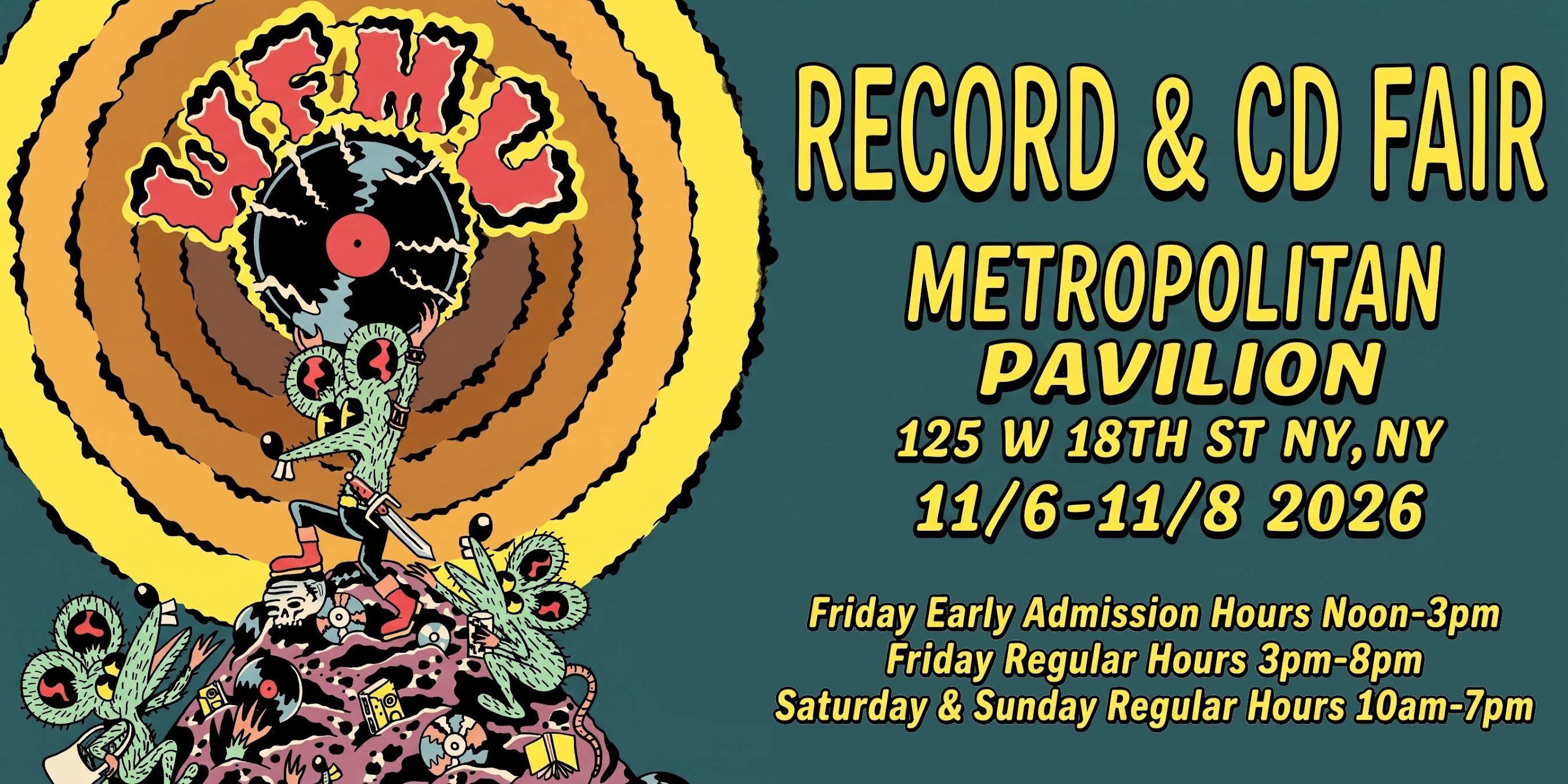
Join us for the WFMU Record Fair from November 6-8, 2026, at Metropolitan Pavilion, New York City, showcasing vinyl records, CDs, and more.
Dates
6–8 Nov 2026
City / country
New York, United States
Venue
Metropolitan Pavilion
Are you the organiser of this event?
Event overview
The WFMU Record Fair returns for its three-day event from November 6 to 8, 2026, at the Metropolitan Pavilion in New York City.
This fair features over 200 tables of vinyl records, CDs, clothing, books, zines, and art.
WFMU Record Fair takes place in New York, United States.
TL;DR
Visitors can explore a vast selection of vinyl records and music-related merchandise, connect with fellow enthusiasts, and enjoy live performances and special programming throughout the fair. Dates and Venue: The WFMU Record Fair runs from November 6 to 8, 2026, at the Metropolitan Pavilion in New York City. Buyer Authority: Attendees include collectors, music enthusiasts, and independent dealers looking for unique finds.
Exhibitors gain access to a dedicated audience of music lovers, the opportunity to showcase their collections, and the chance to network with other dealers and collectors. Buyer Authority: Attendees include collectors, music enthusiasts, and independent dealers looking for unique finds.
Attendees, exhibitors & solutions
Visitor profile
Typical attendee groups you can expect to meet.
Exhibitor profile
Main supplier and exhibitor segments present at the show.
Product categories
Key solution areas showcased across the event.
Location & Facilities
New York, United States
Food options
On-site catering
On-site diningParking: Metropolitan Pavilion in New York typically provides on-site or adjacent visitor parking during major trade fairs; confirm daily rates, payment methods and hall access on the organiser or venue website before travel.
Gate: Follow organiser signage to the main visitor entrance at Metropolitan Pavilion for badge collection; allow extra time for security screening during peak morning arrival.
Attend
Intelligence
Key market insights, trends, news and related events to help you understand the bigger picture.
Why it matters
Attending WFMU Record Fair on 2026-11-06 to 2026-11-08 in New York lets buyers and specifiers benchmark suppliers, see live demonstrations, and compress months of vendor meetings into one focused trade visit — worthwhile when your category roadmap aligns with the official exhibitor profile.
Key trends shaping this market and its wider industry.
Digital buyer journeys
What digital buyer journeys means for buyers and exhibitors in this sector.
Sustainability in procurement
What sustainability in procurement means for buyers and exhibitors in this sector.
Automation and labour efficiency
What automation and labour efficiency means for buyers and exhibitors in this sector.
Regional supply-chain resilience
What regional supply-chain resilience means for buyers and exhibitors in this sector.
Hybrid engagement models
What hybrid engagement models means for buyers and exhibitors in this sector.
Plan your trip

Choose from the following airports, with convenient access to the event and venue.
John F. Kennedy International Airport
Queens gateway with the widest international and transcontinental choice. AirTrain connects to Jamaica for the LIRR to Penn Station or to Howard Beach for the A train. Taxi and rideshare times depend heavily on traffic through Queens and Midtown; confirm live conditions and fares before travel.
to venue
Road: roughly 45-75 min outside peak traffic. Rail: AirTrain plus LIRR or subway, roughly 60-90 min door to door.
by car
LaGuardia Airport
No rail link. The Q70 SBS bus runs to the Jackson Heights-Roosevelt Avenue subway hub for the E, F, M, R and 7 lines, and the M60 SBS reaches Harlem for the 2, 3, 4, 5 and 6. Domestic carriers dominate here; confirm current bus routes and traffic before travel.
Closest of the three airports to Chelsea
to venue
Road: roughly 25-45 min. Bus plus subway: roughly 50-70 min.
by car
Newark Liberty International Airport
New Jersey gateway used by United and many European carriers. AirTrain links to the NJ Transit station for trains to New York Penn Station, and the 62 bus plus PATH is a cheaper alternative. Confirm tunnel traffic and train timetables on the day.
to venue
Road: roughly 35-60 min depending on tunnels. Rail: AirTrain plus NJ Transit to Penn Station, roughly 50-70 min door to door.
by car
A range of accommodation options near the venue and across key areas.
USD 110–180 / night
Lower-cost base connected by the L, F, A/C and 2/3 lines; allow 25–45 min door to door and confirm subway service before travel.
USD 200–320 / night
Strong transit access via N/Q/R/W and 4/5/6 at Union Square and F/M at 14th Street–6th Avenue; 15–25 min walk to the venue.
USD 350–600 / night
Closest lodging cluster to Metropolitan Pavilion, 5–25 min on foot; confirm exact walking route and rates before travel.
Get around the city with these convenient transport options.
subway
Two blocks from Metropolitan Pavilion; default from Penn Station, Times Square and Upper West Side. Weekend service changes common on the 1 line—confirm day-of status before travel.
subway
About four blocks from the venue; useful from Brooklyn and Queens. The M runs a different route on weekends—check the map before travel.
subway
Best from Penn Station and the west side; walk east along 14th Street then north to 18th Street. Confirm service before travel.
subway
10–20 minute walk to the venue; suits Brooklyn arrivals via L or Astoria/Queens via N/W. Check weekend service before travel.
taxi
Allow 45–75 minutes depending on traffic through Queens and Midtown. Rideshare pickup zones at JFK add walking time; confirm live conditions and fares before travel.
taxi
Usually 25–45 minutes via Grand Central Parkway and Queens-Midtown Tunnel or RFK Triborough Bridge; both traffic-sensitive. Confirm before travel.
taxi
Road: roughly 45-75 min outside peak traffic. Rail: AirTrain plus LIRR or subway, roughly 60-90 min door to door.; Queens gateway with the widest international and transcontinental choice. AirTrain connects to Jamaica for the LIRR to Penn Station or to Howard Beach for the A trai
taxi
Road: roughly 25-45 min. Bus plus subway: roughly 50-70 min.; No rail link. The Q70 SBS bus runs to the Jackson Heights-Roosevelt Avenue subway hub for the E, F, M, R and 7 lines, and the M60 SBS reaches Harlem for the 2, 3, 4, 5 and 6. Domestic carriers dominate here; confirm cu
Weather
November in New York City is late autumn: expect cool days, colder evenings and a real chance of rain across the 6-8 November 2026 fair window. Halls at Metropolitan Pavilion are heated, but queueing outside and walking between Chelsea and the subway can be chilly, so pack layers and a compact umbrella. Confirm the short-range forecast in the final week, as temperature swings are normal in early November.
Plan for the climate
Check temperatures and pack accordingly
Venue connectivity
Mobile coverage across Manhattan is generally strong on all major US networks, so international visitors should arrange roaming or an eSIM data plan before arrival; prepaid SIMs and eSIMs are also sold at airport and Midtown stores. US power runs at 120V with Type A and Type B plugs, so most European visitors need a plug adapter and should check whether their devices accept 120V. Venue Wi-Fi at event halls is often shared and slow when the floor is busy, so download tickets, maps and payment apps in advance and bring a charged power bank, since power outlets on the fair floor are usually reserved for dealers.
Ride-hailing
Taxis
Public transit
Car rentals
Useful information to help you have a smooth and respectful visit.
Fair floor culture
Serious collectors arrive at the opening hour, work the room quickly and then circle back. Ask before pulling whole sections out of a dealer's crate, and restack records in the same order so other buyers can browse.
Cash and cards
Dealers generally accept cards and mobile payments, but cash remains common for small purchases and bundle deals. Tipping is not expected at record tables, though rounding up on a large purchase is appreciated.
Tipping in the city
Tipping is standard in New York: 15-20 percent at restaurants and bars, a few dollars per bag for hotel staff, and a tip on taxi or rideshare fares.
Queues and space
Aisles at Metropolitan Pavilion fill quickly in the first two hours of each day. Step aside to inspect a record at the table edge, and carry purchases in a tote rather than stacking them on the floor.
Bag and entry checks
Expect bag checks or a bag policy at large Manhattan venues. Leave suitcases and large luggage at your hotel and bring only what you need for the day, plus a way to carry records.
Around the venue
The venue sits in Chelsea between 6th and 7th Avenues, close to the High Line, Chelsea Market and numerous galleries and cafes for a break between browsing sessions.
Practical guides
Everything needed to arrive prepared, navigate the event, and make the visit productive.
Destination: JFK
Fly into JFK for the widest international and transcontinental nonstop choice, LGA for domestic shuttle convenience and the shortest taxi ride to Chelsea, and EWR for United and many European services plus straightforward NJ Transit connections to Penn Station. Book roughly 6-10 weeks ahead for early November travel, since autumn demand in New York builds steadily. Allow at least three hours between landing and any fixed plan, because airport-to-Chelsea transfers can double in rush hour. If you are travelling with records, check airline baggage weight and size rules in advance and consider shipping heavy purchases separately. Compare fares across all three airports before booking, and confirm visa or ESTA status well before departure.
Find a stay near the venue with options for every budget.
Areas to stay
Brooklyn (Williamsburg, Downtown Brooklyn) · Chelsea (West 18th to West 30th Streets, Manhattan) · Flatiron and Union Square
budget
USD 110-180/night
mid range
USD 200-320/night
premium
USD 350-600/night
Get to the venue and around the city with these options.
Airport → venue: Primary gateways: John F. Kennedy International Airport (JFK): Road: roughly 45-75 min outside peak traffic. Rail: AirTrain plus LIRR or subway, roughly 60-90 min door to door.; LaGuardia Airport (LGA): Road: roughly 25-45 min. Bus plus subway: roughly 50-70 min.; Newark Liberty International Airport (EWR): Road: roughly 35-60 min depending on tunnels. Rail: AirTrain plus NJ Transit to Penn Station, roughly 50-70 min door to door.. Allow road or rail time to Metropolitan Pavilion; on-site parkin
Hotel → venue: Precinct hotels near Metropolitan Pavilion: Brooklyn (Williamsburg, Downtown Brooklyn): Brooklyn (Williamsburg, Downtown Brooklyn); Flatiron and Union Square: Flatiron and Union Square; Chelsea (West 18th to West 30th Streets, Manhattan): Chelsea (West 18th to West 30th Streets, Manhattan).
Ride-hail: Uber and Lyft both operate throughout Manhattan, and yellow cabs can be hailed along 6th and 7th Avenues near the venue. Expect surge pricing around the fair's opening and closing hours and after evening live sets. Pickup points are usually on the nearest avenue rather than on 18th Street itself, so walk a block or two before requesting a ride and keep an eye on one-way street directions. JFK journeys from Manhattan are covered by a published yellow-cab flat fare plus tolls and tip, while rideshare quotes from JFK, LGA and EWR vary widely with demand. Confirm the live quote in the app before you accept. For groups carrying heavy record bags, splitting a ride is often easier than managing multiple subway transfers.
Public transit: The New York City subway is the fastest way to reach Metropolitan Pavilion. 1 train: 18th Street station on 7th Avenue, about two blocks from the venue. F and M trains: 14th Street-6th Avenue, about three to four blocks away. A, C and E trains: 14th Street-8th Avenue, a short walk east along 14th Street. L train: 6th Avenue, then a 10-15 minute walk north to 18th Street. N, Q, R and W trains: 14th Street-Union Square, about 15 minutes on foot or one short ride on the L or 1. Buses: the M7 and M20 serve the 6th Avenue, 7th Avenue and Broadway corridors through Chelsea; confirm current stop locations and service changes. Fares: pay with a contactless card or phone through OMNY, or buy a MetroCard; a single subway or bus ride is approximately USD 2.90, so confirm the current fare. Weekend maintenance frequently changes routes, so check MTA service status on the day.
Parking: Metropolitan Pavilion occupies a dense Chelsea block where dedicated on-site parking for large events is limited. Commercial garages operate on surrounding streets in the West 18th to West 23rd Street area, and rates typically rise for event days and evening hours. Confirm garage availability, height clearance and any event parking arrangement with the organiser before driving in, and allow extra time for queues around the opening hour. Some visitors park in Midtown or Penn Station area garages and take the 1 train to 18th Street instead, which avoids circling the block at peak arrivals.
Plan and pack for the event climate.
Month: November 2026 (late autumn in New York City)
Temperature: Typical daytime highs around 10-14 C (50-57 F) with overnight lows around 4-8 C (39-46 F). Cold snaps and mild spells both occur in early November; confirm the forecast in the final week before travelling.
Seasonality: November is a moderately wet month in New York, with rain or showers on several days and noticeably shorter daylight after the clocks change on 1 November. Bring a compact umbrella and a water-resistant outer layer rather than relying on a single sunny forecast, and plan indoor stops between the venue, hotels and subway stations.
Packing: Pack layers: a warm mid-layer, a water-resistant outer shell and comfortable walking shoes for long hours on concrete floors. Bring a reusable tote or record bag for purchases, plus a padded inner sleeve for anything valuable. Small bills are useful alongside a card, and a portable phone charger keeps ticket, map and payment apps alive across a full day at the fair. A scarf and light gloves help for early morning queues and late evening walks back to the subway or hotel.
Plan your trip
Best day for qualified buyer meetings: Day 2 (mid-show)
Mid-show days at WFMU Record Fair usually combine full exhibitor attendance with scheduled B2B meetings, before early pack-down on the final day.
WFMU Record Fair registration concourse
Organiser B2B lounge (if offered)
Budget

Adjust the inputs below to create a directional event budget.
This is a directional estimate. Please verify live rates before booking.
Decision
Use this quick check to decide whether WFMU Record Fair fits your visit, exhibit or skip plan.
QUESTION 1 OF 6
What is your primary role?
Compare participation options side by side to choose the best fit for your objectives.
visit
Your category focus aligns with the official product themes.
Best for
Buyers, researchers, and delegates evaluating the programme and networking value.
Min. budget
$400.00
Timeline
4–8 weeks before opening day for registration and travel.
Risks
Limited session times published — confirm agenda before booking.
exhibit
You have a clear lead-generation or launch goal for this market.
Best for
Suppliers and brands seeking qualified meetings with the event audience.
Min. budget
$2,500.00
Timeline
3–6 months for stand booking, freight, and marketing prep.
Risks
Booth pricing not published in captured sources — confirm with organiser.
skip
Programme, audience, or commercial goals do not match your plan.
Best for
Teams whose category or region fit is weak this edition.
Min. budget
Not yet confirmed
Timeline
N/A
Risks
No major risks listed.
Gallery
FAQs & glossary
Frequently asked
Glossary
Also known as
Alternate names and search phrases for this event.
10 more alternate names hidden
Trust footer
5
References
1
Publishers
0
Date checked
WFMU
Display a free company card at your booth, or share your professional card on the show floor.