October Special — 50% off Spotlights and exhibitor listsSee prices

    Dates

    11–13 Nov 2026

    City / country

    Tokyo, Japan

    Venue

    Tokyo Big Sight

    Time

    10:00 AM – 5:00 PM

    20 Floor Picks

    Matched booths for Jfex - Japan International Food & Beverage Expo - Winter 2026

    Get my picks

    Exhibiting at?

    Enter your business email to get a free first Exclusive Spotlight worth 250$.

    Explore Spotlights
    Official Website Register / Buy Tickets

    Are you the organiser of this event?

    Event overview

    Overview

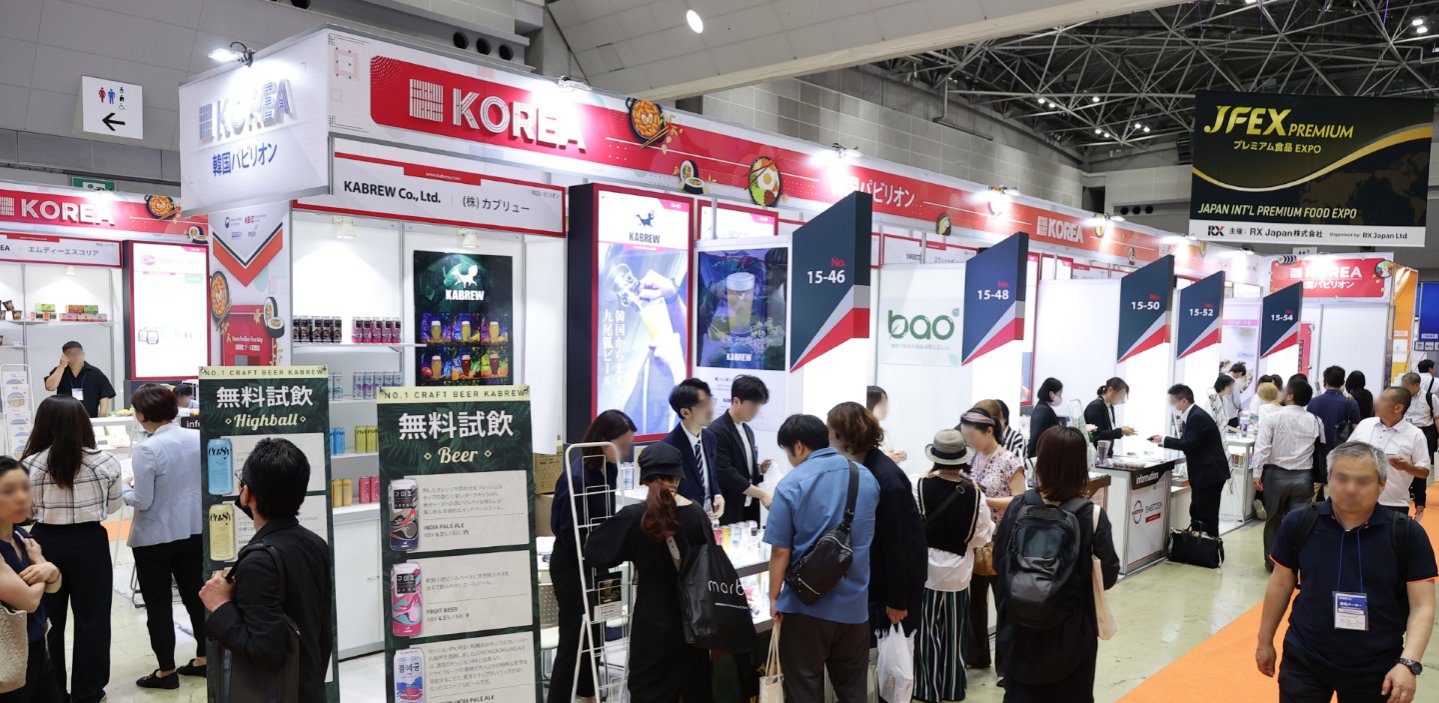
    The JFEX - Japan International Food & Beverage Expo - Winter 2026 will take place from November 11 to 13, 2026, at Tokyo Big Sight.

    This event focuses on connecting international buyers with Japanese food and beverage suppliers, showcasing a wide range of products including agri-food, seafood, and beverages.

    TL;DR

    1. 1Edition Dates: JFEX Winter 2026 runs November 11-13, 2026 at Tokyo Big Sight in Tokyo, Japan.
    2. 2Sector Focus: A dedicated B2B marketplace for Japanese food and beverage exports and sourcing.
    3. 3Free Registration: Visitor registration is free until November 5, 2026, after which admission costs JPY 5,500.
    4. 4Buyer Audience: Aimed at importers, distributors, and industry professionals sourcing from Japanese suppliers.
    5. 5Show Hours: Doors are open 10:00-17:00 each show day across the three-day programme.

    Why visit

    Visitors will gain access to a diverse range of Japanese food and beverage products, meet with key suppliers, and explore the latest trends in the industry. The expo provides invaluable networking opportunities with decision-makers and industry leaders. Event Dates: November 11-13, 2026. Location: Tokyo Big Sight, Japan. The JFEX - Japan International Food & Beverage Expo - Winter 2026 will take place from November 11 to 13, 2026, at Tokyo Big Sight.

    Why exhibit

    Exhibitors will benefit from direct access to international buyers, enhance their brand visibility, and engage in meaningful business discussions. Sector Focus: A dedicated B2B marketplace for Japanese food and beverage exports and sourcing. Buyer Audience: Aimed at importers, distributors, and industry professionals sourcing from Japanese suppliers. JFEX is crucial for showcasing Japan's food and beverage industry to international markets, facilitating trade and export.

    Attendees, exhibitors & solutions

    Who this event is for

    Visitor profile

    Typical attendee groups you can expect to meet.

    Importers and distributors of food and beverages
    Retail buyers from supermarkets and specialty stores
    Food service professionals including restaurants and cafes
    Logistics and supply chain managers
    Food manufacturers looking for sourcing opportunities
    Market researchers and industry analysts

    Exhibitor profile

    Main supplier and exhibitor segments present at the show.

    Food and beverage manufacturers
    Logistics and supply chain service providers
    Packaging solution companies
    Export consultants
    Retailers and wholesalers
    Food technology innovators

    Product categories

    Key solution areas showcased across the event.

    Japanese agri-food products including rice and vegetables
    Seafood products such as sushi and sashimi
    Beverages including sake and soft drinks
    Processed foods like snacks and sauces
    Kitchenware and food preparation tools
    Logistics solutions for food distribution

    Location & Facilities

    Venue

    Halls & areas

    1
    East Hall 7

    Tokyo Big Sight

    Tokyo, Japan

    Entrances & gates

    Main Entrance

    East Hall 7

    Attend

    Entry & tickets

    Trade-only
    Free registration

    Event days & opening times

    DayOpening hours
    10:00 AM –5:00 PM
    • General Admission

      Free registration until November 5, 2026

      ¥5,500
    Register

    Ticket info

    Registration deadline

    2026-11-05

    Who runs the show

    Organisers

    How the last edition performed

    Previous edition

    Current edition

    2026

    Forecast — not final

    Visitors

    23,070

    Exhibitors

    728

    Impact

    A bigger and stronger platform

    Visitor total from organiser recap language in captured sources. The most recent edition recorded 23,070+ visitors. The JFEX - Japan International Food & Beverage Expo - Winter 2026 will take place from November 11 to 13, 2026, at Tokyo Big Sight. This event focuses on connecting international buyers with Japanese food and beverage suppliers, showcasing a wide range of products including agri-food, seafood, and beverages. JFEX is crucial for showcasing Japan's food.

    Audience quality

    High-value decision-makers

    Visitors typically include Importers and distributors of food and beverages, Retail buyers from supermarkets and specialty stores, Food service professionals including restaurants and cafes, Logistics and supply chain managers. Event Dates: November 11-13, 2026. Location: Tokyo Big Sight, Japan. Focus on Japanese food and beverage exports. Free registration until November 5, 2026. Documented attendance reached 23,070+ visitors in the reference edition. Jfex - Japan International Food & Beverage Expo - Winter 2026.

    Exhibitor outcomes

    Real business growth

    Exhibitors will benefit from direct access to international buyers, enhance their brand visibility, and engage in meaningful business discussions. JFEX is crucial for showcasing Japan's food and beverage industry to international markets, facilitating trade and export opportunities. It serves as a platform for Japanese producers to connect with global buyers, enhancing the visibility of Japanese products abroad. Exhibitor categories include Food and beverage manufacturers, Logistics and supply chain service.

    Intelligence

    Market context

    Key market insights, trends, news and related events to help you understand the bigger picture.

    Tokyo (Ariake, Kōtō-ku), Kantō region, Japan — Tokyo Big Sight, on the Tokyo Bay waterfront

    Why it matters

    Japan is one of the world's largest food importers, sourcing roughly 60% of its calories from abroad (calorie-based food self-sufficiency around 38%), and Tokyo is where its trading houses, national retailers, convenience-store chains and food-service groups make sourcing decisions. JFEX is RX Japan's dedicated food and beverage trade show at Tokyo Big Sight, co-located with the Japan Food Export Fair, WINE TOKYO and adjacent food-industry shows — so a single trip covers both inbound buying (importers looking at overseas products) and outbound opportunity (overseas buyers sourcing Japanese ingredients, sake, confectionery and prepared foods). For exporters, JFEX is one of the few venues where a small producer can meet Japanese distributors, importers and retail buyers face to face in three days.

    Industry trends

    Key trends shaping this market and its wider industry.

    01

    Digital buyer journeys

    Professionals expect pre-show agendas, product finders, and meeting tools; suppliers align demos and literature to short on-stand decision cycles.

    02

    Sustainability in procurement

    Energy use, recyclable materials, and carbon reporting increasingly appear in RFPs and exhibitor scorecards across industrial trade fairs.

    03

    Automation and labour efficiency

    Visitors benchmark machinery, software, and services that reduce downtime, staffing pressure, and total cost of ownership.

    04

    Regional supply-chain resilience

    Buyers diversify suppliers across Europe, MENA, and Asia while favouring vendors with local service, spare parts, and training.

    05

    Hybrid engagement models

    Live demonstrations remain decisive, but follow-up webinars, digital catalogues, and year-round supplier portals extend the commercial window after the show.

    Global food & beverage trade-show circuit around JFEX

    Register for JFEX up to 3 months ahead (free pre-registration closes 5 Nov 2026); book stand space 6–9 months ahead. For the wider circuit, plan European shows in Q1 and autumn, Middle East in Q1 and Asian shows in spring and late autumn.

    JFEX sits inside a dense international F&B circuit. Asian sourcing pivots around FOODEX JAPAN in the spring and JFEX / FHC in the autumn, while European and Middle East shows anchor the winter buying season. Buyers commonly pair a JFEX visit with a spring FOODEX trip to cover both new-product launches and contract renegotiation cycles.

    January–March

    Gulfood (Dubai) and FOODEX JAPAN (Chiba) — the spring contract and new-listing season for Asia and the Middle East.

    April–June

    Southeast Asia shows such as FHA-Food & Beverage (Singapore); good for ASEAN distribution and food-service deals.

    September–November

    European flagships (Anuga / SIAL Paris) plus JFEX Winter and FHC Shanghai — the autumn buying window for the following year's programmes.

    Event names, host cities and websites are taken from the organisers' public sites; typical windows are historical and should be confirmed on each event's site before committing travel.

    Plan your trip

    Travel & logistics

    Local currency · JPY

    Arrival airports

    Choose from the following airports, with convenient access to the event and venue.

    NRT

    Tokyo

    Primary international gateway serving Tokyo.

    to venue

    45–70 min

    by car

    Hotel tiers

    A range of accommodation options near the venue and across key areas.

    Budget
    Ariake / Shinonome — 10–20 min walk or one stop on the Yurikamome/Rinkai Line to Tokyo Big Sight

    USD 75–130 / night

    Compact business hotels; book 4–8 weeks ahead because JFEX, co-located shows and Odaiba events fill the district in November.

    source
    Mid-range
    Ariake / Kokusai-Tenjijo — direct connection or 5–10 min walk to the venue

    USD 130–220 / night

    Best balance of walking distance and comfort; both properties are standard picks for Tokyo Big Sight exhibitors and buyers.

    source
    Premium
    Odaiba waterfront — 10–20 min by Yurikamome or taxi from the venue

    USD 220–420 / night

    Bay-view rooms, larger meeting/breakfast space and easy evening dining; convenient if you are hosting Japanese partners after show hours.

    source

    Local transport

    Get around the city with these convenient transport options.

    Yurikamome Line (elevated automated train)

    Estimated costJPY 390 (approx. USD 2.60)
    Best forShimbashi → Tokyo Big Sight Station (U11)

    Closest station to the East Halls — 3–5 min walk. ~18 min from Shimbashi; cars can be crowded 08:30–09:30 on show mornings.

    Rinkai Line (JR-through service)

    Estimated costJPY 220–500 (approx. USD 1.50–3.40)
    Best forShinjuku / Shibuya / Osaki → Kokusai-Tenjijo Station

    Direct trains from Shinjuku and Shibuya via Osaki; 7 min walk to the venue. Handy if you are staying in central Tokyo rather than Ariake.

    Subway / IC card

    Estimated costTokyo Metro 24-hour ticket JPY 600 (approx. USD 4); single rides JPY 180–330 (USD 1.20–2.20)
    Best forTokyo Metro & Toei network, including Tokyo Metro 24-hour ticket

    Suica/PASMO IC cards work on the Yurikamome, Rinkai Line, metro and buses. Japan Rail Pass does not cover the Yurikamome or Rinkai Line.

    Ride-hailing app

    Estimated costMetered taxi fare plus a small app booking fee (roughly USD 40–60 for a central Tokyo ↔ venue trip)
    Best forGO / Uber across central Tokyo and to the venue

    GO and Uber operate in Tokyo but supply around Ariake is thinner than in central wards; hailing from the venue taxi rank or pre-booking is usually faster at show close.

    taxi

    Estimated costJPY 15,000–20,000 (taxi to Tokyo Big Sight)
    Best forTokyo (NRT) to Tokyo Big Sight

    Narita Express to Tokyo Station, then Yurikamome or taxi.

    Plan your trip

    Visa & entry documents

    Check the latest visa requirements and entry guidelines before travelling.

    Visa not required
    ATA Carnet: accepted

    Visa-free short-term stay (usually 90 days) for ~70 countries/regions including the US, UK, EU/Schengen, Canada, Australia, New Zealand, South Korea, Singapore, Taiwan, Hong Kong and Brazil. A few exempt nationalities (e.g. Indonesia, Thailand) receive 15 days. Exemptions cover business meetings and trade-fair attendance, not paid work.

    Japan accepts ATA Carnets for temporarily imported exhibition goods, professional equipment and commercial samples. The carnet must list Japan and itemise the goods; confirm the exhibition-goods procedure with Japanese customs or the Japan Chamber of Commerce and Industry before shipping freight to Tokyo Big Sight.

    Official visa page

    Weather

    November in Tokyo is one of the driest, clearest months: daytime highs of 15–18°C (59–64°F) and overnight lows of 7–11°C (45–52°F), with roughly 90–100 mm of rain spread over ~8–10 days. Tokyo Big Sight sits on the breezy Ariake waterfront, so mornings and evenings feel cooler than central Tokyo — pack a light coat or trench plus a compact umbrella.

    Plan for the climate

    Check temperatures and pack accordingly

    Venue connectivity

    Confirm mobile roaming or local SIM options for business visitors to Japan.

    Ride-hailing

    Taxis

    Public transit

    Car rentals

    Cultural notes

    Useful information to help you have a smooth and respectful visit.

    Tipping and payment

    Tipping is not practised in Japan — service is included and leaving cash can cause confusion. A small wrapped gift from your home country, or a thank-you email after a meeting, is the appropriate gesture. Cash is still common in smaller restaurants; Suica/PASMO and major credit cards work widely.

    Meetings, business cards and punctuality

    Business cards (meishi) are exchanged with both hands and a slight bow; read the card before putting it away, never write on it. Arrive on time to the minute, and use formal titles plus family name (e.g. 'Tanaka-san'). Seating order at restaurants and meetings follows seniority.

    Show-floor and public etiquette

    Business or smart-casual dress is standard at Tokyo Big Sight. Ask before photographing booths or products, keep voices low on trains and in queues, and avoid eating while walking. Slip-on shoes help if you enter exhibition or factory-floor booths.

    Practical guides

    Visitor & Exhibitor Essentials

    Everything needed to arrive prepared, navigate the event, and make the visit productive.

    Flights

    Destination: NRT

    Book flights to NRT (Tokyo) when possible for the shortest transfer to the venue.

    Visa

    Japan admits most Western and Asian business travellers visa-free for short-term stays: citizens of ~70 countries/regions (United States, United Kingdom, all EU/Schengen states, Canada, Australia, New Zealand, South Korea, Singapore, Taiwan, Hong Kong, Brazil and most of Latin America) receive a 90-day 'Temporary Visitor' status on arrival — a handful of exempt nationalities (e.g. Indonesia, Thailand) receive 15 days only. Nationals of countries without an exemption (China, India, the Philippines, Vietnam, Russia, most African states) must obtain a short-term visa in advance from a Japanese embassy/consulate or via the Japan eVisa portal; allow 5–10 business days plus document time and bring your JFEX registration confirmation. Business meetings, trade fairs and contract negotiations are permitted on Temporary Visitor status; paid employment is not. Japan also accepts ATA Carnets for exhibition goods and professional equipment.

    Estimated cost: Varies by visa type and nationality (check official site).

    Processing: Varies by nationality; apply several weeks before travel.

    Carry a passport valid for the duration of stay, a return/onward ticket and hotel address. Business meetings, conference attendance and trade-fair visits are permitted; paid employment is not. Apply at a Japanese embassy/consulate or via the Japan eVisa portal where available (currently includes China, India, Vietnam and Brazil among others). Fee is JPY 3,000 (≈ USD 20); some nationalities pay rec

    Official

    Hotels

    Find a stay near the venue with options for every budget.

    Areas to stay

    Ariake / Kokusai-Tenjijo — direct connection or 5–10 min walk to the venue · Ariake / Shinonome — 10–20 min walk or one stop on the Yurikamome/Rinkai Line to Tokyo Big Sight · Odaiba waterfront — 10–20 min by Yurikamome or taxi from the venue

    budget

    $75-$130 USD/night

    Book

    mid range

    $130-$220 USD/night

    Book

    premium

    $220-$420 USD/night

    Book

    Transport

    Get to the venue and around the city with these options.

    Airport → venue: Primary gateways: Tokyo (NRT): Primary international gateway serving Tokyo.. Allow road or rail time to Tokyo Big Sight; on-site parking is usually available at major exhibition venues.

    Hotel → venue: Precinct hotels near Tokyo Big Sight: Ariake / Shinonome — 10–20 min walk or one stop on the Yurikamome/Rinkai Line to Tokyo Big Sight: Daiwa Roynet Hotel Tokyo Ariake, Far East Village Hotel Tokyo, Ariake; Ariake / Kokusai-Tenjijo — direct connection or 5–10 min walk to the venue: Sotetsu Grand Fresa Tokyo-Bay Ariake, Tokyo Bay Ariake Washington Hotel; Odaiba waterfront — 10–20 min by Yurikamome or taxi from the venue: Hilton Tokyo Odaiba, Grand Nikko Tokyo Daiba, Hotel Villa Fontaine Grand Tok

    Ride-hail: Ride-hailing apps are commonly used in Tokyo; confirm local availability before travel.

    Public transit: Check local bus/metro options for routes to Tokyo Big Sight.

    Parking: On-site parking is available at Tokyo Big Sight; confirm daily rates and hall access on the organiser or venue site.

    Weather

    Plan and pack for the event climate.

    Month: November 2026

    Temperature: Daytime highs 15–18°C (59–64°F), overnight lows 7–11°C (45–52°F); occasional colder snaps late in the month (down to ~5°C at night).

    Seasonality: November is one of Tokyo's drier months — roughly 90–100 mm of rain over ~8–10 days, with many crisp, sunny days and low humidity. Autumn foliage peaks across Tokyo in late November; the Ariake waterfront is windier and cooler than the city centre.

    Packing: November in Tokyo is one of the driest, clearest months: daytime highs of 15–18°C (59–64°F) and overnight lows of 7–11°C (45–52°F), with roughly 90–100 mm of rain spread over ~8–10 days. Tokyo Big Sight sits on the breezy Ariake waterfront, so mornings and evenings feel cooler than central Tokyo — p

    Plan your trip

    Planning

    Best day to visit: Day 2 — Thursday 12 November 2026

    JFEX runs Wednesday 11 to Friday 13 November 2026. Day 1 carries the opening ceremony, the longest registration queues and the most supplier stock on display, but aisles are congested and staff are distracted by launch traffic. Day 2 keeps every exhibitor fully staffed while the floor calms down, which is ideal for booked 20–30 minute meetings, technical and specification questions and repeat visits to shortlisted booths. Day 3 (Friday) thins out as exhibitors begin dismantling and many teams travel home, so treat it as a short follow-up morning rather than a full sourcing day.

    1

    Confirm Japan entry requirements — Check visa or visa-free short-stay rules for your nationality before booking; apply early if a visa is required.

    2

    Book flights to Tokyo — Target arrival on November 10, 2026, the day before the November 11-13 show opens.

    3

    Reserve a hotel in Tokyo — Book near Tokyo Big Sight or on a direct rail link for the three show days plus arrival night.

    4

    Complete free visitor registration — Register online at jfex.jp before November 5, 2026 to avoid the JPY 5,500 admission fee.

    5

    Download the hall plan and exhibitor list — Review the JFEX floor plan and shortlist Japanese food and beverage suppliers to visit.

    6

    Pre-schedule B2B meetings — Contact target exhibitors in advance and book meeting slots across the three show days.

    7

    Plan airport to hotel and venue transport — Confirm airport transfer and onward travel to Tokyo Big Sight; allow extra time on show mornings.

    8

    Prepare business documents and materials — Bring business cards, buyer requirements, product specs, and bilingual collateral.

    9

    Check November Tokyo weather and pack — Expect mild late-autumn conditions; pack layered business attire and a compact umbrella.

    10

    Confirm connectivity and payment setup — Arrange a data plan or eSIM for Japan and carry a card plus some local cash for incidental costs.

    11

    Arrive and collect your badge — Attend Day 1 on November 11 for badge collection and security screening; show hours are 10:00-17:00.

    Side trips

    2

    Odaiba and Tokyo Bay waterfront


    Rainbow Bridge views, DiverCity Tokyo Plaza, Aqua City and teamLab Planets — the easiest decompression walk or dinner run from the venue, reachable in 5–10 minutes without entering central Tokyo.


    Toyosu Market and Ginza


    Toyosu Fish Market's observation decks and sushi counters open early and are the closest food-industry pilgrimage from Ariake; Ginza adds department-store food halls and flagship retail for competitive benchmarking.


    Networking spots

    3

    Buyer lounge and B2B meeting area, East Halls, Tokyo Big Sight

    Official Show-Floor Networking


    Tokyo Big Sight Conference Tower cafés and restaurant floor

    Informal on-Site Meetings


    Ariake / Odaiba hotel bars and restaurants (Tokyo Bay Ariake Washington Hotel, Villa Fontaine Grand Tokyo Ariake, Odaiba waterfront)

    Evening Business Dining


    Budget

    Costs & budget

    Cost reference

    Official cost items and estimated ranges for exhibitors.

    visitor_ticket

    visitor · General Admission

    JPY 5500 / per person

    official

    visa_fee

    visitor · Entry visa

    USD 20 / per application

    official

    Decision

    Visit, exhibit, or skip?

    Should you go?

    Pick the closest answer for each. Your recommendation updates live.

    QUESTION 1 OF 6

    What is your primary role?

    Decision matrix

    Compare participation options side by side to choose the best fit for your objectives.

    visit

    You need supplier shortlists, price benchmarking or category insight, and can commit 2–3 days on the floor — Day 2 (Thu 12 Nov) is the most productive single day.

    Best for

    Importers, distributors, retail and food-service buyers, exporters scouting Japanese suppliers, and product/packaging teams benchmarking the Japanese market.

    Min. budget

    $490.00

    Timeline

    1–3 months: register free by 5 Nov 2026 (JPY 5,500 on the door), then book flights and Ariake/Odaiba hotel 4–8 weeks ahead.

    Risks

    Budget estimate from listing cost signals — confirm live rates.

    Show-week hotel rates in Ariake/Odaiba spike and sell out; last-minute rooms move to central Tokyo and add 40+ minutes of commuting.

    Visa-free entry does not permit paid work — keep the trip to meetings and sourcing.

    November evenings on the waterfront are cool and windy; plan for a 15–18°C daytime, 7–11°C night range.

    exhibit

    You already have Japanese or Asian channel interest to convert, can staff the booth with Japanese-speaking or interpreter support, and can commit to follow-up visits after the show.

    Best for

    Overseas food and beverage producers, ingredient suppliers and equipment/packaging brands targeting Japanese importers, trading houses and retail buyers.

    Min. budget

    $2,950.00

    Timeline

    6–9 months: book space with RX Japan, appoint a booth builder, and arrange freight/ATA Carnet, samples and labelling compliance 3–4 months before the show.

    Risks

    Budget estimate from listing cost signals — confirm live booth pricing with the organiser, as stand contracts, shell scheme and freight are quoted separately.

    Japanese labelling, JAS, allergen and (where relevant) halal requirements must be satisfied before listings; budget for compliance review.

    Samples and freight require customs handling — arrange ATA Carnet or a temporary-import agent early.

    Return on a first-time stand depends on pre-booked buyer meetings; Japanese buyers rarely commit on a cold walk-up.

    skip

    Your product categories, price points or channel strategy do not align with Japanese supply and demand — for example commodity lines already sourced locally at better terms.

    Best for

    Teams with no Japan/Asia sourcing mandate this cycle, or those whose categories are not represented by Japanese and Asian suppliers.

    Min. budget

    Not yet confirmed

    Timeline

    N/A — revisit in the next JFEX cycle or use FOODEX JAPAN (March, Chiba) as the alternative.

    Risks

    No major risks listed.

    FAQs & glossary

    Answers

    Frequently asked

    Glossary

    1
    B2B
    Business-to-Business, referring to transactions between businesses.
    2
    Expo
    A large-scale exhibition where companies showcase their products and services.
    3
    Logistics
    The detailed organization and implementation of a complex operation, often involving the transportation of goods.
    4
    Networking
    The action or process of interacting with others to exchange information and develop professional or social contacts.
    5
    Registration
    The process of signing up to attend an event, often requiring personal information and sometimes a fee.
    6
    Supplier
    A person or organization that provides goods or services.
    7
    Exhibitor
    A company or individual that displays products or services at an exhibition.
    8
    Visitor
    A person who attends an event, typically to view exhibits and network.

    Trust footer

    Sources

    4

    References

    1

    Publishers

    0

    Date checked

    1

    JFEX

    Digital business cards for the show floor

    Display a free company card at your booth, or share your professional card on the show floor.

    Create a free card