October Special — 50% off Spotlights and exhibitor listsSee prices

    Dates

    7–9 Oct 2026

    City / country

    Tokyo, Japan

    Venue

    Tokyo Big Sight

    Time

    10:00 AM – 5:00 PM

    20 Floor Picks

    Matched booths for International Optical Fair Tokyo (IOFT) 2026

    Get my picks

    Exhibiting at?

    Enter your business email to get a free first Exclusive Spotlight worth 250$.

    Explore Spotlights
    Official Website Register / Buy Tickets

    Are you the organiser of this event?

    Event overview

    Overview

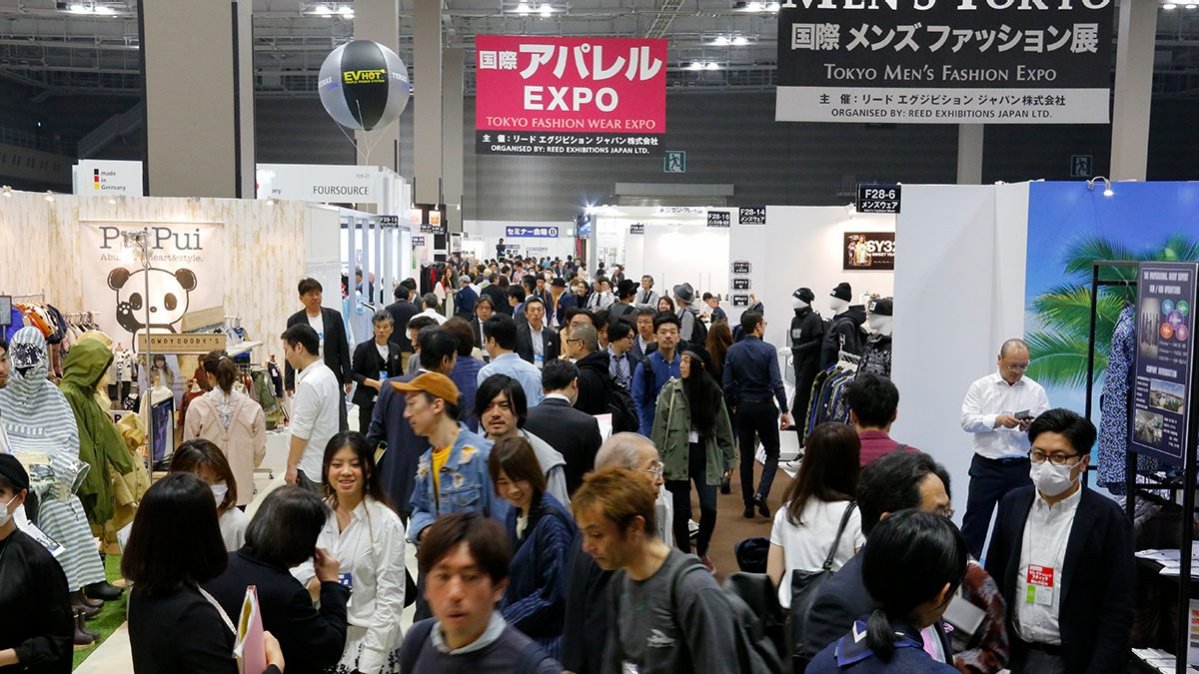
    FaW TOKYO is Japan’s largest fashion trade show.

    It brings together fashion brands, designers, fabric and material suppliers, OEM/ODM companies, and fashion tech solutions from Japan and around the world.

    Held twice a year in Tokyo, it’s a place for industry professionals to discover new trends, connect with suppliers and buyers, and expand their business in the fashion market.

    TL;DR

    1. 1Event dates: October 7-9, 2026.
    2. 2Location: Tokyo Big Sight, Japan.
    3. 3Organized by RX Japan.
    4. 4Features 10 specialized shows covering the entire fashion spectrum.
    5. 5Expected attendance of over 20,000 industry professionals.

    Why visit

    Visitors gain access to a diverse range of exhibitors, networking opportunities, and insights into the latest fashion trends. Event dates: October 7-9, 2026. Location: Tokyo Big Sight, Japan. Expected attendance of over 20,000 industry professionals.

    Why exhibit

    Exhibitors can showcase their products to a targeted audience of industry professionals, gain visibility in the market, and establish valuable connections with potential buyers and partners. FaW TOKYO serves as a crucial platform for connecting global buyers and suppliers, showcasing the latest trends and innovations in the fashion industry. It highlights Japan's role as a leader in fashion and sustainability, making it essential for industry professionals.

    Attendees, exhibitors & solutions

    Who this event is for

    Visitor profile

    Typical attendee groups you can expect to meet.

    Fashion brand owners and designers
    Retail buyers from department stores and boutiques
    OEM/ODM manufacturers
    Textile suppliers and fabric manufacturers
    Sourcing managers from global retailers
    Industry professionals seeking sustainable solutions

    Exhibitor profile

    Main supplier and exhibitor segments present at the show.

    Fashion brands and designers
    Textile and fabric suppliers
    OEM/ODM manufacturers
    Sustainable fashion companies
    Fashion tech solution providers
    Accessories and footwear brands

    Product categories

    Key solution areas showcased across the event.

    Apparel and fashion goods
    Textiles and fabrics
    Sustainable materials and production technologies
    Fashion accessories and footwear
    OEM/ODM services
    Fashion tech solutions

    Location & Facilities

    Venue

    Tokyo Big Sight

    Tokyo, Japan

    Attend

    Entry & tickets

    Trade-only
    Free registration

    Event days & opening times

    DayOpening hours
    10:00 AM –5:00 PM
    • General Admission

      Free registration until October 6, 2026.

      ¥5,500
    Register

    Ticket info

    Registration deadline

    2026-10-06

    Who runs the show

    Organisers

    How the last edition performed

    Previous edition

    Current edition

    2026

    Forecast — not final

    Visitors

    15,000

    Exhibitors

    400

    Impact

    A bigger and stronger platform

    FaW TOKYO is Japan’s largest fashion trade show. It brings together fashion brands, designers, fabric and material suppliers, OEM/ODM companies, and fashion tech solutions from Japan and around the world. Held twice a year in Tokyo, it’s a place for industry professionals to discover new trends, connect with suppliers and buyers, and expand their business in the fashion market.

    Audience quality

    High-value decision-makers

    Visitors typically include Fashion brand owners and designers, Retail buyers from department stores and boutiques, OEM/ODM manufacturers, Textile suppliers and fabric manufacturers. Event dates: October 7-9, 2026. Location: Tokyo Big Sight, Japan. Organized by RX Japan. Features 10 specialized shows covering the entire fashion spectrum. International Optical Fair Tokyo (IOFT) 2026 attracts an audience aligned with the organiser's published visitor positioning.

    Exhibitor outcomes

    Real business growth

    Exhibitors can showcase their products to a targeted audience of industry professionals, gain visibility in the market, and establish valuable connections with potential buyers and partners. FaW TOKYO serves as a crucial platform for connecting global buyers and suppliers, showcasing the latest trends and innovations in the fashion industry. It highlights Japan's role as a leader in fashion and sustainability, making it essential for industry professionals. Exhibitor categories include Fashion brands.

    Intelligence

    Market context

    Key market insights, trends, news and related events to help you understand the bigger picture.

    Tokyo, Japan — East Asia / Asia-Pacific optical and eyewear market

    Why it matters

    Japan is one of the world's largest and most fashion-literate eyewear markets, and IOFT at Tokyo Big Sight is its principal annual sourcing and launch platform. Japan combines an ageing population that drives demand for progressive and functional lenses with a globally respected high-end frame industry — Sabae (Fukui) and other domestic clusters — attracting buyers from across Asia, Europe and North America. For suppliers, the show is the most efficient single point of access to Japanese distributors, optical chains and licensing partners; for buyers, it is where Japanese and international brands present new-season collections alongside lens technology and lab equipment.

    Industry trends

    Key trends shaping this market and its wider industry.

    01

    Digital buyer journeys

    Professionals expect pre-show agendas, product finders, and meeting tools; suppliers align demos and literature to short on-stand decision cycles.

    02

    Sustainability in procurement

    Energy use, recyclable materials, and carbon reporting increasingly appear in RFPs and exhibitor scorecards across industrial trade fairs.

    03

    Automation and labour efficiency

    Visitors benchmark machinery, software, and services that reduce downtime, staffing pressure, and total cost of ownership.

    04

    Regional supply-chain resilience

    Buyers diversify suppliers across Europe, MENA, and Asia while favouring vendors with local service, spare parts, and training.

    05

    Hybrid engagement models

    Live demonstrations remain decisive, but follow-up webinars, digital catalogues, and year-round supplier portals extend the commercial window after the show.

    Global optical and eyewear trade-show circuit

    Plan the circuit 9–12 months ahead: space contracts are usually signed 6–12 months before each show and hotel rates in host cities firm up 3–6 months out.

    The optical industry runs on a small number of large regional fairs that buyers and brands plan as a yearly circuit. IOFT in October anchors Asia alongside SILMO in Paris; MIDO and opti cover European buying in the winter, and the US is served by the Vision Expo series. Brands typically launch new collections at SILMO and IOFT and use MIDO, opti and Hong Kong for follow-on volume orders.

    January–February

    MIDO (Milan) and opti (Munich) open the European buying year.

    September–October

    SILMO Paris launches new collections; IOFT Tokyo and Vision Expo West serve Asia and the US in the same window.

    November

    Hong Kong Optical Fair closes the Asian sourcing calendar with a strong OEM/ODM focus.

    Peer events and typical timing compiled from public event websites and standard industry calendar patterns; verify exact dates on each organiser's site before booking.

    Plan your trip

    Travel & logistics

    Local currency · JPY

    Arrival airports

    Choose from the following airports, with convenient access to the event and venue.

    NRT

    Tokyo

    Primary international gateway serving Tokyo.

    to venue

    45–70 min

    by car

    Hotel tiers

    A range of accommodation options near the venue and across key areas.

    Budget
    Ariake / Kokusai-Tenjijo — 5–15 min walk to Tokyo Big Sight

    USD 85–140 / night

    Limited inventory in the immediate Ariake zone during show week — book 2–3 months ahead.

    source
    Mid-range
    Ariake / Odaiba waterfront — 5–15 min by Yurikamome

    USD 130–210 / night

    Odaiba hotels give bay views and easy Yurikamome access to Kokusai-Tenjijo Seimon station.

    source
    Premium
    Odaiba / Daiba — 15–25 min by Yurikamome or taxi

    USD 250–420 / night

    Best for hosting client dinners and evening meetings; concierge can arrange airport transfers.

    source

    Local transport

    Get around the city with these convenient transport options.

    rail

    Estimated costJPY 200–400 one way (approx. USD 1.5–3.0)
    Best forYurikamome Line — Kokusai-Tenjijo Seimon Station to Tokyo Big Sight entrances

    Elevated, driverless line linking Shimbashi and Toyosu to the venue; trains every 3–5 min in peak.

    rail

    Estimated costJPY 200–500 one way (approx. USD 1.5–3.5)
    Best forRinkai Line — Kokusai-Tenjijo Station to Osaki / Shibuya / Shin-Kiba

    Fastest rail link from central Tokyo and the JR Yamanote loop; ~8 min walk to the venue.

    shuttle_bus

    Estimated costJPY 2,800–3,500 one way (approx. USD 19–24)
    Best forAirport limousine bus — Narita (NRT) to Tokyo Big Sight / Ariake hotel area

    Runs to the Ariake and Odaiba hotel cluster; allow 75–110 min depending on traffic.

    taxi

    Estimated costJPY 20,000–28,000 (approx. USD 135–190)
    Best forTokyo (NRT) to Tokyo Big Sight

    Metered plus expressway tolls; useful only for late arrivals or when carrying exhibit samples.

    metro_card

    Estimated costJPY 500 refundable deposit (approx. USD 3.5) plus top-up; typical day of travel JPY 800–1,500 (USD 5–10)
    Best forSuica / PASMO IC card — all Tokyo rail, metro and buses

    Mobile Suica is available in Apple Wallet; cards also work at station lockers and convenience stores.

    Plan your trip

    Visa & entry documents

    Check the latest visa requirements and entry guidelines before travelling.

    Visa not required
    ATA Carnet: accepted
    TypeWho needs itFeeProcessing
    Visa waiver — short-term stay up to 90 daysNationals of around 70 countries and regions, including the US, UK, EU/EEA, Canada, Australia, New Zealand, South Korea, Singapore, Hong Kong, Taiwan, Brazil and most of Latin America, visiting for business meetings, trade fairs or market research.—Not applicable — entry permission granted on arrival
    Short-term visitor visa (single entry, business purposes)Nationals without a visa-waiver agreement — e.g. China, the Philippines, Vietnam, Indonesia, India, Thailand (business visits beyond waiver terms) and most African and Middle-Eastern states.$20.005–10 working days after submission; allow 3–4 weeks to secure an embassy or consulate appointment
    Multiple-entry short-term visaFrequent business travellers from eligible countries with sufficient travel history and financial standing.$40.0010–15 working days; allow 3–4 weeks end to end

    Short business visits (up to 90 days) are visa-free for nationals of roughly 70 countries including the US, UK, EU/EEA, Canada, Australia, South Korea, Singapore and most of Latin America; all other nationalities must obtain a visa before travel.

    Japan accepts ATA Carnets for the temporary admission of professional equipment, samples and exhibit goods; arrange the Carnet with your national guaranteeing chamber before shipping and confirm handling with the freight forwarder.

    Official visa page

    Weather

    Expect mild, comfortable October conditions in Tokyo: typical afternoon highs of 22–24°C and overnight lows of 15–17°C. Early-to-mid October still carries the tail of the rainy/typhoon season, so a compact umbrella and a light layer for air-conditioned halls are worth packing.

    Plan for the climate

    Check temperatures and pack accordingly

    Venue connectivity

    Confirm mobile roaming or local SIM options for business visitors to Japan.

    Ride-hailing

    Taxis

    Public transit

    Car rentals

    Cultural notes

    Useful information to help you have a smooth and respectful visit.

    Business card etiquette

    Exchange meishi with both hands, present your card face-up and take a moment to read the other person's card before pocketing it. Punctuality for meetings is essential and a slight bow accompanies greetings.

    Tipping

    Tipping is not customary in Japan. Restaurants, taxis and hotels include service in the price; leaving cash on the table can cause confusion.

    Dress and conduct on the show floor

    Dark business suits for meetings, smart-casual with comfortable shoes for the halls. Keep phone calls short and step aside on trains, and avoid eating while walking on public transport.

    Practical guides

    Visitor & Exhibitor Essentials

    Everything needed to arrive prepared, navigate the event, and make the visit productive.

    Flights

    Destination: NRT

    Book flights to NRT (Tokyo) when possible for the shortest transfer to the venue.

    Visa

    Most Western and Asia-Pacific business visitors — including nationals of the US, UK, EU/EEA, Canada, Australia, South Korea, Singapore and around 70 countries in total — can enter Japan visa-free for short business visits of up to 90 days. Nationals of China, the Philippines, Vietnam, Indonesia, India and most African and Middle-Eastern states need a short-term visitor visa applied for in advance at a Japanese embassy or consulate, costing roughly USD 20–40 (JPY 3,000–6,000) with 5–15 working days processing after the appointment. Carry a passport valid for the duration of stay, pre-register arrival details in Visit Japan Web, and bring printed invitations or host-company letters if entering on a business visa.

    Estimated cost: Varies by visa type and nationality (check official site).

    Processing: Varies by nationality; apply several weeks before travel.

    Passport must be valid for the planned stay. Register immigration and customs details in Visit Japan Web before departure to use the QR-code lanes. Standard fee is JPY 3,000 (higher, around JPY 6,000 / USD 40, for certain nationalities under reciprocity). A letter of invitation or guarantee from a Japanese host company or the organiser may be requested. Not valid for paid employment.

    Official


    Hotels

    Find a stay near the venue with options for every budget.

    Areas to stay

    Ariake / Kokusai-Tenjijo — 5–15 min walk to Tokyo Big Sight · Ariake / Odaiba waterfront — 5–15 min by Yurikamome · Odaiba / Daiba — 15–25 min by Yurikamome or taxi

    budget

    $85-$140 USD/night

    Book

    mid range

    $130-$210 USD/night

    Book

    premium

    $250-$420 USD/night

    Book

    Transport

    Get to the venue and around the city with these options.

    Airport → venue: Primary gateways: Tokyo (NRT): Primary international gateway serving Tokyo.. Allow road or rail time to Tokyo Big Sight; on-site parking is usually available at major exhibition venues.

    Hotel → venue: Precinct hotels near Tokyo Big Sight: Ariake / Kokusai-Tenjijo — 5–15 min walk to Tokyo Big Sight: Tokyo Bay Ariake Washington Hotel, Daiwa Roynet Hotel Tokyo Ariake; Ariake / Odaiba waterfront — 5–15 min by Yurikamome: Hotel Sunroute Ariake, Tokyo Bay Ariake Washington Hotel (upper floors); Odaiba / Daiba — 15–25 min by Yurikamome or taxi: Hilton Tokyo Odaiba, Grand Nikko Tokyo Daiba, Tokyo Baycourt Club Hotel & Spa Resort.

    Ride-hail: Ride-hailing apps are commonly used in Tokyo; confirm local availability before travel.

    Public transit: Check local bus/metro options for routes to Tokyo Big Sight.

    Parking: On-site parking is available at Tokyo Big Sight; confirm daily rates and hall access on the organiser or venue site.

    Weather

    Plan and pack for the event climate.

    Month: October 2026

    Temperature: October average highs 22–24°C (72–75°F) and lows 15–17°C (59–63°F); occasional warm days near 26°C early in the month.

    Seasonality: Early-to-mid October is the tail end of Japan's wet/typhoon season — roughly 180–200 mm of rainfall spread over about 10 days. Conditions become drier and mild from mid-October, so plan for short heavy showers rather than all-day rain.

    Packing: Expect mild, comfortable October conditions in Tokyo: typical afternoon highs of 22–24°C and overnight lows of 15–17°C. Early-to-mid October still carries the tail of the rainy/typhoon season, so a compact umbrella and a light layer for air-conditioned halls are worth packing.

    Plan your trip

    Planning

    Best day to visit: Day 1 — Wednesday 7 October 2026

    Trade fairs of this profile front-load their programme: new collections and products are unveiled on the opening day, exhibitor staff and senior decision makers are all on the floor, and press activity peaks before attention thins on the final afternoon. Day 1 also leaves Day 2 and Day 3 free for follow-up sourcing meetings and technical seminars, so a single-day visitor gets the widest access with the least risk of empty booths.

    Sample visitor itinerary

    Route-optimised day
    TBA

    Arrive at Tokyo Big Sight, badge collection and venue orientation

    Tokyo Big Sight — main entrance / registration hall
    TBA

    Frames and eyewear design walk-through — Japanese and international frame makers

    Eyewear / frames exhibition halls
    TBA

    Scheduled supplier and buyer meetings

    Business matching / meeting area, Tokyo Big Sight
    TBA

    Lens, technology and optical equipment zone plus seminar sessions

    Lens / equipment halls and conference area

    Side trips

    2

    Odaiba and Tokyo Bay waterfront

    Asakusa, Senso-ji and the Sumida River

    Networking spots

    3

    Business matching and buyer meeting area

    Conference and seminar area foyer

    Ariake / Odaiba hotel lobbies and bars

    Budget

    Costs & budget

    Cost reference

    Official cost items and estimated ranges for exhibitors.

    visitor_ticket

    visitor · General Admission

    JPY 5500 / per person

    official

    visa_fee

    visitor · Short-term visitor visa (single entry, business purposes)

    USD 20 / per application

    official

    visa_fee

    visitor · Multiple-entry short-term visa

    USD 40 / per application

    official

    Decision

    Visit, exhibit, or skip?

    Should you go?

    Pick the closest answer for each. Your recommendation updates live.

    QUESTION 1 OF 6

    What is your primary role?

    Decision matrix

    Compare participation options side by side to choose the best fit for your objectives.

    visit

    You need first-hand product assessment, supplier shortlisting or channel-partner introductions in Japan and have at least two full days on the floor.

    Best for

    Optical retailers, optometrists, distributors, e-commerce buyers and trade press evaluating frames, lenses and lab equipment for the Japanese and wider Asian market.

    Min. budget

    $5,800.00

    Timeline

    4–8 weeks: free online registration before 6 October, plus flights and Ariake/Odaiba hotel bookings.

    Risks

    Budget estimate from listing cost signals — confirm live rates.

    Ariake-area hotel inventory is tight during show week and rates spike.

    Limited English-language support at some exhibitor booths — arrange interpreters early.

    exhibit

    You have a defined Japan/Asia distribution target, a pre-booked meeting pipeline and budget for a multi-show Asian circuit.

    Best for

    Eyewear brands, lens and equipment manufacturers, diagnostic-technology firms and Japanese distributors seeking retail chains, wholesale partners or licensing deals.

    Min. budget

    $26,100.00

    Timeline

    6–12 months: space contract and deposit, stand design and build, freight and ATA Carnet, staff travel and Japanese marketing.

    Risks

    Budget estimate from listing cost signals — confirm live rates.

    Stand space and build costs in Tokyo are high, and shipping exhibit goods requires customs and Carnet planning.

    Returns depend on pre-booked meetings; walk-up traffic alone rarely justifies the spend.

    skip

    Japan is not a near-term market and the trip cost cannot be justified against existing supplier relationships.

    Best for

    Teams with no Japanese or Asian commercial remit, early-stage concept projects, and buyers already served by the SILMO, MIDO or Vision Expo circuit.

    Timeline

    Not applicable.

    Risks

    No major risks listed.

    FAQs & glossary

    Answers

    Frequently asked

    Glossary

    1
    OEM
    Original Equipment Manufacturer, a company that produces parts or equipment that may be marketed by another manufacturer.
    2
    ODM
    Original Design Manufacturer, a company that designs and manufactures a product as specified and eventually rebranded by another company.
    3
    B2B
    Business to Business, a transaction between businesses, such as between a manufacturer and a wholesaler.
    4
    Sustainable Fashion
    Fashion that is designed, manufactured, distributed, and used in ways that are environmentally friendly.
    5
    Textile
    A type of cloth or woven fabric.
    6
    Fashion Tech
    The intersection of fashion and technology, focusing on innovations in the fashion industry.
    7
    Trade Show
    An exhibition where companies in a specific industry showcase their products and services.
    8
    Fashion Industry
    The industry involved in the design, manufacturing, marketing, and selling of clothing and accessories.

    Trust footer

    Sources

    5

    References

    2

    Publishers

    0

    Date checked

    1

    RX Japan

    2

    FaW TOKYO

    Digital business cards for the show floor

    Display a free company card at your booth, or share your professional card on the show floor.

    Create a free card