October Special — 50% off Spotlights and exhibitor listsSee prices

    Dates

    27–29 Apr 2027

    City / country

    Nuremberg, Germany

    Venue

    Messezentrum 1

    Time

    9:00 AM – 6:00 PM daily

    20 Floor Picks

    Matched booths for European Coatings Conference

    Get my picks

    Exhibiting at?

    Enter your business email to get a free first Exclusive Spotlight worth 250$.

    Explore Spotlights
    Official Website Register / Buy Tickets

    Are you the organiser of this event?

    Event overview

    Overview

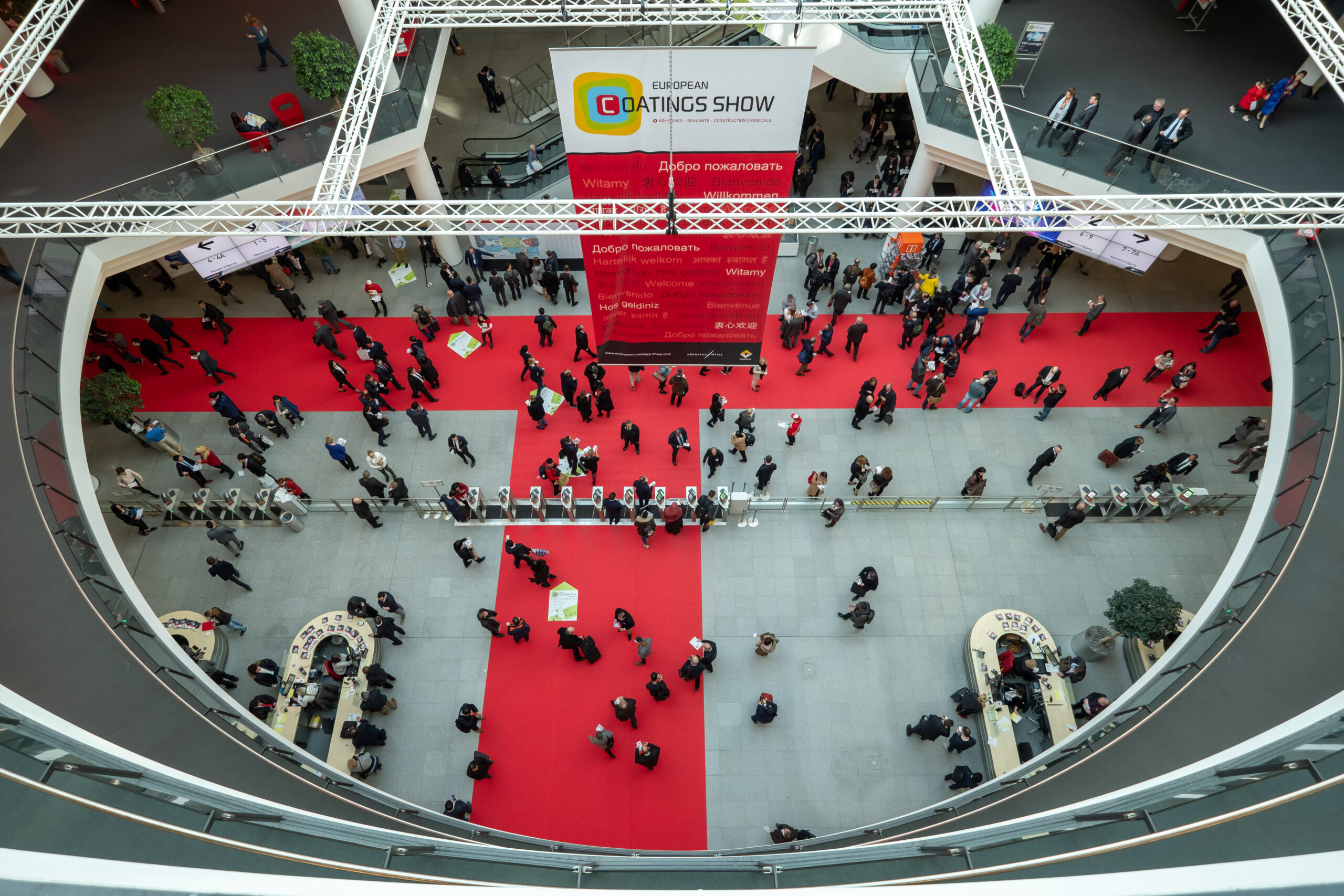
    The European Coatings Show is the industry’s leading trade fair for paints, coatings, adhesives, sealants, and construction chemicals, taking place from 27 – 29 April 2027 in Nuremberg.

    This event gathers key players to showcase innovations and discuss trends in the coatings sector.

    European Coatings Conference takes place in Nuremberg, Germany.

    TL;DR

    1. 1Dates and Venue: The European Coatings Show runs from 27 – 29 April 2027 at Messezentrum 1, Nuremberg, Germany.
    2. 2Scale and Focus: This leading trade fair for paints and coatings attracts exhibitors and visitors from around the globe, showcasing the latest innovations.
    3. 3Organiser: The event is organised by Vincentz Network and NürnbergMesse GmbH, ensuring a high-quality experience for all participants.
    4. 4Buyer Authority: With 89% of visitors being decision-makers, exhibitors can engage directly with influential buyers in the coatings industry.
    5. 5Entry: Registration is now open for exhibitors and visitors, with detailed information available on the official website.

    Why visit

    Attending the European Coatings Show offers visitors the opportunity to connect with industry leaders, explore cutting-edge technologies, and gain insights into market trends. Dates and Venue: The European Coatings Show runs from 27 – 29 April 2027 at Messezentrum 1, Nuremberg, Germany. Scale and Focus: This leading trade fair for paints and coatings attracts exhibitors and visitors from around the globe, showcasing the latest innovations. Organiser: The event is organised.

    Why exhibit

    Exhibiting at the European Coatings Show provides companies with direct access to decision-makers and potential clients. Scale and Focus: This leading trade fair for paints and coatings attracts exhibitors and visitors from around the globe, showcasing the latest innovations. Buyer Authority: With 89% of visitors being decision-makers, exhibitors can engage directly with influential buyers in the coatings industry. Entry: Registration is now open for exhibitors and visitors,.

    Attendees, exhibitors & solutions

    Who this event is for

    Visitor profile

    Typical attendee groups you can expect to meet.

    Manufacturers of paints and coatings looking for new suppliers and innovations.
    Procurement professionals seeking to source sustainable materials and technologies.
    Research and development teams focused on advancements in coatings technology.
    Marketing and sales professionals aiming to connect with potential clients.
    Industry consultants providing insights and solutions to manufacturers.
    Students and recent graduates exploring career opportunities in the coatings sector.

    Exhibitor profile

    Main supplier and exhibitor segments present at the show.

    Companies specializing in raw materials for paints and coatings.
    Manufacturers of application systems and equipment.
    Suppliers of testing and measuring technology for coatings.
    Firms offering environmental and safety solutions in the coatings industry.
    Innovators in sustainable and green coatings technologies.
    Start-ups presenting cutting-edge solutions in the coatings sector.

    Product categories

    Key solution areas showcased across the event.

    Raw materials for paints and coatings, including pigments and additives.
    Application systems for efficient and effective coating processes.
    Testing and measuring equipment for quality assurance in coatings.
    Environmental solutions for sustainable coatings production.
    Adhesives and sealants for various industrial applications.
    Construction chemicals for enhanced building performance.

    Location & Facilities

    Venue

    Messezentrum 1

    90471 Nürnberg, Germany

    Facilities

    Food options

    On-site catering

    On-site dining

    Parking: Messezentrum 1 in Nuremberg typically provides on-site or adjacent visitor parking during major trade fairs; confirm daily rates, payment methods and hall access on the organiser or venue website before travel.

    Gate: Follow organiser signage to the main visitor entrance at Messezentrum 1 for badge collection; allow extra time for security screening during peak morning arrival.

    Attend

    Entry & tickets

    Event days & opening times

    DayOpening hours
    27–29 April 2027:9:00 AM – 6:00 PM daily
    29 April 2027:9:00 AM – 5:00 PM
    Register

    Ticket info

    Ticket notes

    For detailed ticket pricing and registration information, please visit the official registration page.

    Intelligence

    Market context

    Key market insights, trends, news and related events to help you understand the bigger picture.

    Nuremberg, Germany

    Why it matters

    Attending European Coatings Conference on 2027-04-27 to 2027-04-29 in Nuremberg lets buyers and specifiers benchmark suppliers, see live demonstrations, and compress months of vendor meetings into one focused trade visit — worthwhile when your category roadmap aligns with the official exhibitor profile.

    Industry trends

    Key trends shaping this market and its wider industry.

    01

    Digital buyer journeys

    What digital buyer journeys means for buyers and exhibitors in this sector.
    02

    Sustainability in procurement

    What sustainability in procurement means for buyers and exhibitors in this sector.

    03

    Automation and labour efficiency

    What automation and labour efficiency means for buyers and exhibitors in this sector.

    04

    Regional supply-chain resilience

    What regional supply-chain resilience means for buyers and exhibitors in this sector.

    05

    Hybrid engagement models

    What hybrid engagement models means for buyers and exhibitors in this sector.

    Plan your trip

    Travel & logistics

    Local currency · EUR

    Arrival airports

    Choose from the following airports, with convenient access to the event and venue.

    NUE

    Nuremberg Airport

    The closest international airport to Messezentrum 1. U-Bahn line U2 connects the airport to Nuremberg Hauptbahnhof in about 12 minutes; transfer to U1 for Messe. Taxis are readily available outside the terminal.

    TBA

    to venue

    20-25 minutes by taxi; 35-40 minutes by U-Bahn (U2 then U1)

    by car

    MUC

    Munich Airport

    A major international hub with more long-haul connections. Direct trains from Munich Airport to Nuremberg run regularly. From Nuremberg Hauptbahnhof, take U1 to Messe. Allow extra time for transfers.

    TBA

    to venue

    1 hour 45 minutes by car; about 1 hour by high-speed train to Nuremberg Hauptbahnhof

    by car

    FRA

    Frankfurt Airport

    Germany's largest airport with extensive global routes. Direct ICE trains connect Frankfurt Airport to Nuremberg in about 2 hours. Then take U1 from Hauptbahnhof to Messe. Train travel is often faster than driving.

    TBA

    to venue

    2 hours 15 minutes by car; about 2 hours by direct ICE train to Nuremberg Hauptbahnhof

    by car

    Hotel tiers

    A range of accommodation options near the venue and across key areas.

    Budget
    Nuremberg Messe / Langwasser

    USD 80–115 / night

    Chain budget hotels within 10 minutes' walk of Messezentrum 1; rates spike during major trade fairs, so book early. Confirm breakfast inclusion before travel.

    Mid-range
    Nuremberg Messe / City West

    USD 120–170 / night

    3–4 star hotels near the U1 Messe station or with quick tram/taxi links to the venue. Good balance of proximity and amenities. Confirm trade-fair rates before travel.

    Premium
    Nuremberg city centre / directly opposite Messe

    USD 190–280 / night

    Upscale hotels with direct access to the exhibition centre or in the historic centre, about 15–20 minutes by U-Bahn to Messe. Confirm availability and cancellation policy before travel.

    Local transport

    Get around the city with these convenient transport options.

    U-Bahn (metro) U1

    Estimated costEUR 3.20–3.60 single trip (VGN Zone A/B); day pass from about EUR 8.00
    Best forNuremberg Hauptbahnhof or Lorenzkirche to Messe station

    Most direct public transport to the exhibition centre; journey about 8 minutes from Hauptbahnhof, trains every 5–10 minutes at peak. Confirm current VGN fares before travel.

    U-Bahn (metro) U2

    Estimated costEUR 3.20–3.60 single trip; then transfer to U1 to Messe (same ticket covers both)
    Best forNuremberg Airport (NUE) to Nuremberg Hauptbahnhof

    Connects the airport to the main railway station in about 12 minutes; transfer to U1 for Messe. Frequency every 10 minutes or better. Confirm VGN ticket zones before travel.

    Tram

    Estimated costEUR 3.20–3.60 single trip (VGN Zone A/B)
    Best forCity centre to Messe via line 4 or connecting services

    Trams provide additional connections from various city districts; journey times 20–30 minutes. Check VGN for the best route from your hotel. Confirm schedules before travel.

    Taxi

    Estimated costApprox. EUR 25–30; confirm with driver before departure
    Best forNuremberg Airport (NUE) to Messezentrum 1

    Taxis available at the airport rank; journey 20–25 minutes depending on traffic. Suitable for travellers with luggage or tight schedules. Confirm fare and payment method before travel.

    Ride-hailing

    Estimated costSimilar to taxi rates; in-app pricing applies
    Best forVarious points in Nuremberg to Messezentrum 1

    Uber and Bolt operate in Nuremberg, but availability may be limited during peak fair times. Check app for current wait times and prices. Confirm availability before travel.

    S-Bahn / regional train

    Estimated costApprox. EUR 60–100 one way (ICE/IC); then U1 to Messe (EUR 3.20–3.60)
    Best forMunich Airport (MUC) to Messezentrum 1

    Direct trains from Munich Airport (about 1 hour) and Frankfurt Airport (about 2 hours) to Nuremberg Hauptbahnhof. Train often faster than driving. Confirm schedules and fares before travel.

    taxi

    Estimated costEUR 35–85 taxi or rideshare to the venue district
    Best forFrankfurt Airport (FRA) to Messezentrum 1

    2 hours 15 minutes by car; about 2 hours by direct ICE train to Nuremberg Hauptbahnhof; Germany's largest airport with extensive global routes. Direct ICE trains connect Frankfurt Airport to Nuremberg in about 2 hours. Then take U1 from Hauptbahnhof to Messe. Train travel is ofte

    Weather

    Late April in Nuremberg is a transition period between spring and early summer. Average daytime high temperatures are around 14°C (57°F), while nighttime lows drop to about 4°C (39°F). Frost is possible early in the month but rare by late April. Rainfall averages 40-50 mm across 8-12 rainy days, often as short showers. Snow is extremely unlikely. The weather can change quickly, so layered clothing and a waterproof jacket are recommended. Indoor exhibition halls are climate-controlled, but outdoor queues and transport stops may be chilly in the morning. Check a local forecast before packing.

    Plan for the climate

    Check temperatures and pack accordingly

    Venue connectivity

    Confirm mobile roaming or local SIM options for business visitors to Germany.

    Ride-hailing

    Taxis

    Public transit

    Car rentals

    Cultural notes

    Useful information to help you have a smooth and respectful visit.

    Business Etiquette

    German business culture values punctuality, formality, and direct communication. Arrive on time for meetings and appointments. Use titles such as Herr or Frau with surnames until invited to use first names. Handshakes are common in professional settings. Small talk is brief before getting to business topics.

    Language

    The official language of the trade fair is English, and most exhibitors and visitors speak English. In Nuremberg, German is the everyday language, but hotel, restaurant, and transport staff usually understand English. Learning a few phrases like Guten Tag (hello) and Danke (thank you) is appreciated.

    Currency and Payments

    Germany uses the Euro (EUR). Credit and debit cards are widely accepted in hotels, restaurants, and larger shops, but some smaller establishments prefer cash. ATMs are readily available. Inform your bank before travelling to avoid card blocks. Contactless payments are common.

    Tipping

    Tipping is customary in restaurants and cafes. A tip of 5-10% of the bill is standard, rounded up to the nearest euro. For taxis, round up to the nearest euro or add about 10%. Tips are given directly to the server when paying, not left on the table. Hotel staff may appreciate 1-2 EUR per bag.

    Public Transport Etiquette

    Nuremberg's U-Bahn, tram, and bus network uses a proof-of-payment system. You must validate your ticket before boarding and keep it until you exit. Inspectors may check tickets, and fines apply for invalid fares. Offer your seat to elderly or disabled passengers. Keep noise levels low on public transport.

    Sunday and Holiday Closures

    Most shops and many businesses are closed on Sundays in Germany. Plan your shopping and errands on weekdays or Saturdays. Restaurants and cafes in tourist areas often remain open. The trade fair operates on its own schedule, but city amenities may be limited on Sundays.

    Local Cuisine

    Nuremberg is famous for its small grilled sausages (Nürnberger Rostbratwürste), typically served with sauerkraut or potato salad. Other local specialties include gingerbread (Lebkuchen) and Nuremberg red beer. The city has a wide range of restaurants, from traditional Franconian taverns to international cuisine. Reservations are recommended during trade fairs.

    Trade Fair Etiquette

    Wear business casual attire. Carry business cards and offer them with a handshake. Ask permission before taking photos of exhibitor stands or products. Respect scheduled meeting times. Follow any booth marketing rules. Networking is a key part of the event, so be prepared to introduce yourself and your company concisely.

    Safety and Emergencies

    Germany is generally very safe. In case of emergency, dial 112 for ambulance or fire, and 110 for police. Keep your passport and valuables secure, especially in crowded exhibition halls. The venue has first-aid stations and security staff. Follow any instructions from event personnel.

    Accessibility and Inclusivity

    Nuremberg and the exhibition centre are largely accessible for visitors with reduced mobility. Public transport stations have elevators or ramps. The venue provides accessible restrooms and parking. Contact the organiser in advance for specific assistance. Service animals are generally welcome.

    Practical guides

    Visitor & Exhibitor Essentials

    Everything needed to arrive prepared, navigate the event, and make the visit productive.

    Flights

    Destination: NUE

    Flight searches from Frankfurt am Main (FRA) to Nuremberg (NUE) for 27 April 2027 show direct options of around 45 minutes as well as connecting itineraries via Munich (MUC) of about 4-5 hours; searches from New York (JFK) return connections to Nuremberg. Confirm fares, baggage and schedules with the airline before booking.

    Hotels

    Find a stay near the venue with options for every budget.

    Check-in (recommended)

    2027-04-26

    Check-out (recommended)

    2027-04-30

    Areas to stay

    Nuremberg Messe / City West · Nuremberg Messe / Langwasser · Nuremberg city centre / directly opposite Messe

    budget

    EUR 80-115/night

    mid range

    EUR 120-170/night

    premium

    EUR 190-280/night

    Transport

    Get to the venue and around the city with these options.

    Airport → venue: Primary gateways: Nuremberg Airport (NUE): 20-25 minutes by taxi; 35-40 minutes by U-Bahn (U2 then U1); Munich Airport (MUC): 1 hour 45 minutes by car; about 1 hour by high-speed train to Nuremberg Hauptbahnhof; Frankfurt Airport (FRA): 2 hours 15 minutes by car; about 2 hours by direct ICE train to Nuremberg Hauptbahnhof. Allow road or rail time to Messezentrum 1; on-site parking is usually available at major exhibition venues.

    Hotel → venue: Precinct hotels near Messezentrum 1: Nuremberg Messe / Langwasser: Nuremberg Messe / Langwasser; Nuremberg Messe / City West: Nuremberg Messe / City West; Nuremberg city centre / directly opposite Messe: Nuremberg city centre / directly opposite Messe.

    Ride-hail: Ride-hailing apps are commonly used in Nuremberg; confirm local availability before travel.

    Public transit: Google Maps directions from central Nuremberg hotels to Messezentrum 1 suggest U-Bahn line U1 (departure from Lorenzkirche) with a journey of roughly 25 minutes and a service frequency of about 15 minutes on the U1 segment. Confirm current routes and timetables with VGN before your visit.

    Parking: On-site parking is available at Messezentrum 1; confirm daily rates and hall access on the organiser or venue site.

    Weather

    Plan and pack for the event climate.

    Month: April 2027

    Temperature: Late April: average high 14°C (57°F), average low 4°C (39°F). Frost possible early in the month, but daytime temperatures are mild.

    Seasonality: April is a changeable month with frequent but usually light rain. Expect about 8-12 rainy days and 40-50 mm of precipitation. Sunshine hours are increasing but cloudy periods are common. Snow is very unlikely by late April.

    Packing: Pack layers: long-sleeve shirts, sweaters, and a waterproof jacket for cool mornings and mild afternoons. Comfortable walking shoes are essential for long days in the exhibition halls. Bring an umbrella or compact raincoat. Business casual attire for meetings. A power adapter for Germany (Type F, Schuko) and any prescription medications. A portable charger for your phone is useful for scanning badges and taking notes.

    Plan your trip

    Planning

    Best day for qualified buyer meetings: Day 2 (mid-show)

    Mid-show days at European Coatings Conference usually combine full exhibitor attendance with scheduled B2B meetings, before early pack-down on the final day.

    Networking spots

    2

    European Coatings Conference registration concourse


    Organiser B2B lounge (if offered)


    Budget

    Costs & budget

    Build your working budget

    Adjust the inputs below to create a directional event budget.

    Estimated budget
    Live estimate
    • Hotel × 2 nights€160.00
    • Per diem × 2€150.00
    Estimated total€310.00

    This is a directional estimate. Please verify live rates before booking.

    Decision

    Visit, exhibit, or skip?

    Should you go?

    Use this quick check to decide whether European Coatings Conference fits your visit, exhibit or skip plan.

    QUESTION 1 OF 6

    What is your primary role?

    Decision matrix

    Compare participation options side by side to choose the best fit for your objectives.

    visit

    Your category focus aligns with the official product themes.

    Best for

    Buyers, researchers, and delegates evaluating the programme and networking value.

    Min. budget

    $400.00

    Timeline

    4–8 weeks before opening day for registration and travel.

    Risks

    Limited session times published — confirm agenda before booking.

    exhibit

    You have a clear lead-generation or launch goal for this market.

    Best for

    Suppliers and brands seeking qualified meetings with the event audience.

    Min. budget

    $2,500.00

    Timeline

    3–6 months for stand booking, freight, and marketing prep.

    Risks

    Booth pricing not published in captured sources — confirm with organiser.

    skip

    Programme, audience, or commercial goals do not match your plan.

    Best for

    Teams whose category or region fit is weak this edition.

    Min. budget

    Not yet confirmed

    Timeline

    N/A

    Risks

    No major risks listed.

    FAQs & glossary

    Answers

    Frequently asked

    Glossary

    1
    Binder
    The film-forming component of a coating that holds pigments and additives together and adheres to the substrate. Binders determine the coating's mechanical properties, chemical resistance, and durability. Common binder chemistries include acrylics, alkyds, epoxies, polyurethanes, and polyesters. At the European Coatings Conference, binder innovations focus on bio-based and waterborne systems.
    2
    Pigment
    A finely divided insoluble powder that provides color, opacity, or special effects in a coating. Pigments are classified as organic or inorganic and can be further divided into prime pigments (e.g., titanium dioxide) and extender pigments. Conference sessions often cover pigment dispersion stability and high-performance colorants for industrial coatings.
    3
    Additive
    A small quantity of a chemical agent added to a coating formulation to modify or enhance specific properties such as flow, leveling, defoaming, wetting, UV stability, or rheology. Additives are critical for achieving application and performance targets. The European Coatings Conference features dedicated tracks on additive technologies and their interaction with binder systems.
    4
    Solvent
    A volatile liquid used to dissolve or disperse binders and adjust viscosity for application. Solvents evaporate after coating, leaving a solid film. Regulatory pressure on volatile organic compounds (VOCs) drives innovation in waterborne, high-solids, and solvent-free systems. Conference discussions include solvent recovery and VOC abatement.
    5
    VOC (Volatile Organic Compound)
    Any organic compound that has a high vapor pressure at ordinary room temperature and can contribute to atmospheric photochemical reactions. VOC content in coatings is regulated in many regions, including the EU. Formulators at the European Coatings Conference explore low-VOC and zero-VOC technologies to meet environmental standards.
    6
    Powder Coating
    A solvent-free coating applied as a dry powder, typically by electrostatic spray, and then cured under heat to form a continuous film. Powder coatings offer high transfer efficiency, minimal waste, and excellent durability. The conference covers advances in low-temperature cure powder and powder coatings for heat-sensitive substrates.
    7
    UV-Curable Coating
    A coating that cures rapidly when exposed to ultraviolet light in the presence of photoinitiators. UV curing enables high-speed production, low energy consumption, and solvent-free formulations. Applications range from wood and plastics to optical fibers and automotive parts. Recent conference topics include UV-LED curing and cationic systems.
    8
    Waterborne Coating
    A coating in which water is the primary carrier or dispersing medium, reducing VOC emissions compared to solventborne systems. Waterborne coatings require careful control of pH, coalescing agents, and rheology. The European Coatings Conference highlights new waterborne resins for industrial and architectural applications.
    9
    Solventborne Coating
    A coating that uses organic solvents as the carrier. Solventborne coatings often provide superior flow, gloss, and chemical resistance, but face regulatory restrictions on VOC content. Innovations presented at the conference aim to reduce solvent content while maintaining performance.
    10
    High-Solids Coating
    A coating formulated with a high percentage of non-volatile solids, typically above 60-70% by weight. High-solids coatings reduce solvent emissions and can be applied in thicker films per coat. Conference papers address crosslinker selection and rheology control for high-solids systems.
    11
    Intumescent Coating
    A fire-retardant coating that expands when exposed to heat, forming a insulating char layer that protects the substrate. Intumescent coatings are widely used in structural steel and construction. The conference explores new intumescent chemistries and test standards for fire protection.
    12
    Anti-Corrosion Coating
    A coating designed to protect metal substrates from corrosion by barrier action, inhibitive pigments, or cathodic protection. Systems often include primers and topcoats. At the European Coatings Conference, anti-corrosion topics include zinc-rich primers, graphene-enhanced coatings, and accelerated testing methods.
    13
    Rheology Modifier
    An additive that controls the flow and deformation behavior of a coating, affecting sag resistance, leveling, and pigment suspension. Common types are cellulosics, acrylics, polyurethanes, and associative thickeners. Conference sessions cover smart rheology for waterborne and high-solids coatings.
    14
    Dispersant
    A surface-active agent that stabilizes pigment particles in a liquid medium, preventing agglomeration and settling. Dispersants improve color strength, gloss, and storage stability. The European Coatings Conference features advances in polymeric dispersants for high-performance pigments.
    15
    Defoamer
    An additive that prevents or breaks foam in coatings, ensuring defect-free films. Defoamers work by lowering surface tension and destabilizing bubble lamellae. Selection depends on the coating system, application method, and compatibility. Conference workshops address defoamer efficiency in waterborne systems.
    16
    Wetting Agent
    A surfactant that reduces the surface tension of a coating, improving substrate wetting and penetration. Wetting agents are especially important for low-energy surfaces and for preventing craters and fish eyes. The conference covers substrate-specific wetting solutions.
    17
    Titanium Dioxide (TiO2)
    A white pigment widely used for its high refractive index, opacity, and brightness. TiO2 is the dominant opacifier in architectural and industrial coatings. Conference discussions include optimization of TiO2 loading, spacing, and alternative opacifiers to reduce cost and environmental impact.
    18
    Resin
    A solid or semi-solid organic material, natural or synthetic, that forms the basis of many binders. Resins can be thermoplastic or thermosetting and determine coating hardness, flexibility, and chemical resistance. The European Coatings Conference showcases novel resins from renewable resources.
    19
    Curing Agent
    A chemical compound that reacts with a resin to form a crosslinked network, converting a liquid coating into a solid film. Examples include amines for epoxies and isocyanates for polyurethanes. Conference papers examine low-temperature and latent curing agents.
    20
    Crosslinker
    A molecule that links polymer chains together, enhancing coating properties such as hardness, solvent resistance, and adhesion. Crosslinkers are central to thermoset coatings. The European Coatings Conference includes sessions on blocked isocyanates, melamines, and aziridines.
    21
    Extender Pigment
    A low-refractive-index pigment used to reduce cost, control gloss, and improve mechanical properties of a coating. Common extenders include calcium carbonate, talc, and barium sulfate. Conference content covers extender selection for optimum film reinforcement.
    22
    Biocide
    An active substance that inhibits the growth of microorganisms in a coating, either in the can or on the dry film. Biocides are regulated under the EU Biocidal Products Regulation (BPR). The European Coatings Conference addresses regulatory updates and alternative preservation technologies.
    23
    In-Can Preservative
    A biocide added to a waterborne coating to prevent bacterial and fungal spoilage during storage. In-can preservatives must be compatible with the formulation and provide broad-spectrum efficacy. Conference sessions discuss regulatory challenges and new preservative actives.
    24
    Dry Film Preservative
    A biocide that protects the dried coating film from mold, mildew, and algae, especially in exterior applications. Dry film preservatives are essential for architectural coatings in humid climates. The conference covers leaching behavior and long-term efficacy.
    25
    Corrosion Inhibitor
    A chemical additive that reduces the corrosion rate of a metal substrate by forming a protective layer or interfering with electrochemical reactions. Inhibitors can be inorganic (e.g., phosphates) or organic (e.g., amines). Conference papers focus on environmentally friendly inhibitors.
    26
    Adhesion Promoter
    A substance that improves the bond between a coating and a substrate, often by modifying the interface chemistry. Silanes are common adhesion promoters for metals and glass. The European Coatings Conference includes case studies on adhesion promotion for difficult substrates.
    27
    Matting Agent
    An additive that reduces the gloss of a coating by creating micro-roughness on the surface. Synthetic silica and waxes are typical matting agents. Conference topics include matting efficiency and the effect on other film properties.
    28
    Wax Additive
    A wax-based additive used to improve slip, scratch resistance, and water repellency of coatings. Waxes can be natural or synthetic and are often supplied as dispersions. The European Coatings Conference features innovations in micronized waxes for powder and liquid coatings.
    29
    Surface Tension
    The cohesive force at the surface of a liquid that influences wetting, spreading, and leveling of a coating. Formulators use surfactants to lower surface tension and improve substrate wetting. Conference sessions explain surface tension measurement and control.
    30
    Substrate
    The material to which a coating is applied, such as metal, wood, plastic, concrete, or glass. Substrate preparation and compatibility are critical for coating performance. The European Coatings Conference covers coating solutions for challenging substrates including composites and lightweight metals.
    31
    Primer
    The first layer of a coating system, applied directly to the substrate to provide adhesion, corrosion protection, or a base for subsequent coats. Primers are tailored to specific substrates and topcoats. Conference papers discuss novel primer technologies for industrial and automotive applications.

    Also known as

    Alternate names and search phrases for this event.

    • European Coatings Conference
    • European Coatings Conference 2027
    • European Coatings Conference Nuremberg
    • European Coatings Conference Nuremberg 2027
    • European Coatings Show
    • European Coatings Show Nuremberg
    • coating industry conference Germany
    • paints and coatings conference
    • coatings industry expo Nuremberg
    • paints and coatings fair Germany

    6 more alternate names hidden

    Trust footer

    Sources

    1

    References

    1

    Publishers

    0

    Date checked

    1

    European Coatings Show

    Digital business cards for the show floor

    Display a free company card at your booth, or share your professional card on the show floor.

    Create a free card